

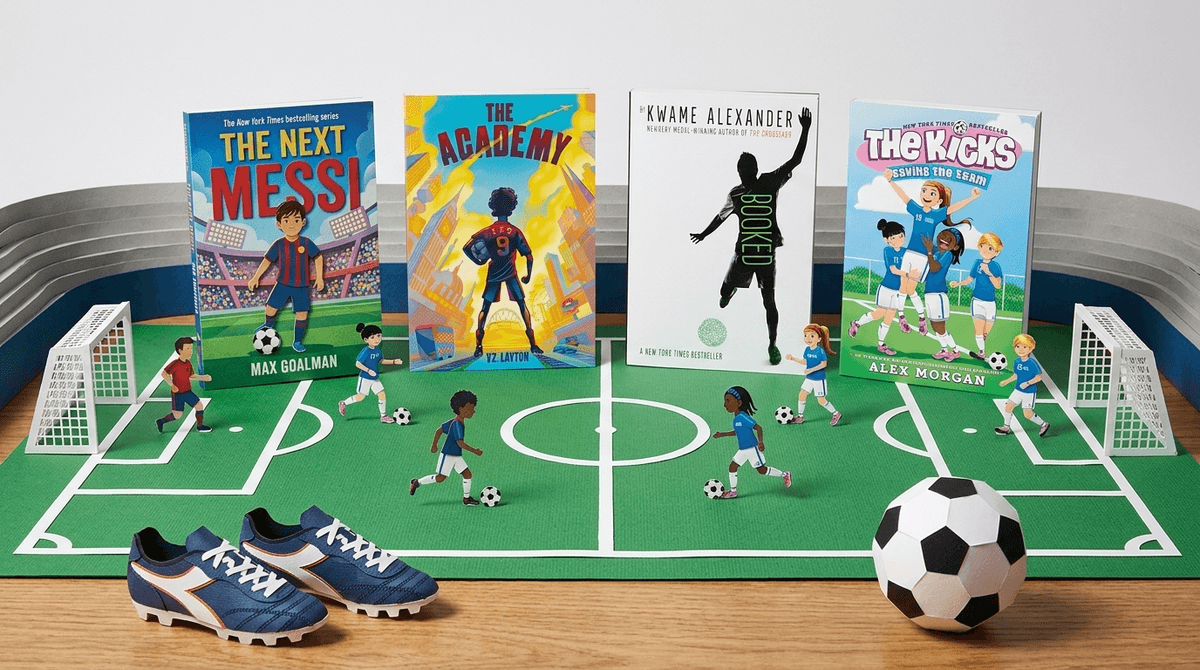
The Next Messi is the soccer-world equivalent of a page-turner, specifically engineered for the kid who would rather be doing drills in the driveway than sitting with a chapter book. Max Goalman isn't trying to win a Newbery Medal here; he’s trying to capture the high-stakes, adrenaline-soaked reality of elite youth soccer, and for the 8-to-12-year-old demographic, he hits the back of the net.
If your kid lives for the pitch but disappears when it’s time to read, The Next Messi series is the ultimate hook. It follows Leo, a talented but underdog player navigating the cutthroat world of a pro soccer academy, blending genuine tactical talk with relatable middle-grade drama. It’s a perfect bridge for fans of Diary of a Wimpy Kid who have outgrown the stick figures and want a story that treats their sport with the intensity it deserves.
The brilliance of The Next Messi isn't in its prose—which is functional and fast—but in its setting. By placing the protagonist, Leo, in a prestigious soccer academy, Goalman taps into the "special school" trope that has fueled kid lit for decades. Instead of magic wands, it's carbon-fiber boots. Instead of potions class, it's tactical film sessions.
For a 10-year-old who dreams of being scouted, this is pure wish fulfillment. But it’s grounded. Leo isn't a superhero; he’s a kid who struggles with his first touch, gets intimidated by bigger defenders, and has to deal with the "academy environment" where teammates are also your competition for a starting spot. It captures that specific brand of sports anxiety that kids actually feel, making it feel more "real" than a lot of generic "go team!" sports fiction.
Most "sports books" for kids fall into two traps: they’re either too "educational" (trying to teach life lessons about sportsmanship) or they’re too "kiddy" (ignoring the actual mechanics of the game). Goalman avoids both.
- The Action is Legitimate: The match sequences are written with a clear understanding of the game. If your kid knows what a "false nine" or a "high press" is, they won’t feel condescended to.
- The Stakes are Internal: While there’s plenty of "we have to win the cup" energy, the real story is about Leo’s confidence. It deals with the fear of being "found out" as not good enough—a feeling every competitive kid recognizes.
- The Pacing is Snappy: Chapters are short, the dialogue is punchy, and the cliffhangers are frequent. It’s designed to be binged.
If your kid finishes the series and is looking for more, don't just default to the same three series every librarian recommends. Look for books that capture that same "professional-but-personal" vibe.
This is the natural next step. It’s slightly more "pro" in its feel and focuses on a kid moving from the US to a top-tier English academy. It’s gritty (for middle grade) and focuses heavily on the technical side of the game.
For the kid who likes the soccer but struggles with big blocks of text, this is a masterpiece. It’s a novel in verse (don't let the "poetry" tag scare them—it reads like a fast-paced graphic novel) about a soccer-obsessed kid dealing with family shifts and on-field pressure.
If you're looking for the girls' game equivalent, this series by Olympic gold medalist Alex Morgan is the gold standard. It captures the social dynamics of a team moving from "messy" to "contender" without losing the sports focus.
Wait, zombies? Yes. If the "reluctant reader" part is the bigger hurdle than the "soccer" part, this series uses the same fast-paced, high-stakes, "underdog-makes-good" energy as The Next Messi, just with more monsters and fewer corner kicks.
Soccer is a global language, and these books are a great excuse to widen the lens. If they’re reading about Leo’s journey, use it as a bridge to the actual culture of the sport.
- The "Scouting" Conversation: Ask them: "If you were the coach at Leo's academy, what's the one skill you'd look for that isn't just scoring goals?" It gets them thinking about teamwork, vision, and "soccer IQ."
- Tactical Deep Dives: When a specific play happens in the book, ask them to show you what that would look like on a real pitch (or in FC 25 if they play it).
- Burnout Check-in: The academy world is intense. Use Leo’s stress as a low-stakes way to ask your kid how they’re feeling about their own team or schedule. "Leo’s feeling the pressure to perform every single day—do you ever feel that way at practice?"
The biggest "friction point" in the series isn't content—it's the reality of the youth sports industrial complex. The books accurately depict a world where 11-year-olds are treated like mini-professionals. For some kids, this is inspiring; for others, it might actually mirror their own stress a little too closely.
If your kid is already in a high-pressure club environment, keep an eye on whether they’re using these books as an escape or if the "academy stress" in the story is making their own anxiety spike. Usually, it’s the former—seeing a character like Leo struggle and then succeed is the best kind of "mental reps" for a young athlete.
Q: Is The Next Messi appropriate for an 8-year-old? Absolutely. The reading level is perfect for 3rd or 4th graders, and the content is very "clean"—the drama is focused on soccer, friendships, and school, with no mature themes to worry about.
Q: My kid doesn't like soccer; will they still like these books? Probably not. This is a "specialist" series. Unlike Wonder by R.J. Palacio, which has universal appeal, The Next Messi is written for the fan. If they don't care about the difference between a winger and a striker, they’ll be bored by page ten.
Q: How does this compare to the Matt Christopher sports books? Matt Christopher is the "old school" version. Those books are fine, but they can feel a bit dated. Goalman’s series feels contemporary—it mentions modern stars, current gear, and the way the game is actually played in the 2020s.
The Next Messi is a win for intentional parents because it meets the kid where they are. It doesn't try to "trick" them into reading something "important"; it gives them more of the thing they already love. In the world of reluctant readers, that’s the ultimate hat trick.
- Check out our best books for kids list for more age-appropriate picks.
- If they're more into screens than pages right now, see our best games for kids list for sports titles that build strategy.
- Get help picking a next book series
 based on your kid's specific interests.