

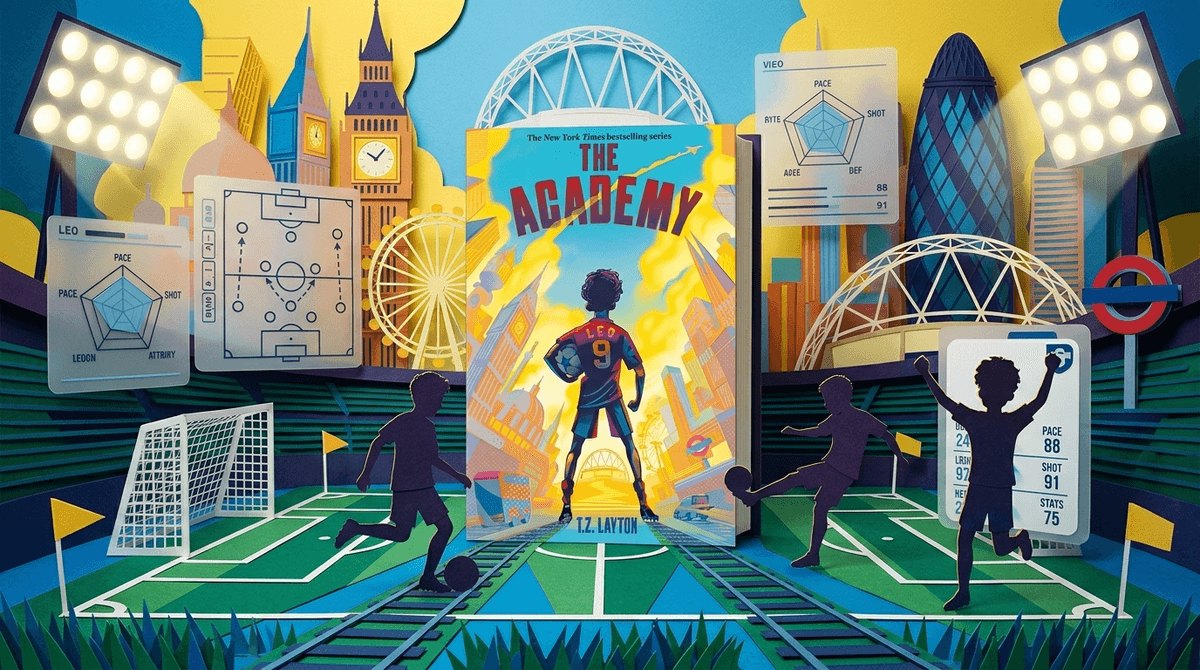
The Academy by T.Z. Layton is the rare middle-grade series that actually captures the high-pressure, stats-heavy, technical world of elite youth soccer without sounding like a lecture. It is the definitive "hook book" for the kid who thinks reading is a chore but can spend six hours analyzing a 4-3-3 formation on a console.
TL;DR: The Academy is a high-stakes, fast-paced series that mirrors the "Career Mode" experience in games like EA Sports FC. It’s perfect for reluctant readers aged 8-12 who crave technical detail and underdog stories. If your kid is obsessed with stats and "the grind," this series will land better than almost anything else on the shelf.
The biggest hurdle for "sports books" is usually that they’re written by people who haven't played the game since 1994. They focus on "teamwork" and "trying your best." The Academy doesn't do that. It focuses on the reality of modern youth soccer: the scouting, the cutthroat competition for spots, the tactical nuance, and the sheer work required to go pro.
It follows Leo Caraway, a kid from a small town who gets an improbable shot at a world-class soccer academy in England. It works because it respects the reader's intelligence. It doesn't explain what a "false nine" is like the reader is five years old; it assumes the kid already knows—or wants to know. For a kid used to the fast-paced feedback loops of EA Sports FC or Rocket League, this book provides a similar "mental simulation" of the sport.
If you have a kid who loves Ultimate Team, they are already primed for this series. Here is why:
- The Grind is the Point: In The Academy, progress isn't accidental. Leo has to train, fail, adjust his technique, and train again. This mirrors the "leveling up" mechanic that makes video games so addictive.
- Tactical Depth: T.Z. Layton writes about soccer with the granularity of a coach. He talks about positioning, vision, and "the weight of the pass." It’s catnip for kids who like the strategy side of the sport.
- High Stakes, Low Fluff: The chapters are short. The prose is lean. There aren't long-winded descriptions of the scenery. It’s all action and internal monologue about the game. It’s designed for a generation used to quick cuts and high-frequency engagement.
There isn't a "content warning" needed here in the traditional sense—no graphic violence, no heavy language, no "teen drama" that feels out of place for a 10-year-old. The "intensity" is purely competitive.
The only thing to watch for is the pressure. The book accurately depicts a world where 12-year-olds are treated like professional investments. If your kid is already in a high-pressure travel sports environment, this book might hit close to home. It’s a great opening to talk about the difference between "loving the game" and "the business of the game."

If The Academy successfully hooks your kid, don't let the momentum die. Here is the "extended universe" for kids who want high-stakes competition and technical sports stories:
The "I Only Like Pictures" Category
- Blue Lock: If they’re okay with subtitles (or the dubbed version), this anime is the ultimate "Academy" companion. It’s about a literal prison-like facility where 300 strikers compete to be the best in Japan. It is intense, tactical, and incredibly stylized.
- Haikyu!!: It’s about volleyball, not soccer, but it is the gold standard for "sports growth" stories. It explains the physics and strategy of the game so well that your kid will likely want to go buy a volleyball by episode three.
The Fast-Paced Reads
- Booked by Kwame Alexander: Written in verse (poetry), which sounds "fancy" but actually just means it’s incredibly fast to read with lots of white space on the page. It’s about a soccer-obsessed kid dealing with family stuff and a crush. Very relatable for the middle-school set.
- The Kicks by Alex Morgan: A bit more "wholesome" and aimed slightly younger, but great for kids who want a team-focused dynamic.
The "Deep Dive" Games
- Football Manager (Console Edition): If they love the "scouting" and "tactics" parts of The Academy, this is the final boss of soccer games. There is no actual "playing" the matches—you just manage the team, the finances, and the tactics. It’s basically a high-end spreadsheet that is somehow the most addictive game on earth.
Don't just hand them the book and walk away. Use it as a bridge:
- Ask about the "Attributes": If your kid plays EA Sports FC, ask them what Leo’s "card" would look like. What’s his Pace? His Dribbling? His Shooting? It forces them to translate the narrative into the "data" they already understand.
- The "Transfer Market" Talk: Use the story to talk about how professional sports actually work. Why would an academy want a kid from America? What’s the "ROI" (Return on Investment) for a club? It’s a stealthy way to talk about business and globalism.
- Read the First Chapter Aloud: If they are truly resistant to picking up a book, read the first 15 pages to them. The "on-boarding" is the hardest part for reluctant readers. Once Leo gets the invitation to the academy, the hook is set.
Q: What age is The Academy appropriate for? The sweet spot is ages 8 to 13. The protagonist is 12, so it lands perfectly for middle-grade readers. The language is clean, and the themes are centered on sportsmanship, grit, and competition.
Q: Is The Academy a series? Yes, and that’s the best part. Once they finish the first one, there are several sequels (The Academy: The Second Term, etc.) that follow Leo’s progression through the ranks.
Q: My kid hates reading but loves FIFA. Will they actually like this? Statistically, yes. This is the #1 book Screenwise parents recommend for "FIFA kids." It uses the same vocabulary and focuses on the same "prestige" elements (pro kits, elite facilities, scouting) that make the games appealing.
Q: Is there any "adult" content in the series? Not really. It’s very focused on the sport. There’s some mild "mean kid" bullying from rivals, but nothing that would raise an eyebrow for a typical elementary or middle school parent.
The Academy isn't trying to be "Literature" with a capital L. It’s trying to be a page-turner for kids who think books are boring. It succeeds because it treats soccer with the same intensity that kids do. If you're looking for a way to get your kid to put down the controller for 30 minutes without a fight, this is your best shot.
- Check out our best books for kids list for more "hook books."
- See our digital guide for elementary school for ages 5-10.
- Explore our best games for kids list to find more tactical titles like the ones Leo would play.