

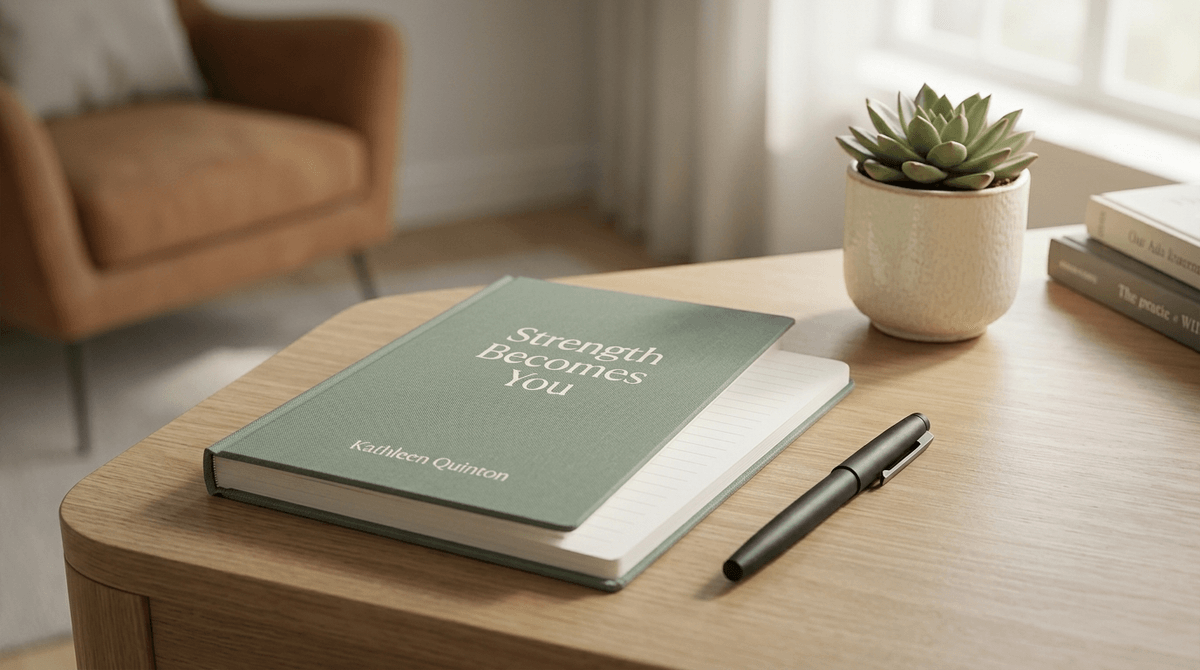
Strength Becomes You – Teen Journal is a legit, structured tool for teens who are ready to move past "surface-level" journaling and actually do the work of rewiring how they talk to themselves. It isn't a magic wand for confidence, but as a 12-month roadmap, it beats a blank notebook every day of the week for kids who need a prompt to get the gears turning.
Strength Becomes You – Teen Journal by Kathleen Quinton is a comprehensive, year-long guided journal designed to help teens build self-worth through conscious thinking and daily reflection. It’s a high-quality alternative to more passive "mood trackers," making it a great fit for middle and high schoolers who enjoy writing. If your teen finds typical journals too "young" or "aimless," this structured approach provides the right amount of friction to actually spark growth.
Most teen journals are designed for a quick hit—30 days of prompts, a few stickers, and then it gathers dust. Kathleen Quinton’s Strength Becomes You – Teen Journal is different because it’s a commitment. It’s broken down into 12 monthly themes, which means it’s designed to live on a nightstand for a full year.
Quinton adapted it from her adult book, Strength Becomes You — subtitled A Practical Guide to Clarity, Confidence, and Purpose — and the two share a backbone. The journal is the one for your kid; the original is the one for you. There’s no separate "parent’s guide" book — this page is the parent’s guide.
The "Strength Becomes You" philosophy is built on the idea that confidence isn't a personality trait you're born with; it's a byproduct of "conscious thinking." For a teen, that means moving away from the default setting of "I'm bad at this" or "Everyone is looking at me" and toward a more objective, resilient internal monologue.
If you’ve browsed the "Self-Help for Teens" section lately, you know it’s a sea of neon covers and toxic positivity. This journal sidesteps the fluff. Here’s why it actually lands:
The "Slow Burn" Structure
Because it’s a year-long guide, it doesn't try to solve everything in chapter one. It tackles themes like self-worth, conscious decision-making, and resilience in bite-sized daily chunks. This is crucial for teens who get overwhelmed by big "life overhaul" projects. It’s low-stakes entry with a high-reward ceiling.
Brain Science Lite
Quinton leans into the concept of "conscious thinking"—essentially a teen-friendly version of Cognitive Behavioral Therapy (CBT) principles. It asks kids to identify the "why" behind their thoughts. For an intentional parent, this is the gold standard. You aren't just giving them a place to vent; you're giving them a tool to audit their own brain.
Aesthetic Maturity
Let’s be real: if a journal looks like a primary school workbook, a 15-year-old won't touch it. Strength Becomes You – Teen Journal has a clean, sophisticated vibe. It feels like a "grown-up" tool, which matters deeply for the middle-to-high-school transition when kids are desperate to be taken seriously.
This isn't a "one size fits all" recommendation.
- The Reluctant Writer: If your kid treats a three-sentence English assignment like a root canal, a 365-day journal will feel like a chore. You might be better off with something more visual or interactive, like A Year of Us or even a high-quality sketchbook.
- The "Digital First" Kid: Some teens find physical writing cathartic; others find it archaic. If they live in their Notes app, consider a digital equivalent or a guided app like Day One.
If your teen is actually using the journal, the worst thing you can do is ask to read it. Journaling only works if the "privacy fence" is ironclad. Instead, use the monthly themes as a "vibe check" for your own conversations.
If you know the month's theme is "Resilience," you don't have to ask, "What did you write about resilience today?" (Please don't do that). Instead, when they fail a test or miss a goal, you can frame the conversation around the idea that strength is built in the recovery, not the win. You’re speaking the same language as the book without invading their private space.
The biggest friction point with the Teen Journal is the "Year-Long" part. Most teens will hit a wall around month three. That’s not a failure; it’s a pattern. If you see it sitting untouched, don't nag. Maybe just mention that you noticed they haven't picked it up in a while and ask if the prompts are still hitting, or if they’ve outgrown that specific theme. Sometimes a new pen or a change of scenery (taking the journal to a cafe) is all the "reset" they need.
If your kid finishes the Teen Journal or just really vibes with the "structured self-growth" genre, here are a few other heavy hitters:
The classic for a reason. It’s less about "feelings" and more about "systems." If the Teen Journal is the emotional workout, this is the productivity playbook.
For the kid who wants to go deeper and darker. It’s less "guided path to confidence" and more "brutally honest self-interrogation." The hook is that you burn the book when you're done, which offers a level of psychological safety that most journals can't match.
A bit more colorful and "active" than Quinton's book. It focuses heavily on growth mindset. It’s excellent for the younger end of the teen spectrum (ages 11-14).
If the journaling feels too heavy, this is a great "how-to" guide for navigating the social and emotional landmines of the middle school years.
Q: Is Strength Becomes You – Teen Journal religious? No. While some journals in this space lean into faith-based empowerment, Strength Becomes You – Teen Journal is secular. It focuses on psychology, conscious thinking, and self-worth from a non-denominational perspective.
Q: Is this the same book as Quinton’s Strength Becomes You? No — there are two. Strength Becomes You is her personal-development book for adults, and the Teen Journal adapts the same principles into a year of guided prompts for teens. If you’re buying for your kid, make sure the cover says "Teen Journal."
Q: What age is this journal appropriate for? The "sweet spot" is 13 to 17. Younger kids (10-12) might find some of the prompts a bit abstract, while older teens (18+) might prefer a more open-ended bullet journal or a standard "adult" wellness planner.
Q: Is it okay for boys, or is it just for girls? The branding and some of the language lean toward a female audience, but the core concepts—resilience, conscious thinking, and confidence—are universal. A teen boy who is comfortable with the aesthetic would get just as much value out of the prompts as anyone else.
Q: How much time does it take daily? Usually 5 to 10 minutes. It’s designed to be a "daily check-in," not a long-form essay session. It’s very manageable for a busy student.
Strength Becomes You – Teen Journal is a high-quality, thoughtful tool for the right kid. It’s not a "quick fix" for teen anxiety or low self-esteem, but it is a consistent, reliable framework for building the mental muscles those things require. If your teen is ready to trade "scrolling" for "thinking" for ten minutes a day, this is a worthy investment.
- Check out our best books for kids list for more age-appropriate reads.
- If your teen is struggling with the transition to a new school year, see our digital guide for middle school.
- Get help picking a next book series
