

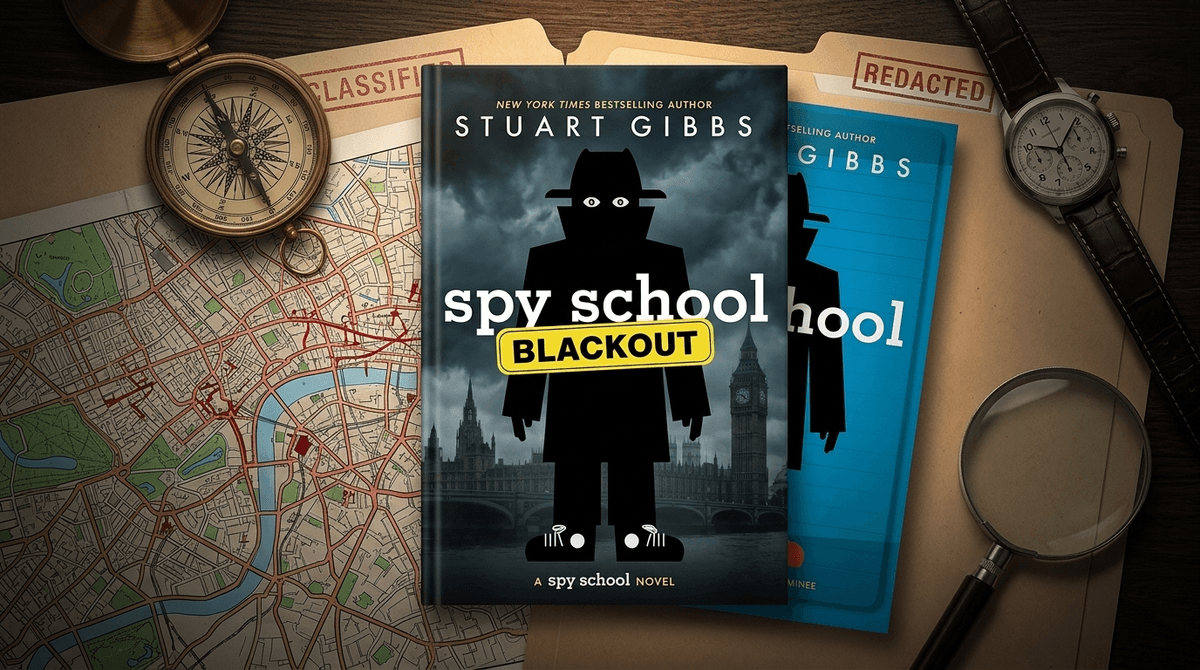
Spy School Blackout is Stuart Gibbs doing what he does best: putting a bunch of capable-but-awkward kids in a situation where the adults are useless, only this time, the Wi-Fi is dead and the stakes are actually high. It’s the 12th book in the series, and it’s arguably the most relevant one for a generation that thinks "offline" is a myth. If your kid is already twelve books deep into the life of Ben Ripley, they know the drill—but Blackout adds a survivalist twist that makes the usual spy gadgets look like toys.
TL;DR: Spy School Blackout is a high-octane middle-grade thriller that forces Ben Ripley to save London without a smartphone. It’s perfect for fans of the Spy School series who love snarky humor and fast-paced action. If your kid is into "competence porn" where kids outsmart villains using old-school logic and grit, this is a top-tier pick.
The premise is a middle schooler’s literal nightmare: a massive cyberattack takes out the entire power grid and communications network in London. No internet, no cell service, no GPS, and—crucially for Ben and his team—no backup from the CIA. They are stuck in a foreign city, being hunted by assassins, with nothing but their wits and whatever analog tools they can scavenge.
Stuart Gibbs has been the undisputed heavyweight champion of the "reluctant reader" thriller for a decade now. He knows that 10-to-13-year-olds don't want to be talked down to; they want to see characters their own age navigating world-ending stakes while still worrying about their crush. In Blackout, the "spy school" vibe shifts from a classroom setting to a "Die Hard in London" scenario. It’s fast, it’s funny, and it’s a masterclass in pacing.
There’s a specific reason the Spy School series has such a grip on middle school readers. Ben Ripley isn't a superhero. He’s a math nerd who got recruited by mistake and spends half his time being terrified. He’s the avatar for every kid who feels like they’re faking it until they make it.
In Spy School Blackout, that relatability is dialed up because the "superpower" of the modern era—instant information—is stripped away. The book rewards characters for knowing things, not just for knowing how to Google things. For a screen-obsessed kid, there’s a sneaky thrill in watching Ben figure out how to navigate a city using a paper map and basic geometry. It’s competence porn for the juice-box crowd.
While we usually talk about digital literacy in terms of "how to use the internet safely," Blackout flips the script. It’s about understanding the infrastructure of our world by seeing what happens when it breaks.
The book doesn't lecture about screen time—Gibbs is too smart for that—but it does make a very compelling case for "analog" skills. There’s a scene involving a mechanical clock that is more tense than most big-budget action movies. It builds a specific kind of confidence in the reader: the idea that even if the world goes dark, you can still solve problems.
If your kid has already inhaled Spy School Blackout and is looking for that next hit of high-stakes competence, don't just default to the same three series every other blog recommends. Here’s what actually hits the same way:
If the London setting and the "team of kids" dynamic were the highlights, this is the move. It’s slightly more grounded than Spy School but just as fast-paced. It follows a group of kids from around the world who are recruited by MI6. It’s smart, inclusive, and the puzzles are genuinely clever.
Also by Stuart Gibbs, but with a sharper edge. Charlie Thorne is a genius-level rebel who is basically the female, more-competent version of Ben Ripley. If your kid liked the "math as a superpower" aspect of Blackout, Charlie Thorne is the natural progression. It’s a bit more "global thriller" and a bit less "middle school comedy."
For the kid who loved the "world has ended and we have to survive" energy of the blackout. It’s got a different tone—more monsters, more slapstick—but it hits that same sweet spot of kid-led survival and DIY gadgetry. Plus, the illustrations make it a great bridge for kids who are still moving from graphic novels to full prose.
If the appeal was the puzzle-solving and outsmarting the system, this is the gold standard. It’s less "spy thriller" and more "Willy Wonka in a library," but the intellectual payoff for the reader is exactly the same.

There’s a friction point in the Spy School series that some parents get hung up on: the violence. Yes, there are assassins. Yes, people use weapons. But it is strictly "cartoonish" violence. Think A-Team or Home Alone—lots of explosions and chases, but very little actual blood or lasting trauma. The stakes feel real to the characters, but the tone remains light enough that it won't keep a 10-year-old up at night.
Pro-tip: If your kid is a reluctant reader, the Spy School audiobooks are phenomenal. The narrator captures Ben’s deadpan snark perfectly, and it’s a great way to get through the 12-book backlog on a road trip.
- The "What If" Scenario: Ask them: "If the Wi-Fi went out for a week, what’s the one thing you’d miss most, and what’s the one thing you think you’d actually be better at doing?"
- The Adult Problem: Gibbs often portrays adults as well-meaning but incompetent. Ask your kid: "Why do you think Ben and Erica are better at solving these problems than the actual CIA agents?" (This usually leads to a great conversation about "thinking outside the box.")
- The Trust Factor: In Blackout, the team has to trust each other without being able to check in. Talk about how communication changes when you can't just send a text.
Q: What age is Spy School Blackout appropriate for? The sweet spot is ages 8-12. Younger kids (7+) who are strong readers will enjoy the action, while older middle schoolers (13-14) will still appreciate the snarky humor and the relationship drama between Ben and Erica.
Q: Do you need to read the first 11 Spy School books to understand Blackout? Ideally, yes. While Gibbs does a decent job of recapping the major plot points, the emotional payoff of Blackout relies heavily on the relationships built over the previous books. If you’re jumping in fresh, start with the first Spy School.
Q: Is Spy School Blackout better than the other books in the series? It’s definitely in the top tier. Some of the middle books in the series felt a bit formulaic, but Blackout revitalizes the concept by taking away the team's primary tools. It feels more urgent and "real" than some of the previous entries.
Q: Are there any content warnings for Spy School Blackout? It’s very clean. There’s some mild "middle school romance" (crushes, blushing, the occasional hug), and the aforementioned cartoonish spy violence. No heavy language, no graphic content. It’s a safe bet for most families.
Stuart Gibbs doesn't miss. Spy School Blackout is a rare 12th installment that actually feels necessary. It’s a fun, fast, and surprisingly thoughtful look at what happens when our digital safety nets disappear. If you have a kid who is "bored" by reading, hand them this. Just don't be surprised if they start asking for a paper map of your neighborhood and a set of lock picks.
- Check out our best books for kids list for more middle-grade thrillers.
- Explore our digital guide for middle school to navigate the real-world tech Ben Ripley is fighting against.
- If they want to try their hand at "coding" their own spy missions, look at our best games for kids.