

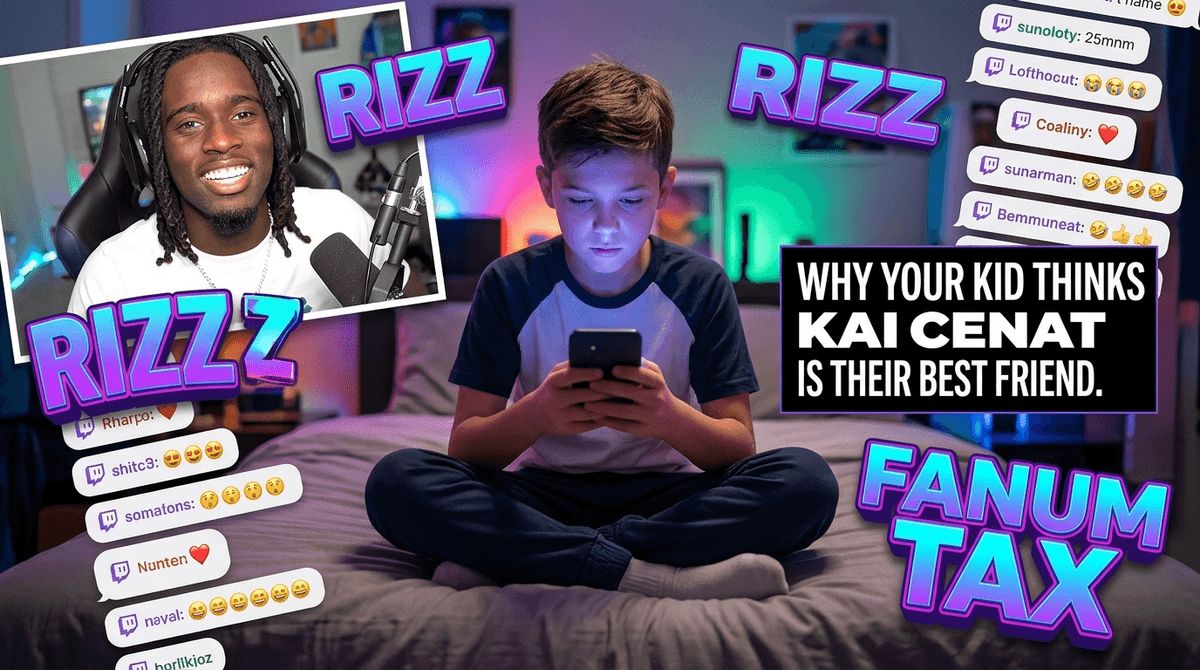
TL;DR: Your kid isn’t just watching a video; they feel like they’re hanging out with a friend. This is a "parasocial relationship"—a one-sided bond where the viewer invests emotional energy and time, but the creator doesn't know they exist. It’s why they use "Ohio" as an adjective and think Kai Cenat is their bestie. It’s mostly normal, but it can get messy when money or AI companions like Character.ai get involved.
Learn more about the psychology of parasocial bonds
If you ever had a poster of a boy band on your wall or felt genuinely sad when a character on Friends went through a breakup, you’ve had a parasocial relationship. The term has been around since the 1950s, but the 2026 version is on steroids.
Back in the day, celebrities were distant. Today, streamers like IShowSpeed or MrBeast look directly into a camera in a bedroom that looks just like your kid’s and talk to "us." They read usernames out loud. They share their "real" lives in real-time. For a developing brain, the line between "entertainment" and "friendship" gets incredibly blurry.
It’s easy to dismiss Kai Cenat as "brain rot" (and some of it definitely is), but there’s a reason your kid is glued to his stream.
- The Illusion of Access: Unlike a movie star, a streamer is "live." If your kid types a message in a Twitch chat and the streamer says, "Thanks for the 5 subs, GamerPro2014!" that kid just got a hit of dopamine that feels like a high-five from a hero.
- Shared Language: Using slang like "Skibidi," "Rizz," or "Fanum Tax" acts as a secret handshake. It makes them feel part of an exclusive club.
- Low-Stakes Socializing: Real-world friendships are hard. They require compromise, face-to-face vulnerability, and conflict resolution. Hanging out with a streamer is easy. You get the "feeling" of social connection without any of the social work.
The current king of Twitch. He’s high-energy, chaotic, and funny. He hosts "subathons" where he streams for days on end, sleeping on camera while his fans watch. To a kid, he’s the funny older cousin who’s always around. The Catch: The language can be rough, and the "hype" culture often encourages kids to spend money to get noticed.
This is the new, slightly weirder frontier. It’s an app and website where kids can "chat" with AI versions of anyone—from Harry Potter to a "Toxic Boyfriend" or even Elon Musk. The Catch: Because the AI "remembers" previous conversations and responds instantly, the parasocial bond is even stronger. It’s not just one-sided anymore; the AI is programmed to mimic a two-sided friendship.
He’s the "philanthropist" of the group. Kids feel a sense of loyalty to him because he "helps people." The Catch: His content is engineered to be addictive. It’s loud, fast-paced, and can make "real life" feel boring by comparison.
While Roblox is a game, it’s also a massive social hub. Kids form intense bonds with "online friends" they’ve never met. These are often healthier than streamer obsessions because they are two-way, but they require the same level of boundary-setting.
Elementary School (Ages 6-10)
At this age, kids struggle to distinguish between a "character" and a "person." If they watch YouTube Kids, they might think the creators are literally talking to them.
- The Goal: Media literacy. Remind them that MrBeast is a business. He is a guy at work, and his "job" is to keep you watching so he can sell advertisements or Feastables.
Middle School (Ages 11-13)
This is the peak of parasocial intensity. They are looking for an identity outside of the family. This is when they start asking for "bits" or "subs" to support their favorite creators.
- The Goal: Boundaries around money and time. It’s okay to watch Kai Cenat, but it shouldn’t cost the family $50 a month in donations.
High School (Ages 14+)
Teens usually understand the "business" of it all, but they might use streamers or AI as a crutch for loneliness.
- The Goal: Balance. If they are spending 5 hours watching Twitch but haven't hung out with a friend in person all week, it’s time to intervene.
Parasocial relationships aren't inherently "bad." They can provide a sense of community for kids who feel like outsiders. But there are a few things that should trigger a "we need to talk" moment:
- Financial Drains: If your kid is obsessed with "supporting" a creator through Roblox Robux or Twitch donations, they’ve crossed from "fan" to "unpaid employee."
- Personality Shifts: If your kid starts adopting the controversial opinions or aggressive behaviors of a streamer like IShowSpeed, that’s a problem.
- Withdrawal: If they’d rather talk to an AI on Character.ai than sit at the dinner table, the "friendship" is replacing real-world social development.
Don't start by mocking the creator. If you say, "That guy is loud and annoying," your kid will just stop talking to you about him. Instead, try these:
- "What’s the funniest thing Kai Cenat has done lately?" (Shows interest without judgment).
- "How do you think these guys make money?" (Starts a conversation about the attention economy).
- "I noticed you’re using a lot of slang from TikTok. Do your friends at school actually talk like that, or is it just online?" (Helps them differentiate between digital and physical social norms).
Your kid isn't "crazy" for thinking they know these people. Their brains are literally wired to respond to faces and voices. The goal isn't to ban the "friendship," but to make sure it stays in its lane.
Streamers are entertainers, not mentors. AI is a tool, not a therapist. As long as your kid knows the difference, they can enjoy the "rizz" without losing their grip on reality.
- Watch together: Sit down for 20 minutes and watch a MrBeast video or a Kai Cenat highlight reel. You’ll learn a lot about what your kid finds funny.
- Check the settings: Ensure your credit card isn't linked to their Twitch or Roblox account.
- Encourage "Two-Way" social time: Push for activities that require actual interaction—like playing Catan or a round of Exploding Kittens.
Check out our guide on the best board games for family night