

Look, we're not talking about wrapping kids in bubble wrap here. But if you've ever settled in for what you thought would be a chill family movie night only to have your 6-year-old hiding behind a pillow during an "unexpected" battle scene, you know what I'm talking about.
Non-violent family movies are films that tell engaging stories without relying on physical conflict, scary villains, or intense action sequences. We're looking for movies where the drama comes from internal struggles, relationships, problem-solving, or discovery rather than fights, chases, or things exploding.
And here's the thing: this isn't about sheltering kids from reality or pretending conflict doesn't exist. It's about recognizing that not every movie night needs to be an adrenaline spike. Sometimes you want a story that's genuinely calming, or you're dealing with a particularly sensitive kid, or you're just tired of explaining why the good guys had to punch the bad guys to solve their problems.
The average family movie today has way more action and intensity than films from even 20 years ago. What gets a PG rating now would've been solidly PG-13 in the '90s. Even "kids' movies" often feature extended battle sequences, scary imagery, and conflict resolution through force.
For some kids, this is totally fine. But for others—especially highly sensitive kids, kids who've experienced trauma, or kids under 7 whose brains literally can't process the difference between pretend danger and real danger—these scenes can be genuinely distressing.
Plus, there's something to be said for showing kids that stories can be compelling without violence. That characters can face real challenges and grow without anyone getting hurt. That's actually a pretty valuable narrative skill to develop.
Here's the honest truth: finding truly non-violent family movies that aren't boring is hard. Like, really hard.
A lot of what gets labeled "gentle" or "peaceful" is either:
- Made for very young kids and will bore anyone over 6
- Slow-paced in a way that loses modern kids' attention
- So saccharine that even the adults want to leave the room
The sweet spot—engaging plots, real stakes, emotional depth, but minimal violence—exists, but it's a smaller category than you'd think.
Ages 3-6: The Gentle Gateway
At this age, you've got the most options. Many preschool-focused films naturally avoid violence:
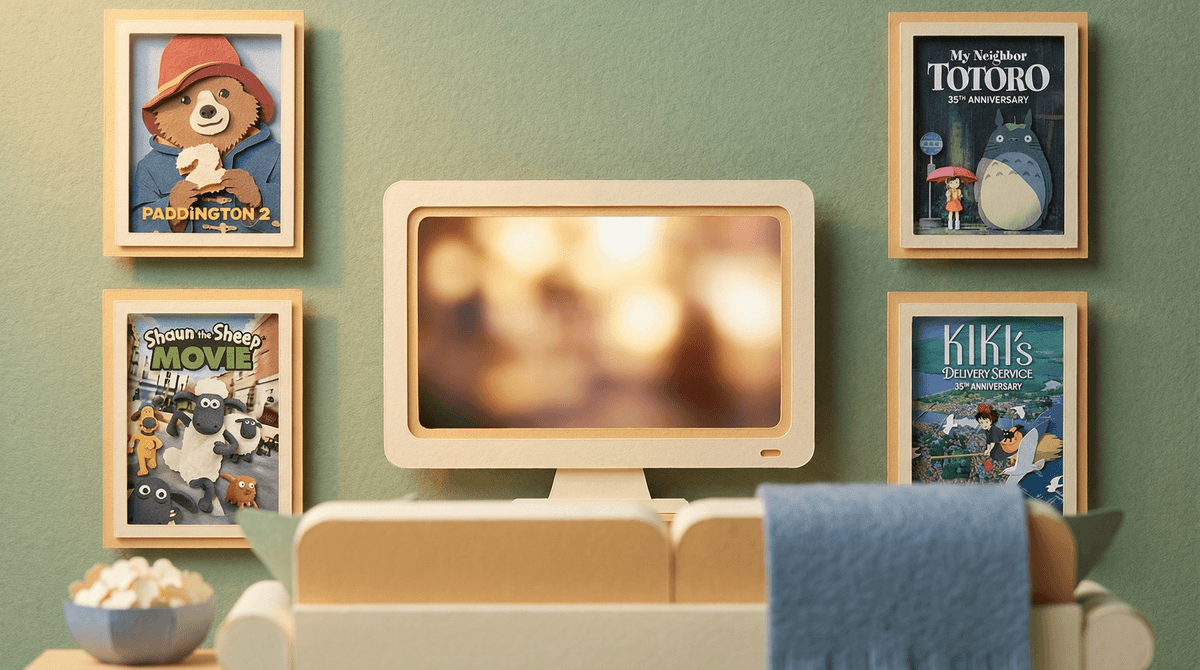
- Paddington and Paddington 2 — Honestly, these might be perfect movies, period. Warm, funny, genuinely moving, with conflict that comes from misunderstandings and cultural differences, not fights.
- My Neighbor Totoro — Studio Ghibli's masterpiece about two sisters adjusting to a new home. The "conflict" is a lost child and worry, resolved through magical help and family love.
- Winnie the Pooh (2011) — Underrated gem. The whole plot is about finding Eeyore's tail and rescuing Christopher Robin from an imaginary monster. Peak cozy.
Ages 7-10: The Tricky Middle
This is where it gets harder. Kids want more complex plots, but many "exciting" stories default to action sequences.
- Encanto — Family dynamics and self-discovery. The climax involves a house falling apart, but zero violence. Plus the songs absolutely slap.
- Coco — Death as a concept might be heavy for some, but there's no violence. The conflict is about family memory and artistic expression.
- A Shaun the Sheep Movie — Slapstick comedy without dialogue. Clever, engaging, and the "danger" is always played for laughs.
- The Peanuts Movie — Charlie Brown trying to impress the Little Red-Haired Girl. That's it. That's the plot. It's lovely.
Ages 11+: When "Babyish" Becomes the Enemy
Tweens and teens will resist anything that feels too young, but some sophisticated films skip violence:
- The Grand Budapest Hotel — Okay, there IS some violence, but it's stylized and brief. The focus is on the caper, the relationships, and the gorgeous visuals. (Check content warnings first—it's PG-13 for a reason.)
- Chef — A dad and son bond while running a food truck. Some language, but zero violence. Food looks amazing.
- Julie & Julia — Parallel stories of two women finding themselves through cooking. Genuinely engaging for teens who can appreciate character-driven stories.
"Non-violent" doesn't mean "no conflict"
Good stories need tension. In non-violent films, that tension comes from:
- Internal struggles (confidence, identity, belonging)
- Relationship challenges (misunderstandings, different goals)
- External obstacles (getting lost, fixing a problem, meeting a deadline)
- Emotional stakes (fear of disappointing someone, grief, change)
Animation isn't always gentle
Don't assume all cartoons are safe. The Incredibles? Tons of action violence. How to Train Your Dragon? Multiple battle scenes. Always check.
Studio Ghibli is your friend (mostly)
Films like Kiki's Delivery Service, Ponyo, and The Secret World of Arrietty are gorgeous, engaging, and genuinely peaceful. Just maybe skip Princess Mononoke—that one's intense.
Documentary-style films can be gold
Nature documentaries or films like March of the Penguins or Monkey Kingdom have real stakes and drama without human violence. (Though nature can be brutal—preview first.)
Use detailed content guides
Common Sense Media is your best friend here. Their reviews break down specific content concerns, so you can see exactly what kind of conflict appears and make the call for your kid.
Create a "peaceful picks" list
Once you find films that work, keep a running list. Movie selection paralysis is real, and having a pre-vetted list saves everyone stress.
Don't apologize for your choices
If your kid complains that a movie is "boring" because nobody fights, that's actually fine. Not every piece of media needs to be a dopamine rush. Sometimes we watch things that are calming or thoughtful, and that's a skill worth developing.
Consider older classics
Films from the '60s-'80s often had lower stakes and less intense action. The Parent Trap (original or remake), Babe, E.T. (some scary moments but no violence), and The Sound of Music all hold up.
Finding truly engaging, non-violent family films takes more effort than it should in 2026. The film industry has trained us to expect conflict resolution through action, and breaking that pattern means being more intentional about what you choose.
But here's what I've seen work: rotate between different types of movies. Some nights, maybe the action film is fine. Other nights, you deliberately choose something gentler. The goal isn't to never expose kids to conflict—it's to show them that stories can be told in lots of ways, and that sometimes the most powerful moments come from quiet connection, not explosive confrontation.
Your 8-year-old might roll their eyes at Paddington at first. But if you stick with it, they might just get swept up in a story about kindness, belonging, and marmalade sandwiches. And honestly? That's a pretty great movie night.
Want more specific recommendations? Check out our guide to cozy family movies or explore alternatives to high-action animated films.