

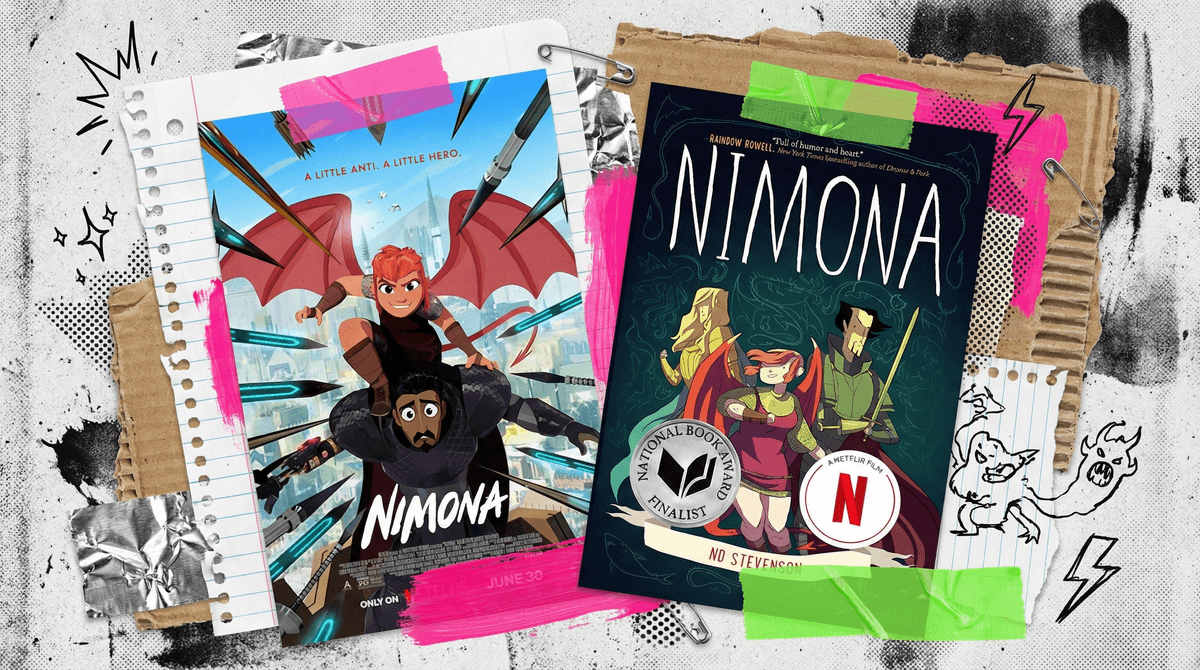
Nimona is a graphic novel by ND Stevenson that started as a webcomic in 2012 and became a published book in 2015. It tells the story of a shapeshifting teenage girl named Nimona who becomes the sidekick to Ballister Blackheart, a villain trying to prove the kingdom's Institution of Law Enforcement is corrupt. The story blends medieval fantasy with sci-fi elements, featuring knights with laser lances and a kingdom that's not quite what it seems.
The book won a ton of awards (including being a National Book Award finalist), and if your kid is talking about it now, it's probably because Netflix released an animated adaptation in 2023 that introduced a whole new generation to the story. The movie stays pretty faithful to the book's core themes while softening some of the darker edges.
Here's the thing about Nimona: it's a story about not fitting in that actually gets it.
Nimona herself is chaotic, impulsive, and doesn't follow anyone's rules. She can shapeshift into anything—a shark, a dragon, a cat, whatever—and she uses that power to challenge every expectation thrown at her. For kids who feel like they're constantly being told to be less of something (less loud, less weird, less emotional), Nimona is refreshingly unapologetic about who she is.
The story also tackles some heavy themes that resonate with middle and high schoolers:
- Questioning authority and institutions - The "good guys" aren't actually good, and the "villain" might be the hero
- Found family - Ballister and Nimona's relationship shows that family isn't always biological
- Identity and transformation - Nimona's shapeshifting is a pretty clear metaphor for figuring out who you are
- Being seen as a monster - The book explores what happens when society decides you're dangerous simply for existing
Plus, the art style is accessible and fun, the pacing is fast, and there's genuine humor mixed in with the serious stuff. It's not preachy—it trusts its readers to think critically.
Age Appropriateness: The publisher recommends ages 12+, which feels about right. The book deals with some mature themes and has violence (though it's not gratuitously graphic). There's no sexual content or strong language, but there are discussions of death, trauma, and what it means to be feared by society.
LGBTQ+ Representation: This is important context. ND Stevenson is queer and nonbinary, and while the book doesn't explicitly label characters' identities, the Netflix adaptation made Ballister and his nemesis-turned-boyfriend Ambrosius's relationship more overtly romantic. The book has always been read as queer allegory, particularly around Nimona's shapeshifting and rejection of fixed categories. If you're wondering how to talk with your kids about LGBTQ+ themes in media , this is a great entry point—the story focuses on acceptance and belonging rather than being didactic.
Reading Level: It's a graphic novel, which means it's visually driven and relatively quick to read (probably 2-3 hours for most middle schoolers). Don't let the format fool you though—the themes are sophisticated and worth discussing.
Potential Concerns: The book does depict a society that fears and wants to eliminate someone they see as monstrous. There's violence, including a significant death scene. Nimona herself has a dark past involving rejection and trauma. If your kid is sensitive to themes of suicide or self-harm, know that the climax involves Nimona feeling like the world would be better without her (though it's handled with care and ultimately hopeful).
If you've got a kid who's into The Owl House, She-Ra and the Princesses of Power (also by ND Stevenson), or Avatar: The Last Airbender, Nimona hits similar notes. It's the kind of story that can spark real conversations about:
- Critical thinking about power structures - Who decides who the "bad guys" are?
- Empathy for people who are different - What does it feel like to be feared?
- The complexity of morality - Can you do bad things for good reasons?
It's also just a really well-crafted story. The relationship between Nimona and Ballister is genuinely touching—he's the first person who sees her as more than a weapon or a monster, and she helps him see that being cast out doesn't mean you're worthless.
If your kid is reading or watching Nimona, here are some conversation starters:
- "What do you think about how the Institution treats Ballister and Nimona?"
- "Why do you think people in the kingdom are so afraid of Nimona?"
- "Have you ever felt like people didn't understand you or judged you before getting to know you?"
You could also watch the Netflix adaptation together if they've read the book—it's a nice way to experience the story as a family and compare the two versions.
Nimona is one of those rare pieces of media that works on multiple levels. Younger readers get an exciting adventure story with cool shapeshifting powers. Older teens pick up on the deeper themes about identity, acceptance, and systemic injustice.
Is it "appropriate"? That depends on your kid and your family values. It's definitely aimed at older tweens and teens, and it doesn't shy away from difficult topics. But it handles those topics with nuance and ultimately delivers a message about the power of acceptance and chosen family.
If you're looking for media that treats young readers with intelligence and respect, Nimona delivers. Just maybe read it yourself first so you're ready for the conversations that might follow.
- Read it yourself - It's a quick read and will help you understand what resonates with your kid
- Check out the Netflix movie - It's a great adaptation and might be easier for younger viewers
- Explore other ND Stevenson works if your kid loves the storytelling style
- Use Screenwise's chat feature to ask specific questions about themes or age-appropriateness for your particular kid