

Movies About Friendship: Building Empathy Through Stories Kids Love
Look, I get it. You're trying to be intentional about screen time, but sometimes you just need 90 minutes where everyone is quiet and you're not the bad guy. The good news? Friendship movies are actually one of the best uses of that screen time. They're basically empathy bootcamp disguised as entertainment.
Not all movies are created equal when it comes to social-emotional learning. Sure, your kid might love watching explosions or singing princesses, but friendship movies do something specific: they show the messy, complicated reality of relationships. The fights. The misunderstandings. The repair work. The loyalty. The boundaries.
These aren't just "be nice to each other" stories. The good ones show kids navigating jealousy, exclusion, forgiveness, standing up for friends, and knowing when to walk away. That's the stuff they actually need to practice before middle school hits.
Here's what we know from research: kids learn social skills through observation and practice. Movies give them a safe space to observe complex social situations and think through "what would I do?" without real-world consequences. It's like a flight simulator for friendship drama.
The best friendship movies show:
- Conflict that gets resolved (not just magically fixed)
- Characters who mess up and apologize (crucial skill)
- Different types of friendships (not everyone has to be best friends)
- Boundaries and consent (yes, even in kids' movies)
- Standing up for what's right even when it's hard
Ages 4-7: Foundation Building
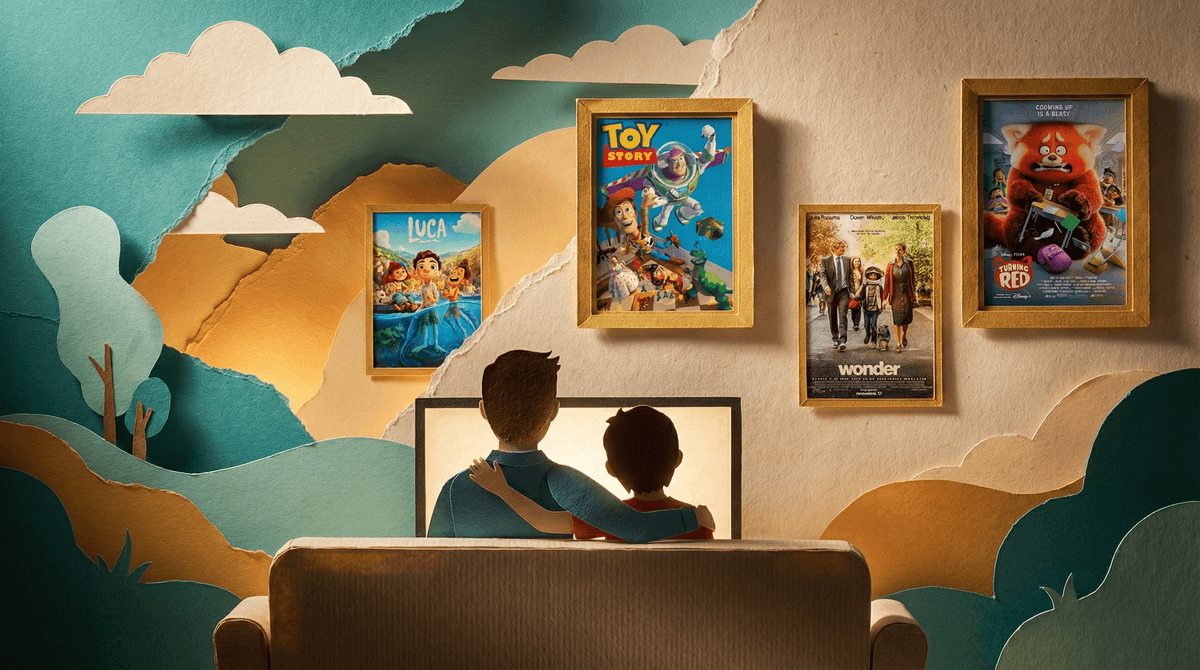
Toy Story – Still the gold standard. Woody's jealousy of Buzz is so relatable it hurts, and watching them work through it teaches kids that feeling jealous is normal, acting on it is the problem.
Luca – Two sea monsters hiding their identity to experience life on land. It's about accepting friends for who they really are, even when they're different than you expected. Plus it's gorgeous and the Italian setting is chef's kiss.
Turning Red – This one hits different if you have a tween girl. The friendship group dynamics are incredibly realistic, and it shows how friendships shift when one person starts changing. (Yes, it's also about puberty, but the friendship stuff is the real heart.)
Ages 8-11: Getting Complex
Bridge to Terabithia – Fair warning: this one will wreck you. It's about an unlikely friendship between two kids who create an imaginary kingdom together, and it deals with grief in a way that's honest without being traumatic. Have tissues ready and be prepared for big conversations.
Wonder – Based on the R.J. Palacio book, this shows friendship from multiple perspectives. It's not just about being kind to the kid who looks different—it also shows how his sister's friendships are affected, how his friend Jack navigates peer pressure, and how choosing kindness sometimes costs you something.
The Goonies – An '80s classic that still holds up. A group of misfit kids going on an adventure together, and the friendship dynamics are surprisingly nuanced. They argue, they support each other, they make mistakes. It's rated PG but has some language and scary moments, so preview it first if you have sensitive kids.
Ages 12+: Real Talk Territory
The Perks of Being a Wallflower – This is PG-13 for good reason (deals with trauma, mental health, sexuality), but for older middle schoolers ready for something real, it's beautiful. It shows how the right friendships can literally save you, and how complicated that can be.
Stand By Me – Four boys on a journey to find a dead body (stay with me here). It's really about that moment when childhood friendships start to shift and you realize you're growing apart. Rated R for language, but it's a coming-of-age essential if your kid is mature enough.
Lady Bird – The mother-daughter relationship gets all the attention, but the friendship breakup between Lady Bird and Julie is devastating and real. It shows how friendships can be casualties of our ambition and insecurity, and how hard it is to repair that damage.
Don't do the thing where you pause every five minutes to make a teaching point. Let them watch. But afterwards, try these conversation starters:
- "What would you have done in that situation?"
- "Have you ever felt like [character] did when [specific scene]?"
- "Do you think [character] was a good friend? Why or why not?"
- "What could they have done differently?"
The goal isn't to extract a moral lesson. It's to help them think through social complexity in a low-stakes way.
Representation: Kids need to see different types of friendships. Cross-gender friendships (My Girl). Friendships across cultural differences. Friendships where one person has a disability. Neurodiverse friendships (Everything Everywhere All at Once has surprising depth here, though it's definitely for older teens).
Conflict resolution: Skip movies where problems disappear with a hug. Look for ones where characters actually talk through their issues, apologize specifically (not just "I'm sorry"), and sometimes decide to take a break from the friendship.
Toxic friendship patterns: As kids get older, they need to see what unhealthy friendships look like. Manipulation. Peer pressure. One-sided relationships. Mean Girls is the obvious choice here for teens, but even younger kids can benefit from seeing these patterns called out.
Friendship movies aren't just entertainment—they're social-emotional learning that doesn't feel like homework. They give kids language for feelings, models for behavior, and permission to struggle with relationships without feeling like they're failing.
Will one movie session turn your kid into an empathy machine? No. But over time, these stories add up. They create a shared vocabulary for talking about friendship. They normalize conflict and repair. They show that being a good friend is a skill you develop, not something you either have or don't.
And honestly? Half the time you'll learn something too. Like maybe you need to apologize more specifically to your own friends. Or maybe you're holding onto a friendship that's run its course. These movies hit different when you're watching them as an adult trying to model healthy relationships for tiny humans who notice everything.
Start with one movie from the age-appropriate section above. Watch it together (phones away, you too). See what conversations emerge naturally. If your kid connects with it, explore more movies about empathy and social-emotional learning .
.
And if you want to dig deeper into how your family's media choices compare to others in your community, or get personalized recommendations based on your kid's specific interests and your values, that's literally what Screenwise is built for. We'll walk you through understanding your family's digital habits and give you actually useful guidance instead of generic "screen time bad" panic.
Because intentional parenting isn't about being perfect. It's about being thoughtful. And sometimes that looks like 90 minutes on the couch watching animated toys work through their feelings.