

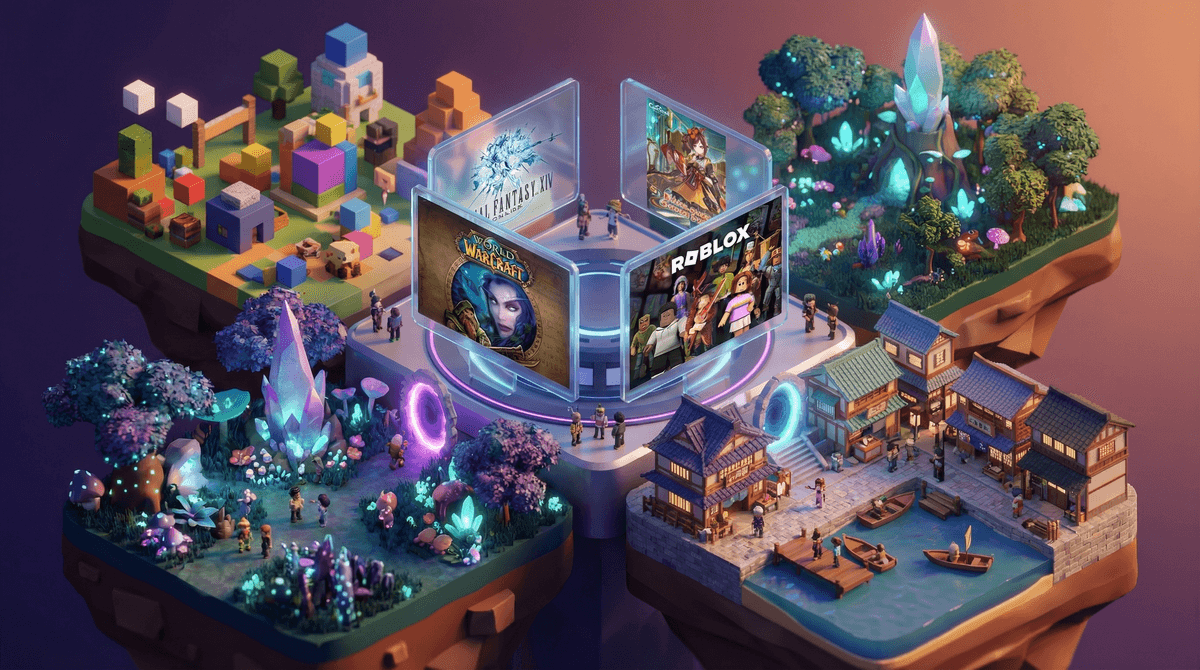
MMO stands for "Massively Multiplayer Online" — basically, games where hundreds or thousands of players exist in the same digital world at the same time. Think of it like a giant playground where kids from all over the world are playing together, except the playground is a fantasy realm, a spaceship, or literally anything developers can dream up.
The key word here is massive. We're not talking about your kid playing Minecraft with three friends on a private server. MMOs are persistent worlds that keep running 24/7, whether your child is logged in or not. Other players are questing, trading, forming guilds, and yes, sometimes causing drama while your kid is at soccer practice.
Popular MMOs your kids might be playing (or begging to play) include Roblox (which is technically thousands of mini-MMOs), World of Warcraft, Final Fantasy XIV, and Genshin Impact. Each has its own flavor, but they all share that core feature: you're never really playing alone.
Let's be honest — MMOs are designed to be absolutely captivating, and they're really good at it.
The social pull is real. For many kids, MMOs aren't just games — they're where their friends are. It's the digital equivalent of hanging out at the mall or the park, except they can do it from home in their pajamas. They're forming guilds, planning raids, trading items, and building genuine friendships. Some of these connections are surprisingly meaningful.
There's always something to do. MMOs are built on progression systems that tap into the same reward centers as... well, everything addictive. Level up your character, unlock new abilities, get better gear, complete daily quests, participate in seasonal events. The game literally never ends, and there's always one more thing to achieve.
They offer identity and belonging. In an MMO, your kid can be a powerful wizard, a heroic knight, or a master crafter. They can find their niche, whether that's combat, crafting, trading, or just hanging out and chatting. For kids who might feel like they don't quite fit in at school, these worlds can feel like home.
The FOMO is engineered in. Limited-time events, daily login bonuses, guild activities that happen at specific times — MMOs are masters at making kids feel like they're missing out if they're not logged in. This isn't an accident.
Here's where we need to talk about the elephant in the room: MMOs are designed to consume time. Not hours — we're talking potentially hundreds or thousands of hours.
Unlike a game of Mario Kart that ends after a few races, MMOs have no natural stopping points. There's no "you beat the game!" screen. The design philosophy is literally "keep players engaged as long as possible."
Some specific time traps to watch for:
Daily quests and login bonuses that make kids feel like they're falling behind if they skip a day. Miss a week and you might lose your guild ranking or miss a limited-time event.
Scheduled group activities where other real humans are counting on your kid to show up. Guild raids might start at 7pm on a Tuesday, and if your kid doesn't show, they're letting down 10 or 20 other people. The social pressure is real and can be intense.
The "just one more" trap — whether it's one more quest, one more level, one more dungeon run. MMOs are expertly designed to always dangle the next reward just out of reach.
For middle schoolers, we're seeing averages of 10-15 hours per week on their primary MMO. High schoolers who are really into it? 20-30 hours isn't uncommon. That's a part-time job.
The social nature that makes MMOs appealing also creates real safety concerns.
Open chat with strangers is the default in most MMOs. Your 10-year-old is potentially chatting with a 40-year-old, and you have no idea what's being said. While most interactions are benign, predatory behavior does happen. Kids can be groomed, exposed to inappropriate content, or pressured into sharing personal information.
Voice chat adds another layer. Many MMOs have built-in voice communication, and third-party apps like Discord are standard for serious players. Your kid might be in voice calls with people you've never met, can't vet, and have no way to monitor.
In-game economies often involve real money. Some MMOs have subscription fees ($10-15/month). Many have cash shops where kids can buy cosmetic items, convenience features, or straight-up power. Learn more about how these in-game currencies work — because your credit card might already be linked.
Toxic behavior is rampant in online gaming communities. Harassment, bullying, racist and sexist language, and generally awful human behavior are common. The anonymity of the internet brings out the worst in some people, and your kid will be exposed to it.
Account security matters more here than in single-player games. If someone hacks your kid's account, they could steal items worth real money, get the account banned, or use it to harass others.
Ages 8-10: Most traditional MMOs are not appropriate for this age group, period. The chat features alone are a dealbreaker. If your kid is interested in multiplayer experiences, stick with heavily moderated games with robust parental controls like Minecraft on a private server with friends you know, or Roblox with strict privacy settings and chat disabled. Here's how to set up Roblox parental controls if you go that route.
Ages 11-13: This is when many kids start getting into MMOs for real. If you're going to allow it, choose games with better moderation and consider ones that don't require voice chat. Set clear time limits (maybe 5-7 hours per week maximum), require that gaming happens in shared family spaces, and periodically check in on who they're playing with. Games like Final Fantasy XIV have notably better communities than most, though they're still not perfect.
Ages 14+: Teens are going to push for more freedom here, and honestly, they're developmentally ready for more autonomy. But that doesn't mean no boundaries. The conversation shifts from "no" to "how." Talk about time management, the difference between online friendships and IRL relationships, and red flags for predatory behavior. Consider a family agreement about total weekly hours, maintaining grades and other responsibilities, and keeping you generally informed about who they're playing with.
You don't need to play the game yourself (though it can help), but you do need to understand what your kid is doing in there. Ask them to show you around their game world. Who are their guild members? What are they working toward? What does a typical play session look like?
"Just pause it" doesn't work here. When your kid says they can't stop right now because they're in the middle of a dungeon with their guild, they're not lying or being difficult. There are real consequences to leaving mid-activity, including letting down other players and potentially losing progress. Build in transition time — "you need to be done in 30 minutes" works better than "stop right now."
The friends are real, even if you've never met them. Your kid's guild members might be genuinely important to them. That doesn't mean you shouldn't have boundaries, but dismissing these friendships as "not real" isn't helpful. They're real relationships, they're just mediated through a screen.
Subscription fees might actually be better than "free" games. Games like World of Warcraft that charge $15/month are often less predatory with their monetization than free-to-play games that constantly push microtransactions. You know exactly what you're paying each month, and there's no pressure to buy the next cosmetic or battle pass.
Watch for warning signs that the game is becoming a problem: declining grades, dropping other activities, irritability when not playing, lying about time spent, or spending money without permission. These are signs that boundaries need to tighten and potentially that professional help might be useful.
MMOs aren't inherently evil, but they're also not just innocent fun. They're sophisticated products designed by teams of psychologists and game designers to maximize engagement — which is a corporate euphemism for "keep people playing as long as possible."
For the right kid at the right age with the right boundaries, MMOs can offer genuine benefits: problem-solving, teamwork, strategic thinking, and real social connections. Some kids are learning leadership by running guilds, others are developing entrepreneurship skills through in-game trading.
But they can also be time sinks that crowd out other important parts of childhood, expose kids to adult content and predatory behavior, and create genuine addictive patterns.
The key is being intentional. Don't just hand over access and hope for the best. Set clear expectations about time limits, who they can interact with, and what happens if those boundaries get crossed. Check in regularly — not in a helicopter parent way, but in a "I'm interested in your life and want to make sure you're safe" way.
If your kid is asking to start playing an MMO:
- Research the specific game thoroughly (ratings, reviews, community reputation)
- Start with a trial period with strict limits
- Set up parental controls and privacy settings before they start playing
- Have a conversation about online safety and what to do if someone makes them uncomfortable
If your kid is already deep into an MMO:
- Ask them to give you a tour of their game world and explain what they enjoy about it
- Review current time spent and whether it's crowding out other activities
- Check privacy settings and who they're interacting with
- Consider whether current boundaries are working or need adjustment
If you're concerned about their MMO use:
- Track actual hours played for a week (you might be surprised)
- Look at what else has changed — grades, sleep, other activities
- Have a non-judgmental conversation about your concerns
- Consider whether this is normal teen gaming or something more concerning
Every family's boundaries will look different, and that's okay. The goal isn't to ban MMOs entirely (though for some families, that might be the right call). The goal is to make sure your kid can enjoy these games without them taking over their entire life.