

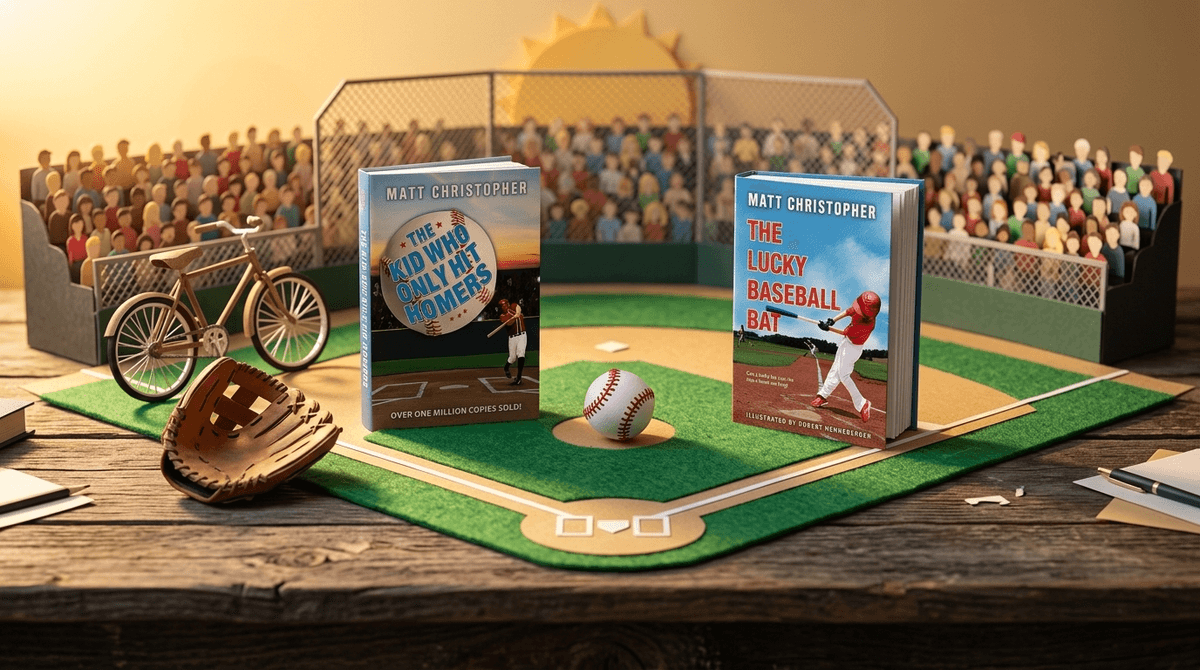
Matt Christopher books are the gateway drug for kids who claim they hate reading but can recite every MLB stat from the last three seasons. They aren't high-brow literature, and they don't try to be—they are punchy, fast-paced, and built specifically to help a sports-obsessed kid finally experience the "flow state" of finishing a whole book without being nagged.
TL;DR
If you have a reluctant reader who lives for the diamond, Matt Christopher is your MVP. These stories—like The Kid Who Only Hit Homers and The Lucky Baseball Bat—use short chapters and high-stakes game action to build reading stamina. They are the perfect bridge from graphic novels to longer fiction because they speak the language of the game fluently.
The magic of a Matt Christopher book isn't in the prose; it’s in the pacing. Most of these titles clock in at under 130 pages with relatively large font and wide margins. For a kid who looks at a 300-page fantasy novel like it's a marathon they didn't train for, a Matt Christopher book feels like a manageable sprint.
But don't mistake "short" for "simple." While the decoding (the actual act of sounding out words) is accessible for most 2nd to 5th graders, the stories lean heavily into the language comprehension strand of literacy. They use specific baseball terminology—sacrifice flies, double plays, southpaws—that rewards the kid’s existing background knowledge. When a kid already knows what a "full count" feels like, they aren't just reading; they're visualizing. That's how you turn a "non-reader" into someone who actually enjoys the process.
Matt Christopher wrote over 100 books before he passed away, and his estate has kept the brand alive by updating the classics and releasing new titles. If you’re staring at a library shelf and don’t know where to start, these are the hall-of-famers.
This is the flagship. It’s got a touch of "Field of Dreams" magic—a kid who isn't great at ball meets a mysterious stranger who helps him become a home run machine. It’s the ultimate wish-fulfillment story for any kid who’s ever sat on the bench. It’s also a great conversation starter about whether "talent" comes from gear, luck, or practice.
This was Christopher’s first book, and it hits on a theme every young athlete understands: superstition. Marty loses his "lucky" bat and suddenly thinks he can’t hit. It’s a classic "the power was inside you all along" arc, but it’s handled with enough grit that it doesn't feel cheesy.
This one is for the kid who struggles with confidence. It’s about a catcher who is terrified of the ball after getting hit, and his journey to get back behind the plate. It deals with fear and bullying in a way that feels real to a 9-year-old, without the "after-school special" vibe.
If your kid is still firmly in the "I only like pictures" phase, the Matt Christopher estate has been adapting the classics into graphic novels. This is a brilliant move. The Kid Who Only Hit Homers (Graphic Novel) keeps the core story but uses visual storytelling to help with the heavy lifting of comprehension.
At Screenwise, we don't treat graphic novels as "cheating." They are legitimate literacy tools that help kids map dialogue to action. If a kid is intimidated by a wall of text, start with the graphic novel version, then hand them the prose version of a different title once they’re hooked on the characters.
You might notice some "vintage" vibes in these books. Even with modern updates, the kids are often playing in sandlots, riding bikes to practice, and dealing with social dynamics that feel a bit more "The Sandlot" than "TikTok."
That’s actually a feature, not a bug. In an era of hyper-curated youth sports and "travel ball" stress, these books focus on the pure joy of the game. They remind kids why they liked baseball in the first place—the sound of the bat, the dust on the uniform, and the bond with teammates.
If you’re trying to move a kid from "I have to read this for school" to "I actually want to know what happens," try the First Inning Assist: Read the first two chapters aloud to them at night.
The hardest part of reading for a reluctant reader is the "onboarding"—learning the names, the setting, and the conflict. Once you've done the heavy lifting of setting the scene, they’re much more likely to take the book to their room and finish it themselves.
Also, don't sleep on the audiobooks. Listening to The Home Run Kid Races On in the car on the way to a tournament is still building those language comprehension strands of the "Reading Rope." It counts.
Q: What age are Matt Christopher books for? The sweet spot is ages 7 to 11 (2nd through 5th grade). They are technically "Middle Grade," but because the chapters are short and the vocabulary is sports-centric, they work well for younger advanced readers or older reluctant readers.
Q: Are the books dated? The originals were written decades ago, but most copies you’ll find in stores or libraries today have been "refreshed." This means the kids might mention modern gear or updated MLB references, though the core "small-town sports" feel remains the same.
Q: Is there any "mature" content to worry about? Not really. The "conflict" in these books is almost always about sportsmanship, honesty, overcoming fear, or dealing with a jerk on the other team. They are famously "clean" and focus on character building through competition.
Q: My kid likes basketball/football more. Does he have those? Yes. While the baseball books are his most famous, the Matt Christopher brand covers almost every sport imaginable—soccer, motocross, ice hockey, and even mountain biking.
Matt Christopher books are the ultimate "low-floor, high-ceiling" reading choice. They provide an easy entry point for kids who find reading a chore, but they offer high-value lessons in resilience and integrity. They aren't going to win a Pulitzer, but they might just be the reason your kid stops complaining about their 20-minute reading log.
- If your kid finishes a Matt Christopher book and wants something with a bit more "modern" humor, check out our best books for kids list and look for the "Funny and Fast" section.
- For kids who want even more sports action, look into The Crossover by Kwame Alexander—it’s written in verse and hits like a freight train.
- Get a personalized book recommendation for your kid
