

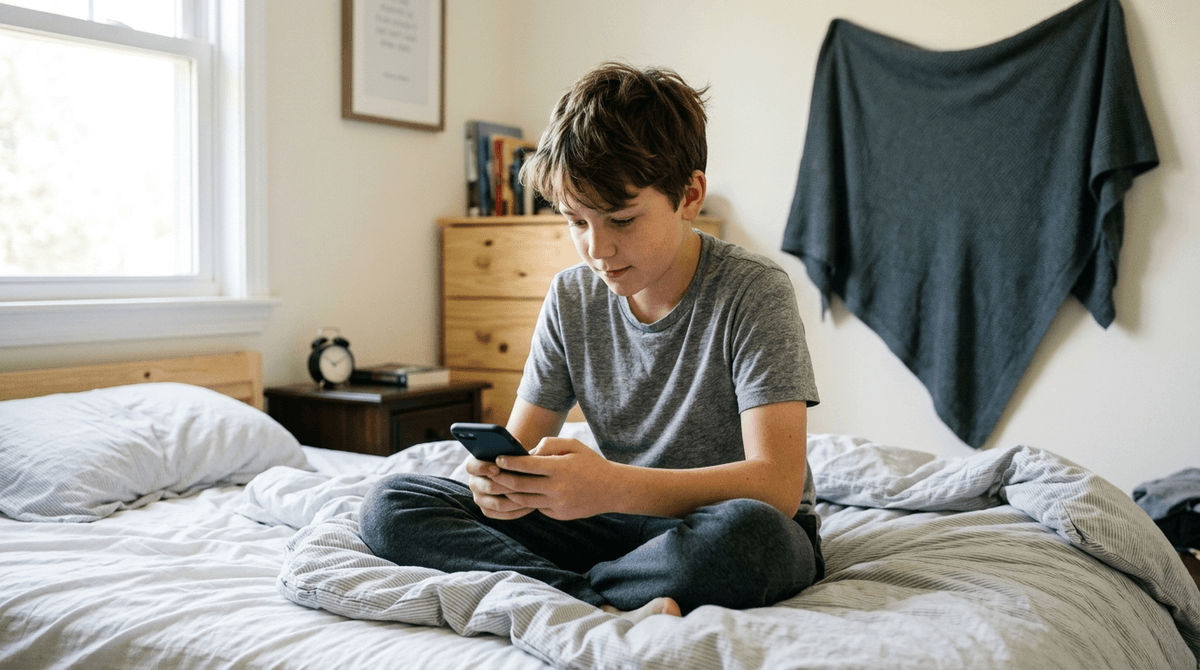
A child’s brain structure can signal a risk for long-term mental health challenges, but lifestyle habits like sleep and screen time are actually more powerful predictors of their psychological trajectory.
Prioritize the "basics"—consistent sleep, physical movement, and sensible screen limits—because these modifiable behaviors influence a child's mental health more than the physical structure of their brain.
Parents often fear that "unusual" behaviors or intrusive thoughts in pre-teens are early warnings of permanent mental illness. This study provides a necessary reality check: for the majority of children (over 50%), these experiences are a temporary phase that fades as they mature.
For the 21% of children whose symptoms do persist and cause distress, the findings shift the focus from unchangeable biology to actionable daily habits. Because lifestyle factors outperformed brain scans in predicting which kids stayed in the "high-risk" group, parents have a clear roadmap for intervention that doesn't require a neurologist.
Adolescence is a critical window for brain remodeling. Researchers wanted to determine if MRI "neuroscores"—which map brain structure to specific psychiatric conditions—could identify children at risk for psychotic-like experiences (PLEs) before they reached a crisis.
By using data from nearly 10,000 children in the ABCD Study (the largest long-term study of child health in the U.S.), the authors sought to distinguish between typical adolescent "strangeness" and biological markers of future disorders like Bipolar Disorder or Schizophrenia.
Brain scans are helpful tools, but a child’s daily routine tells a much clearer story about their mental health future.
- Four distinct paths: The researchers identified four trajectories for "unusual" thoughts. About 27% of kids had none, 53% had symptoms that disappeared over time, and 21% had persistent, distressing symptoms.
- The biological link: Children in the persistent group had brain structures that more closely resembled adults with psychosis. Their "neuroscores" were 13% to 34% higher than their peers, suggesting a shared biological vulnerability.
- Lifestyle wins: Despite the biological markers, common risk factors like trauma or family history predicted symptoms just as well as expensive MRI scans.
- The Big Three: Modifiable factors—specifically sleep duration, physical exercise, and recreational screen time—were the strongest indicators of whether a child’s symptoms would worsen or improve.
We are entering an era where "biological destiny" is being debunked by lifestyle data. While a high "neuroscore" sounds intimidating, the study suggests it is not a life sentence. The fact that lifestyle factors outweighed brain structure implies that the environment a parent builds can act as a "buffer" against biological predispositions.
This research suggests that mental health in the digital age is increasingly about regulation. When a child’s nervous system is supported by enough sleep and limited digital overstimulation, the brain may be better equipped to navigate the structural changes of puberty without sliding into persistent distress.
This paper is a preprint and has not yet undergone formal peer review by other scientists. The "psychotic-like experiences" were also self-reported by 9- and 10-year-olds on a questionnaire; a child’s perception of a "scary thought" may not always align with a clinical diagnosis. Furthermore, the study follows children only to age 13. We do not yet know if these early "neuroscores" will accurately predict who develops a clinical psychiatric disorder in their 20s.
- If your child mentions an "unusual" thought or perception, stay calm and monitor it without panic; over half of children who report these experiences see them disappear entirely within three years.
- If you have a family history of mental health challenges, make sleep hygiene your primary focus; the data suggests quality sleep is a more significant protector of a child's mental trajectory than their baseline biology.
- If your child is in the "high-risk" category for distress, prioritize a "screens-off" window at least 60 minutes before bed; reducing digital friction helps regulate the very brain regions identified in the high neuroscore groups.
- If your child is sedentary, find a low-stress physical activity they enjoy; exercise was shown to be a more reliable predictor of mental stability than the physical "signatures" found on an MRI scan.
Your child’s brain is highly plastic and deeply responsive to the world around them. While biology plays a role in mental health, the daily "basics" of childhood—sleep, movement, and limited screens—are your most effective tools for keeping them on a healthy track.
Cooper R, Sahasrabudhe R, Glahn DC et al. (2026). Neuroimaging Summary Scores Predict Trajectories of Psychotic-Like Experiences in Youth. medRxiv : the preprint server for health sciences. doi:10.64898/2026.06.03.26354754 — pubmed.ncbi.nlm.nih.gov