

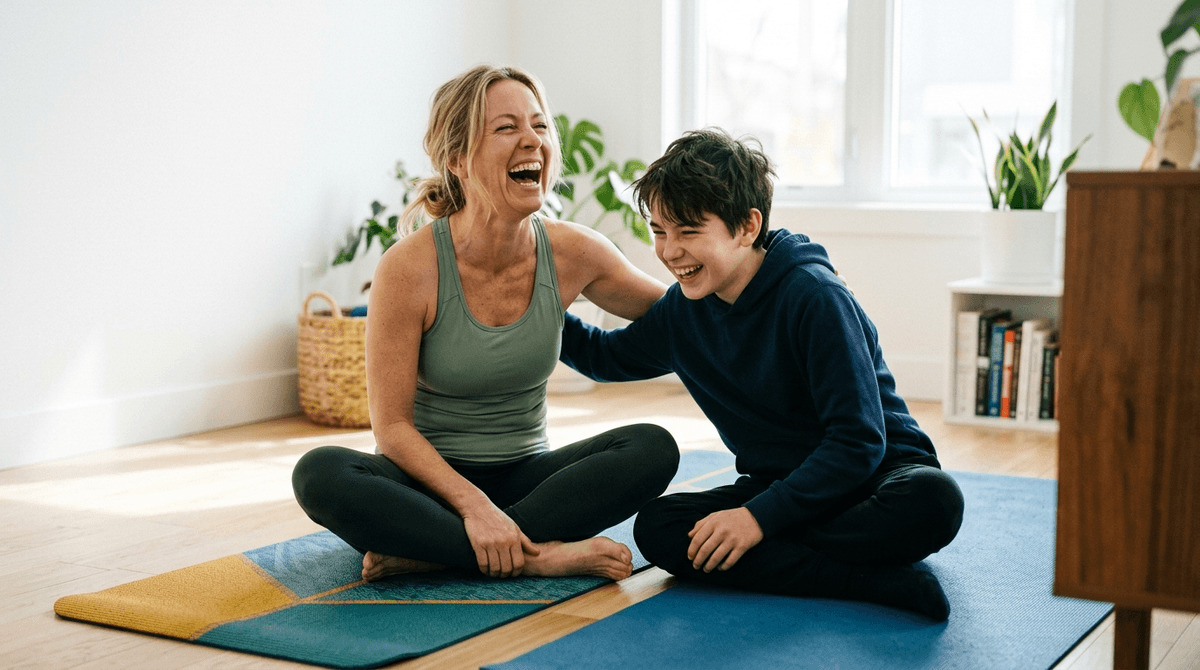

Researchers are testing whether laughter yoga—a practice combining playful forced laughter and deep breathing—can lower anxiety in neurodivergent children and lighten the heavy stress load for their parents.
Clinical researchers are testing whether structured, body-based laughter exercises can improve emotional regulation for children with autism without relying on complex conversation, cognitive humor, or medication.
Parenting a child on the autism spectrum often comes with chronic stress and limited non-pharmacological options for managing childhood anxiety. Standard talk therapies require significant verbal processing and cognitive effort, which can overwhelm neurodivergent kids.
Laughter yoga bypasses complex conversation entirely. By using physical movement and simulated laughter to trigger physiological relaxation responses, it offers a potential way to lower tension in both child and caregiver simultaneously.
Families navigating autism need accessible techniques to reset overloaded nervous systems. Conventional emotional regulation strategies frequently demand executive functioning skills that children with autism spectrum disorder are actively struggling to build. By evaluating a forced physical act—laughing intentionally until genuine endorphins kick in—investigators are working to fill the gap between behavioral therapy and prescription drugs.
The study protocol outlines a trial designed to see if intentional physical laughter delivers measurable mental health relief.
- The program: 66 families in Hong Kong will participate in 12 one-hour laughter yoga sessions spread over a six-month period.
- The focus: Investigators will evaluate whether families stay enrolled and complete the program, while tracking changes in children's anxiety and depression scores.
- Parent impact: The trial explicitly measures changes in parental stress levels, treating caregiver well-being as a primary health outcome.
- Safety monitoring: Protocols are built to track physical side effects of prolonged deliberate laughter, such as asthma triggers, headaches, dizziness, or temporary blood pressure spikes.
Laughter yoga does not rely on humor, jokes, or punchlines; it treats laughter purely as aerobic exercise. For an autistic child who may struggle to decode social nuance, sarcasm, or verbal comedy, this distinction is critical. The approach uses the mechanical actions of laughter—diaphragmatic breathing and rhythmic vocalization—as a direct physical backdoor to quiet a fight-or-flight nervous system response.
This publication is a study protocol for an upcoming trial, not a completed study with published results. No conclusions about whether laughter yoga actually works can be drawn yet. Additionally, the planned trial targets a specific population: 66 children aged 8 to 12 in Hong Kong with an IQ above 70. Participants cannot be blinded to whether they are doing laughter yoga or sitting on a waitlist, which creates a high risk for placebo expectations in self-reported survey answers.
- If your neurodivergent child struggles with traditional talk therapy for anxiety... keep an eye out for emerging research on body-first interventions, which bypass verbal processing entirely.
- If you want to try playful breathing or laughter exercises at home... screen for asthma or respiratory sensitivity first, as forced hyperventilation can occasionally trigger wheezing.
- If you are considering hiring a specialized coach or paying for a laughter program today... hold off until formal trial data is completed and published after 2026.
Laughter yoga is a promising, low-cost concept for neurodivergent households, but it remains an unproven clinical tool until trial data arrives. Don't feel pressured to add specialized laughter classes to your weekly calendar just yet—though a few intentional belly laughs at home won't hurt if your family needs a quick pressure release.
Chung JOK, Lam CY, Leung SF et al. (2026). Effects of laughter yoga on reducing depression and anxiety in children with autism spectrum disorder and parenting stress in their parents: study protocol for a randomised-controlled feasibility trial. BMJ open. doi:10.1136/bmjopen-2025-112368 — pubmed.ncbi.nlm.nih.gov