

Generative AI writes so confidently that kids accept its science answers without questioning them. Real learning only happens when children actively fact-check the machine, which requires enough prior knowledge to spot when AI gets things wrong.
Kids only learn from AI when they actively question its answers, meaning generative tools work best as study partners for kids who already know enough science to catch mistakes.
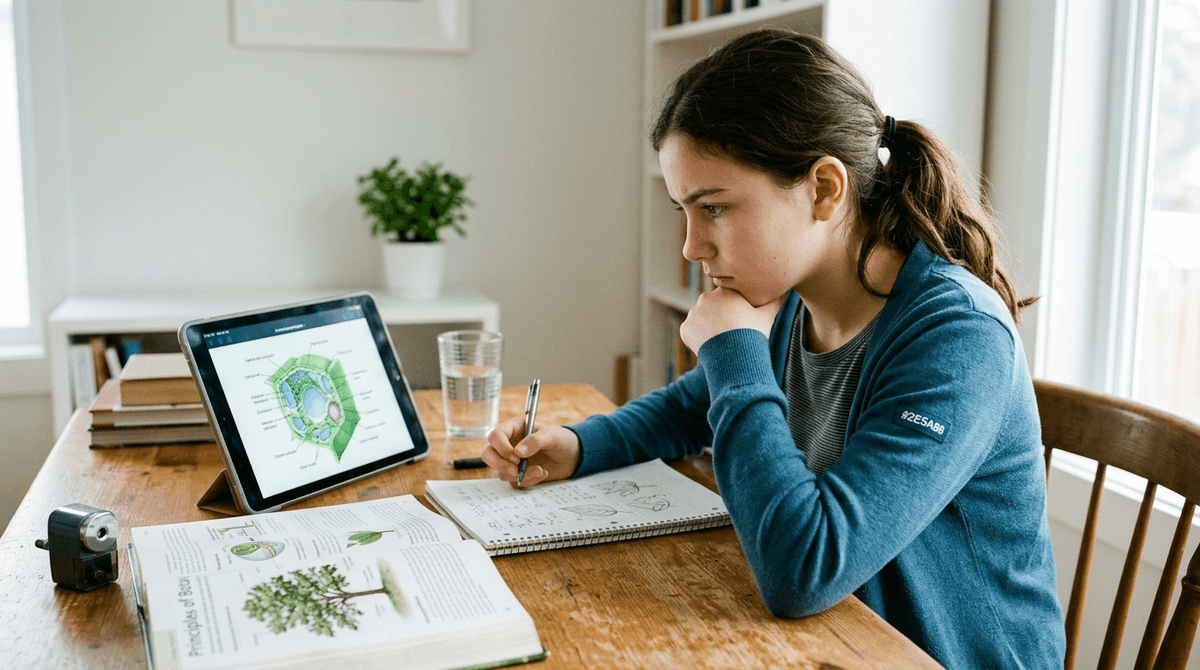
Handing a child an AI chatbot to help with science homework feels like giving them a 24/7 tutor, but it can easily backfire. When AI delivers polished, authoritative paragraphs, kids naturally skip the hard mental work of critical thinking and copy the output.
If a student lacks the background knowledge to spot hallucinations, using AI won't help them learn science—it will just give them the illusion of understanding while secretly widening the gap between high-performing and struggling students.
Schools and parents are rushing to adopt AI learning assistants, assuming that instant explanations will equalize education. Educational theorists are raising alarms that AI's persuasive, human-like fluency acts as a mask, tricking learners into passive acceptance rather than active discovery.
Learning requires "epistemic vigilance"—the mental habit of constantly evaluating whether a claim is actually true.
- The trustworthiness mask: AI's fluent prose makes incorrect answers sound just as convincing as correct ones, discouraging kids from double-checking.
- Deep processing is non-negotiable: Kids only retain concepts when forced to evaluate a claim's validity. Copying or skimming AI answers builds zero long-term understanding.
- The catch-22 of offloading: You can only safely delegate research tasks to AI if you already have enough subject knowledge to audit the results.
- Widening achievement gaps: Uniformly introducing AI across classrooms risks helping advanced kids while leaving weaker students vulnerable to AI errors.
AI won't replace foundational learning; it makes early memorization and core facts more critical. The idea that kids no longer need to learn basic scientific facts because they can just look them up or ask a chatbot is dangerously false. Without facts stored in their own brains, kids have no baseline to judge if the AI is making things up.
This paper is a theoretical framework, not an empirical study with a test group of real kids. The author synthesized existing educational theories to make a logical argument, but the proposed methods for measuring and teaching "vigilance" haven't been tested in live classrooms yet. The paper is also an unreviewed preprint.
- If your child uses AI for homework research... require them to highlight three specific claims the AI made and verify them using an independent textbook or trusted source.
- If your child relies on AI to explain tricky concepts... start with tight restrictions and fade support gradually, granting more AI privileges only as they demonstrate they can catch its errors.
- If your child finishes a science assignment unusually fast with AI... ask them to explain the core scientific mechanism out loud without looking at the screen.
Treat AI like an overly confident classmate who is frequently wrong, not an oracle. Prioritize building your child's core science knowledge first so they have the tools to cross-examine the machine.
Marcus Kubsch (2026). AI as a Partner in Learning about, Doing, and Engaging with Science: Vigilance as the Key to Productive Augmentation. arXiv (preprint). — arxiv.org