

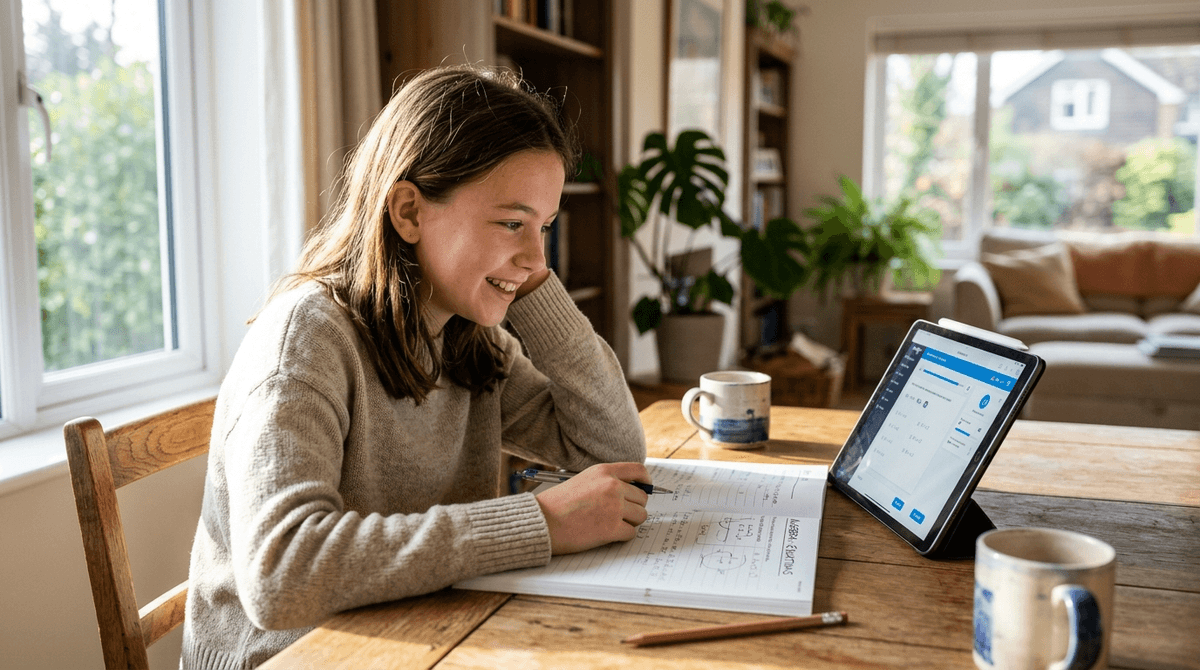

How much a child learns from a study app or a paper workbook depends less on the technology itself and more on whether they actually like the tool and how confident they feel starting out. Surprisingly, kids who lack confidence often gain the most from structured practice—if they enjoy the format they are using.
Low-confidence students gain the most ground from structured practice, but only if they actually enjoy the specific tool—whether it is a flashy digital math app or a standard paper workbook.
EdTech companies love to market adaptive digital tutors as magic bullets that build confidence in struggling students. Research shows that screen-based tutoring systems are no better at boosting a child's self-belief than traditional pencil-and-paper practice.
If you are weighing whether to pay for a costly math app subscription, your child's personal preference matters more than the platform's fancy features. For kids who feel behind, simply liking the tool they use directly correlates with bigger learning gains.
Parents and educators often debate whether screen-based learning apps outperform traditional paper workbooks. Researchers wanted to see if a student's starting mindset—specifically their self-efficacy (confidence in their ability to succeed) and how much they favor a specific medium—changes how much they actually learn from each format.
- Low confidence leads to bigger gains. Children who started with lower self-efficacy saw higher learning gains than their highly confident peers, regardless of whether they used paper or a digital tutor.
- Attitude is everything for struggling kids. For students with low self-confidence, having a positive view of the digital tutor was a strong predictor of how much they actually learned.
- Apps don't magically build confidence. Digital tutoring systems were no more effective than paper practice at raising a child's overall self-confidence.
- Preference trumps format. The most effective practice method depends heavily on a child's baseline motivation and which tool they prefer using.
Overconfident kids might skim through practice material because they assume they already know it, leading to smaller overall progress. Meanwhile, kids with lower confidence pay closer attention, but only if the tool does not frustrate them. If an app frustrates an anxious child, learning stalls; if they like the tool, their lower starting baseline gives them room to make rapid progress.
This study is an arXiv preprint that has not yet undergone formal peer review by other scientists. Additionally, the paper does not disclose the sample size or exact age groups studied, and it measures short-term learning gains rather than long-term memory retention.
- If your child feels behind or lacks confidence in a subject… …let them pick the tool—whether that's a digital app or a physical workbook—because liking the format directly boosts learning gains for hesitant students.
- If you are considering paying for an expensive adaptive tutoring app to boost self-esteem… …stick to low-cost or paper options first, since digital tutors perform no better than paper at improving self-belief.
- If your child complains constantly about a specific learning platform… …switch the format immediately, as negative attitudes toward a practice tool actively drag down achievement.
Stop searching for the "perfect" digital learning app. For kids who struggle with confidence, the best learning tool is simply the one they enjoy opening every day.
Xinfei Cen, Vincent Aleven, Kenneth R. Koedinger et al. (2026). Self-Efficacy and Favorability Shape Learning from Tutoring Systems and Paper Practice. arXiv (preprint). — arxiv.org