

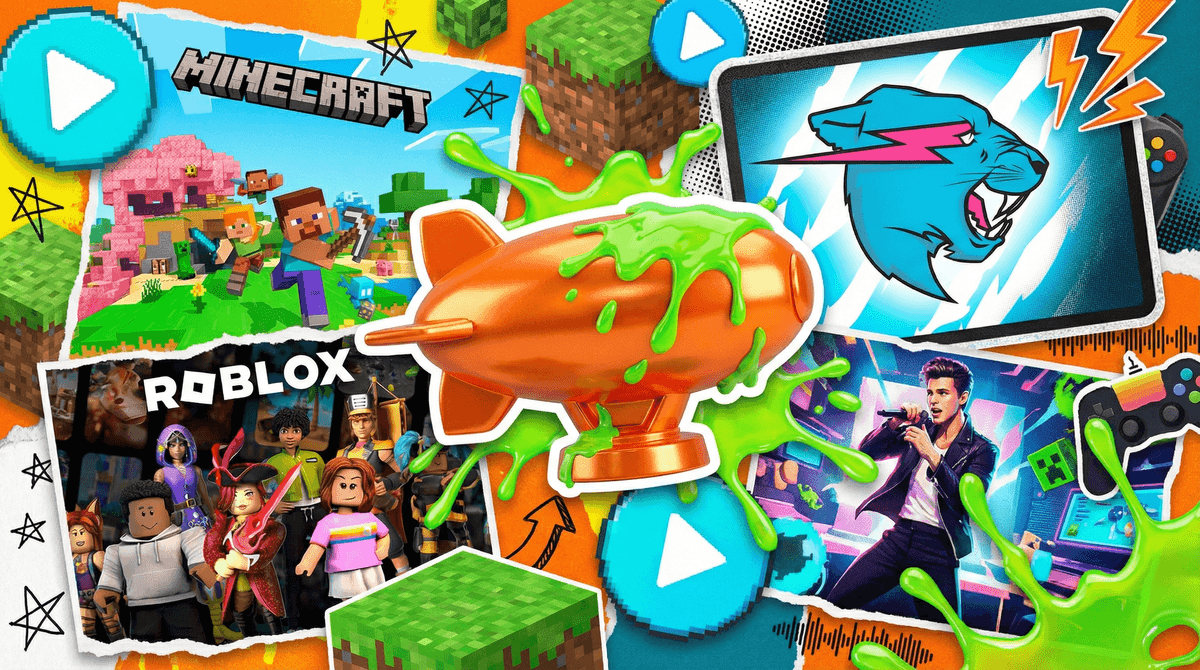
The Kids' Choice Awards are Nickelodeon's annual orange-blimp-trophy extravaganza where kids vote for their favorite stars across movies, TV, music, sports, and—increasingly—social media. It's been around since 1988, but the 2026 version looks wildly different from the show that once crowned Will Smith and Amanda Bynes.
Today's KCAs are dominated by YouTube creators, TikTok stars, and influencers your kids know intimately but you've maybe never heard of. Think MrBeast, Charli D'Amelio, and a rotating cast of gaming creators who've built empires on Roblox and Minecraft content.
The awards themselves? Mostly harmless fun with slime cannons and celebrity appearances. But the real question for parents isn't about the show—it's about the parasocial relationships kids are building with these winners and what kind of content they're consuming to feel connected to them.
Here's the thing: when your kid votes for their favorite creator, they're not just picking someone they think is talented. They're voting for someone they feel like they know. Someone who talks directly to them through a screen for hours each week. Someone whose merch they want, whose inside jokes they share at lunch, whose drama they follow like a soap opera.
The KCAs tap into something powerful—kids' desire to have their taste validated and to participate in their generation's culture. When their pick wins, it feels personal. When their pick gets snubbed, they're genuinely upset.
This isn't new (Millennials had the same feelings about TRL), but the intensity and access are different. These creators aren't distant celebrities—they're posting Instagram stories from their bedrooms, responding to comments, creating the illusion of friendship.
The 2025 nominees span a wild spectrum:
Traditional celebrities like Zendaya, Timothée Chalamet, and the cast of whatever Marvel movie just dropped—these are the "oh I've actually heard of them" category for parents.
Music artists like Olivia Rodrigo, Taylor Swift, and whoever's dominating TikTok sound trends this month.
YouTube/TikTok creators like MrBeast (100+ million subscribers), Preston Playz (gaming content), and various members of the hype house/content house industrial complex.
Athletes who've mastered social media—think LeBron, Messi, and younger stars who are as famous for their TikToks as their stats.
The problem? These categories blur together now. A "favorite movie actor" might be more famous for their thirst traps on Instagram than their actual acting. A "favorite music artist" might be a TikTok creator who had one viral song.
Let's be clear: watching the Kids' Choice Awards isn't going to harm your kid. But the follow-up behavior deserves your attention.
The content pipeline is real. Your 8-year-old votes for a gaming YouTuber because they watch their Minecraft videos. That creator also posts to a second channel with edgier content. And a third with vlogs featuring adult situations. And a TikTok with thirst traps. And a Discord server you definitely don't want your kid in. This pattern is incredibly common .
.
Parasocial relationships hit different with kids. Adults can (usually) distinguish between "I enjoy this person's content" and "this person is my friend." Kids—especially under 12—struggle with this. When a creator asks them to "smash that subscribe button because we're FAMILY," kids believe it. When that creator gets in a scandal or ghosted by another creator, kids feel betrayed.
The merch/money pipeline is designed to extract. KCA winners know their audience is kids with access to parents' credit cards. The awards boost their visibility right when they're launching new merch drops, book deals, or energy drink brands. Your kid's vote literally increases the marketing power aimed back at them.
Not all content is created equal. Some KCA nominees make genuinely good content—educational, creative, age-appropriate. Others are churning out algorithmic slop designed to maximize watch time and ad revenue. The difference matters.
Ages 5-8: At this age, kids probably aren't voting themselves, but they're absorbing the cultural moment. If they want to watch the show, watch with them. Use it as a conversation starter: "Who's that person? What do they do? Have you seen their stuff?" This is your chance to learn what's seeping into their world before it becomes their entire world.
Ages 9-12: This is peak KCA investment age. They're voting, they care deeply, and they're starting to follow these creators independently. This is when you need to actually know who won what and what content they make. Set up a rule: "If you want to follow a KCA winner, we watch/review their content together first." Not as punishment—as genuine interest in what they like.
Ages 13+: Teens are old enough to understand parasocial relationships and marketing, but that doesn't mean they're immune. The conversation shifts to media literacy: "What do you think this creator gets out of winning? How does this award change their business? Do you think their content will change now that they're more famous?"
Here's what actually works:
Do a post-KCA audit. Sit down with your kid and look at who won in the categories they care about. Pull up that creator's content together. Watch a few videos. Check their other platforms. If it's good stuff—great! If it's concerning—talk about why and set boundaries.
Use YouTube parental controls. If your kid is watching YouTube creators, you should know about YouTube's parental controls and how to actually use them. Supervised accounts, watch history review, restricted mode—these tools exist for a reason.
Follow the money. When your kid asks for merch from a KCA winner, use it as a teaching moment. "How much does that cost? How much do you think the creator makes from each sale? Is this something you'll still care about in six months?" Not to shame them—to build critical thinking about influencer marketing.
Distinguish between content types. Help your kid understand that not all screen time is equal. Watching Bluey is different from watching a YouTuber scream over Roblox gameplay is different from watching that same YouTuber's drama-filled vlog. Age-appropriate doesn't just mean "no swearing"—it means developmentally appropriate parasocial exposure.
Check in on the Discord/community spaces. Many KCA-winning creators have Discord servers, Patreon communities, or fan groups. These spaces are often where the real risk lives—not in the polished YouTube video, but in the unmoderated fan chat where your 10-year-old is talking to strangers.
The Kids' Choice Awards themselves? Harmless. A fun show with slime and celebrities and whatever chaos Nickelodeon has planned.
The ecosystem around KCA winners? That requires your attention.
Your kid voting for their favorite creator isn't the problem. The problem is when that vote leads to unsupervised content consumption, parasocial relationships that feel real but aren't, and marketing that's specifically designed to bypass parental oversight.
The good news: you don't have to ban anything or become the fun police. You just have to stay curious about who your kids are voting for and why. Watch some content together. Ask questions without judgment. Help them build the media literacy skills to distinguish between a creator who respects their audience and one who's just farming engagement.
And maybe, just maybe, you'll discover that some of these KCA winners are actually making cool stuff worth watching together.
This week: Ask your kid who they voted for (or would vote for) in the KCAs. Pick one winner and watch their content together—not as a test, but as genuine curiosity about what your kid finds entertaining.
This month: Review your kid's YouTube watch history together. Look for patterns. Are they watching one creator's content exclusively? Are they watching age-appropriate content from that creator, or has the algorithm pushed them toward edgier stuff? Set up better parental controls if needed.
Ongoing: Make "who are you watching these days?" a regular conversation, not an interrogation. The goal is staying connected to your kid's digital world, not controlling every click. When you know who the KCA winners are and what they create, you can have real conversations about media literacy, parasocial relationships, and what's actually worth their time and attention.