

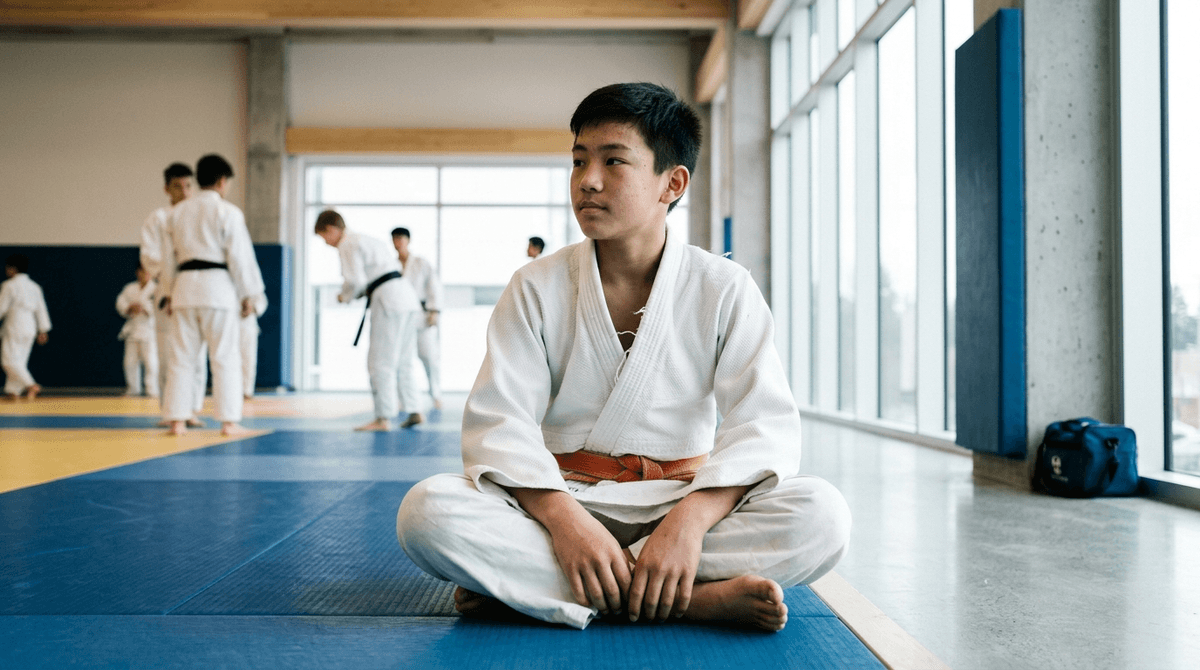

Putting kids into a high-discipline sport like judo cuts their self-reported school stress nearly in half and dramatically reduces stress-related stomach aches and focus issues.
Children who practice judo at least three times a week experience significantly lower school-related anxiety, feel safer in the hallway, and reach for physical movement rather than social media when pressure builds.
When middle schoolers face academic and social tension, their default pressure valve is often a screen. Almost half of non-athletic preteens turn directly to social media or video games to numb out stress—a habit strongly linked to physical symptoms like chronic stomach pain and brain fog.
Swapping passive screen time for structured physical discipline gives kids an active outlet for nervous energy. The physical confidence gained on the mat alters how preteens process anxiety before it turns into physical pain or emotional shutdown.
Researchers evaluated 553 middle school students aged 10 to 15 to track how structured combat sports alter a child's stress response compared to peers not involved in regular sports.
Structured physical practice shifts how kids process pressure across every measure of daily school life.
- School stress drops sharply: Nearly 44% of judo students reported "never" or "rarely" feeling stressed by school, compared to roughly 25% of non-athletic peers.
- Physical symptoms recede: Non-active kids reported far higher rates of stress-induced stomach pain (about 40% vs. 24%) and concentration breakdowns (about 54% vs. 33%).
- Hallway confidence jumps: Judo practitioners were nearly twice as likely to feel "always" safe at school (45% vs. 27%).
- Coping mechanisms invert: Active kids relied on exercise as their main stress reliever (43%), while inactive kids turned directly to social media (46%) and video games (43%).
Physical competence builds psychological armor. The sense of physical agency that comes from martial arts translates directly into hallway confidence, making the school environment itself feel less threatening.
Crucially, martial arts training teaches kids to regulate emotion rather than wallow in it. Judo students showed lower levels of passive emotion-focused coping, meaning they are less likely to spiral into distress and more likely to take constructive physical action to handle tension.
This study shows a strong link, not definitive proof of cause and effect. Naturally resilient, less-anxious kids may simply be the ones who stick with rigorous three-day-a-week martial arts programs in the first place.
The data relies on self-reported surveys from preteens, and researchers did not compare judo directly against team sports like soccer or basketball. It remains unclear whether martial arts offer unique psychological benefits or if any high-intensity, structured physical activity produces the same defense against stress.
- If your middle schooler frequently complains of unexplained stomach aches or brain fog before school... ...enroll them in a structured physical sport like judo three times a week rather than relying on rest or passive screen time.
- If your child instinctively reaches for TikTok or gaming after a frustrating day at school... ...replace that passive digital decompression with a high-discipline physical outlet that forces intense physical focus.
- If your child struggles with feeling unsafe or timid in crowded school environments... ...try martial arts to build the physical self-efficacy that directly correlates with feeling secure around peers.
You do not need to turn your child into a competitive martial artist, but getting them into a rigorous, structured physical routine breaks the cycle of screen-based coping and somatic pain.
Szczepanik K, Kurowski P, Siekańska M (2026). Comparison of stress sources and coping strategies in children practicing judo and their non-training peers. BMC sports science, medicine & rehabilitation. doi:10.1186/s13102-026-01802-w — pubmed.ncbi.nlm.nih.gov