

TL;DR: Yes, a 10-year-old can absolutely play Kerbal Space Program, but they probably won't reach the moon (the "Mun") without a lot of trial, error, and a few YouTube tutorials. It is the gold standard for "sneaky physics"—a game so educational that NASA and SpaceX engineers actually play it for fun. If your kid likes Minecraft or building complex LEGO sets, they have the right DNA for this. Just make sure you buy the first game, not the sequel.
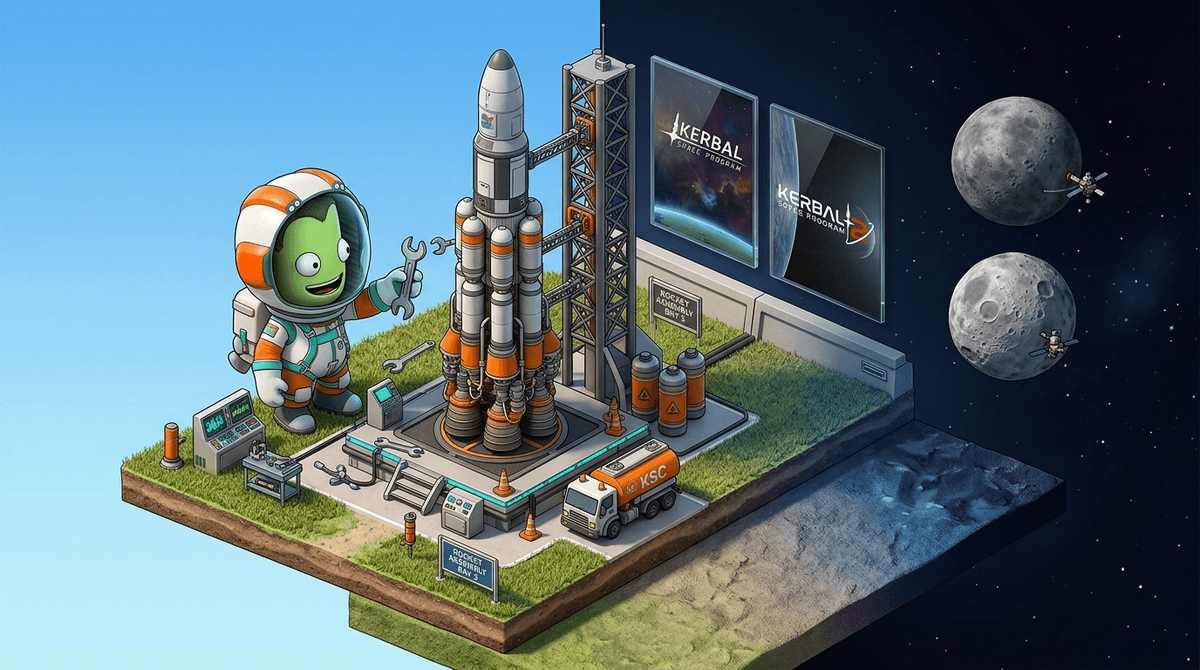
At its core, Kerbal Space Program (often called KSP) is a flight simulation game where you manage a space program for a race of small green aliens called Kerbals. You build rockets, planes, and rovers using a massive library of parts—engines, fuel tanks, landing gear, and even tiny science experiments.
Once you build your craft, you have to fly it. This is where the "literal rocket science" comes in. The game uses a surprisingly accurate physics engine. If your rocket is too top-heavy, it will flip. If you don't have enough fuel, you’ll get stuck in orbit (or fall back to the planet in a ball of fire). If you don't understand how gravity works, you'll never leave the atmosphere.
It’s a sandbox game, meaning there’s no "right" way to play. Some kids just want to build the biggest explosion possible, while others will spend three days meticulously planning a mission to a distant planet.
Check out our full media review of Kerbal Space Program
For a 10-year-old, the appeal usually falls into two categories: Creative Engineering and Spectacular Failure.
KSP turns "learning from your mistakes" into a gameplay mechanic. When a rocket fails, it doesn't just show a "Game Over" screen; it usually disintegrates in a hilarious, chaotic sequence of explosions. Because the Kerbals themselves are goofy and resilient, the stakes feel low even when the physics are high-pressure.
There is also a massive sense of "clout" associated with KSP. In the gaming world, being "good at Kerbal" is a badge of honor. It’s not like Roblox where you might just be clicking around; if you land on the Mun in KSP, you’ve actually accomplished something difficult.
The "Is it too hard?" question is the one I get most often from parents.
The honest answer: The interface is complex, but the concepts are intuitive.
A 10-year-old might struggle with the math if they try to calculate "Delta-V" (change in velocity) on a piece of paper, but they will quickly learn through play that "more weight needs more engines."
However, KSP has what we call a "Learning Cliff." The first few hours can be frustrating. They will struggle to get into orbit. They will accidentally strand poor Jebediah Kerman (the main pilot) in deep space with no way home.
Parenting Pro-Tip: This is a "YouTube Game." Most players—adults included—learned how to play by watching tutorials. If your kid is stuck, point them toward Scott Manley. He’s a legend in the KSP community and explains the science in a way that’s accessible but not "dumbed down."
Learn more about how YouTube tutorials help kids master complex games
If you go to buy this, you’ll see Kerbal Space Program 2. My advice? Skip the sequel for now.
KSP 2 had a very messy launch. It was buggy, missing many of the features that made the first game great, and the studio behind it has faced significant turmoil. The original Kerbal Space Program is a finished, polished, and cheaper masterpiece. It also has a decade’s worth of "mods" (user-created additions) that can make the game easier, prettier, or even more complex once your kid becomes a pro.
Complexity vs. Content
Content-wise, KSP is a 10/10 for safety. There’s no gore, no "chat" with strangers (it’s a single-player game), and no predatory microtransactions. The only "violence" is the aforementioned explosions, which are very cartoonish.
The "age rating" is really about the cognitive load.
- Ages 7-9: Might need a parent to help with the initial building and explaining what an "orbit" actually is. They may get bored if they can't make progress.
- Ages 10-12: The sweet spot. They are old enough to follow a tutorial and feel the immense satisfaction of solving a problem.
- Ages 13+: They’ll likely be teaching you how orbital resonance works within a week.
Digital Wellness Check
KSP is a "high-flow" game. Because it requires deep focus and problem-solving, kids can easily lose track of time. It’s not "brain rot" like infinite scrolling on TikTok, but it is mentally taxing. You might notice your kid is extra tired or "brained out" after a long session.

If you want to sound like the "cool, informed parent" at dinner, here are three things your kid is actually learning while they play:
- Orbital Mechanics: They’ll learn that to go "up," you actually have to go "sideways" very, very fast.
- The Tsiolkovsky Rocket Equation: They won't know the name, but they’ll understand the "tyranny of the rocket equation"—the fact that adding more fuel makes the rocket heavier, which requires more fuel, and so on.
- Center of Mass vs. Center of Thrust: Essential for anyone interested in engineering or architecture.
If your 10-year-old tries KSP and finds it too daunting, or if they’ve already mastered it and want more, consider these:
- [SimpleRockets 2 / Juno: New Origins](https://screenwiseapp.com/media/juno-new-origins-boardgame: Very similar to KSP but often runs better on mobile devices and tablets.
- Universe Sandbox: Less about building rockets and more about playing "God" with the solar system. You can see what happens if you replace the Sun with a black hole.
- NASA Kids' Club: A great browser-based resource for younger kids who have the "space bug" but aren't ready for flight sims.
- Mars Horizon: A management game where you run the space agency rather than flying the rockets yourself. It's much more "turn-based" and less reflex-heavy.
Kerbal Space Program is one of the best investments you can make for a kid interested in STEM. Is it hard? Yes. Is it too hard for a 10-year-old? No—not if they have a bit of patience and access to a few tutorials.
It’s a game that respects a child’s intelligence. It doesn't hold their hand, and it doesn't treat them like a consumer to be mined for data or Robux. It treats them like a rocket scientist.
If they come to you complaining that their "staging is wrong" or they "don't have enough Delta-V for a Munar return," just know that their brain is working harder than it ever has during a math worksheet.
- Check the specs: KSP runs on most modern PCs and Macs, but it can be "heavy" on the processor if the rockets get too big.
- Watch a video together: Sit down and watch a Scott Manley "Beginner's Guide" to see if the interface looks like something your kid would enjoy or find too overwhelming.
- Encourage the "Rescue Mission": If they get a Kerbal stuck on the moon, don't let them just delete the save file. The most fun part of KSP is building a second rocket to go save the first one!
Check out our guide on the best STEM games for middle schoolers