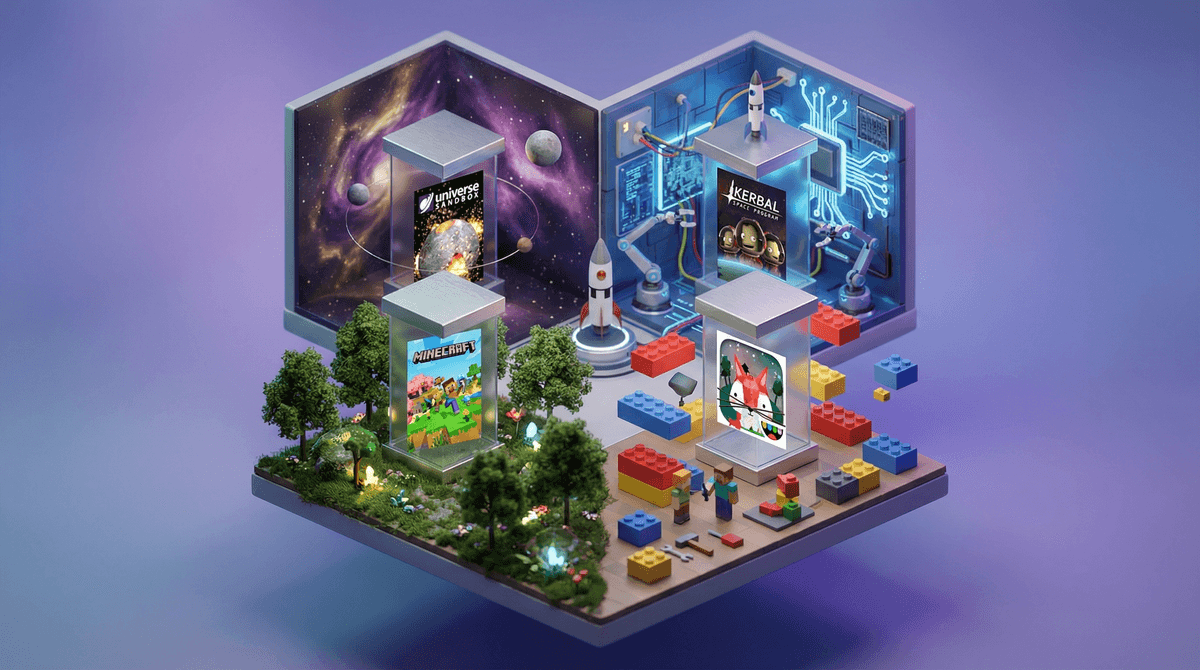
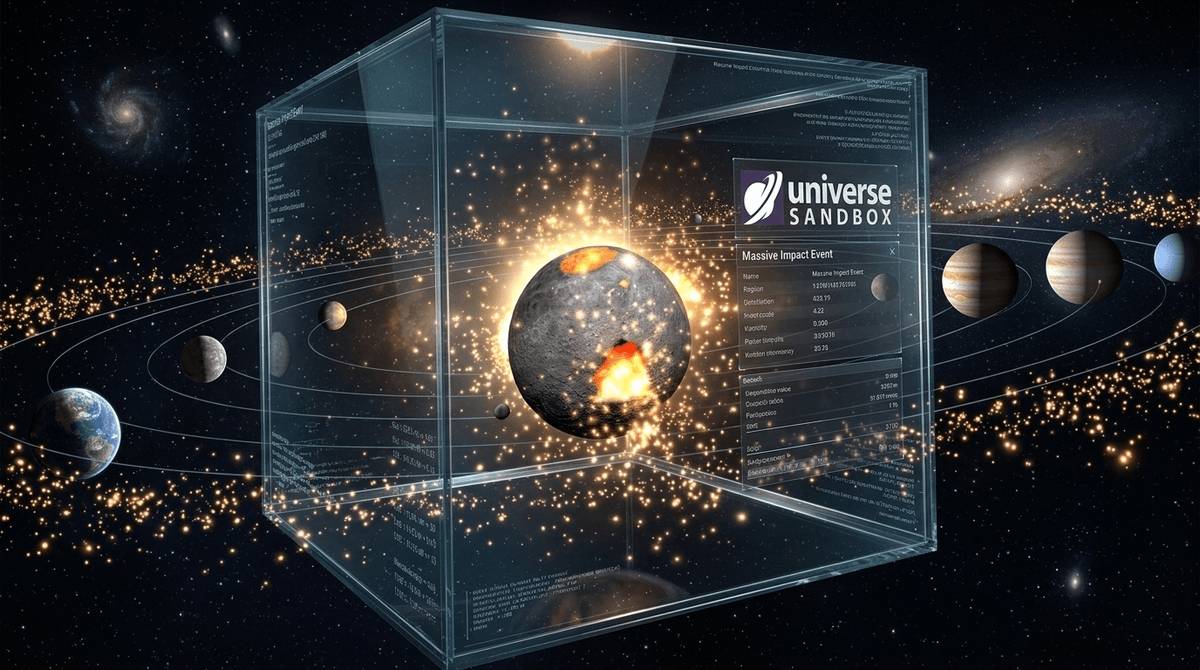
Most "educational" games feel like homework with a thin layer of glitter. Universe Sandbox is the opposite. It doesn't hide the math; it just makes the math look like a supernova. It is less of a game and more of a laboratory where the primary goal is answering the question, "What happens if I mess with this?"
The ultimate "what if" machine
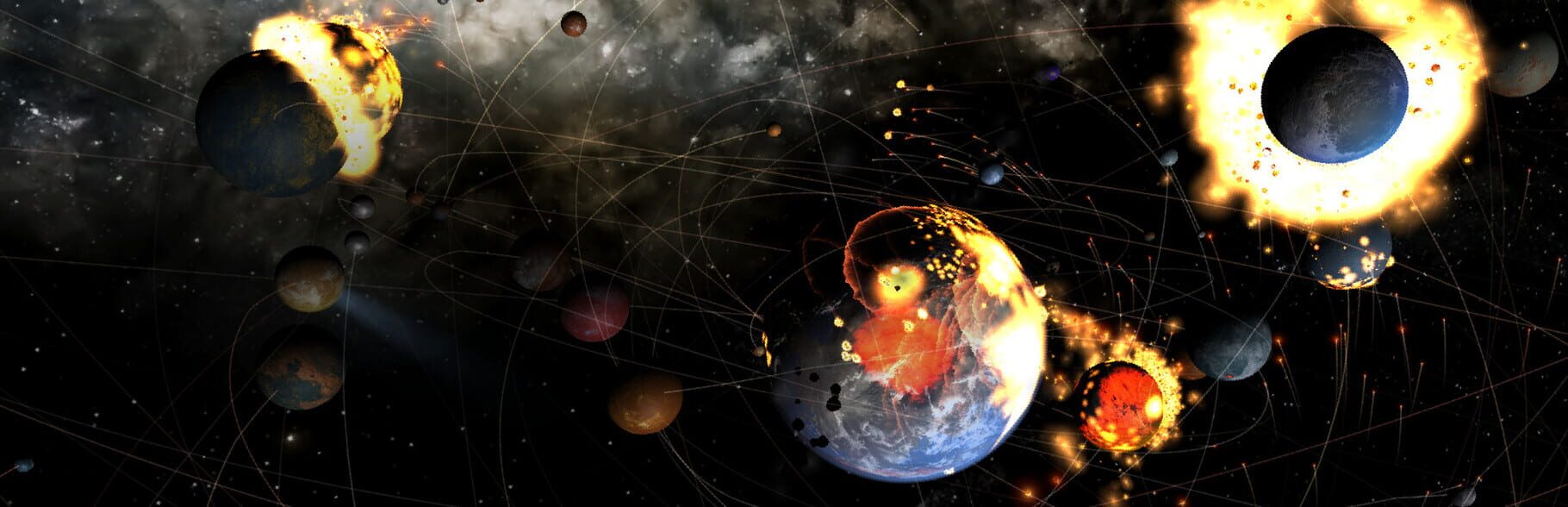
The brilliance here is that everything is interconnected. If you decide to add a second sun to our solar system, you don't just see a pretty light. You watch as the orbits of every planet warp, the Earth’s temperature skyrockets, and the oceans literally boil away. It’s a brutal, beautiful lesson in how delicate the balance of a solar system really is.
This is the gold standard for space exploration games that teach real physics. It moves past the "look at the pretty stars" phase of astronomy and gets into the "why does gravity work this way" phase. For a kid who is constantly asking why the moon doesn't just fall down, this provides a much better answer than a textbook ever could.
The interface hurdle
Be prepared for a learning curve that looks like a cliff. The UI is dense. It’s a PC-first experience designed by Giant Army that prioritizes data over hand-holding. There are sliders for everything: mass, radius, velocity, composition, even the iron-to-silicate ratio of a planet's core.
If your kid is used to the intuitive, "swipe to win" style of mobile games, they might bounce off this in the first ten minutes. It rewards the tinkerer. If they are the type to spend hours in Minecraft's creative mode just seeing how much TNT it takes to crash the server, they’ll have the patience for this. If not, you’ll likely find yourself acting as the "co-pilot," helping them navigate the menus until they find the button that lets them launch a rogue planet at Saturn.
Beyond the "chocolate-covered broccoli"
We talk a lot about sorting real learning from 'edutainment' fluff, and Universe Sandbox is the poster child for the former. It doesn't give you points. It doesn't have levels. It trusts that the player is curious enough to set their own goals.
For parents, the best way to use this isn't to treat it like a lesson. Just let them break things. When they inevitably blow up the sun, that’s the moment to talk about what a supernova actually is. It turns a potential "brain rot" session into a legitimate physics game that actually works.
How it compares
If your kid has already exhausted the more "gamey" space titles, here is where this fits:
- Kerbal Space Program: KSP is about the engineering of rockets. Universe Sandbox is about the physics of the universe those rockets live in.
- Space Engine: Space Engine is a beautiful planetarium for exploration. Universe Sandbox is a toolbox for creation and destruction.
It’s a specific niche, but for a kid who wants to play god with the laws of gravity, there is nothing else that comes close.