

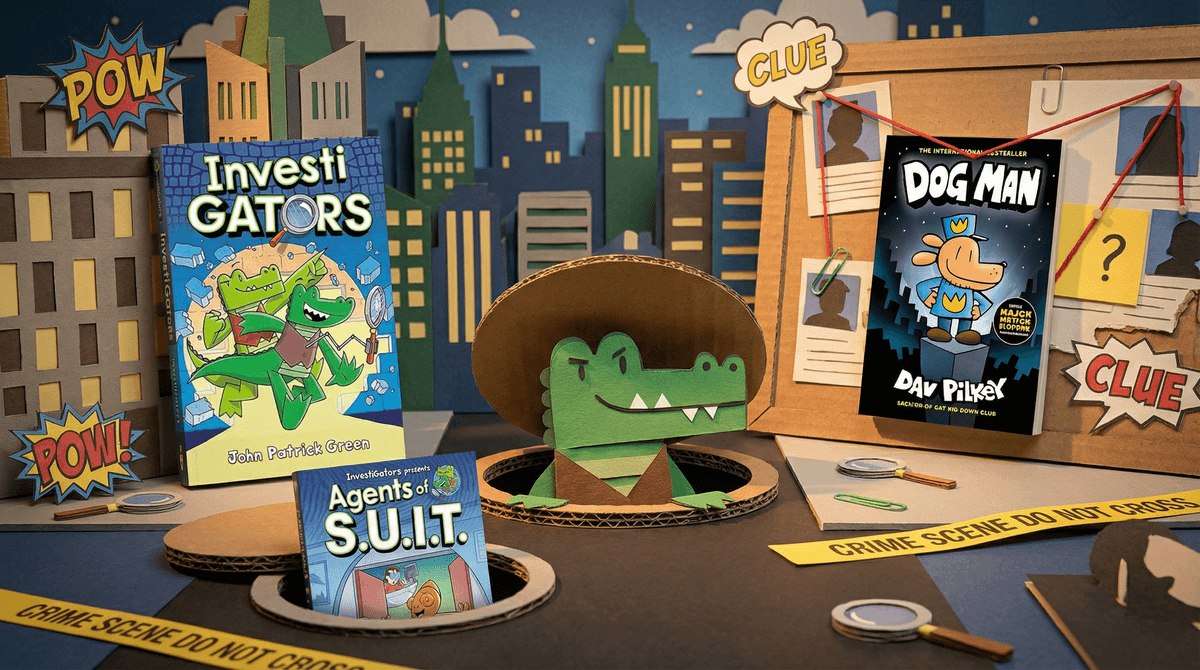
InvestiGators is a graphic novel series by John Patrick Green about two alligator detectives—Mango and Brash—who work for the Special Undercover Investigation Teams (S.U.I.T.) agency. Yes, they literally live in the sewers. Yes, they fight crime. And yes, kids are absolutely obsessed with them.
The series launched in 2020 and has quickly become one of those books that kids actually ask for by name at the bookstore—which, if you're a parent of a reluctant reader, is basically winning the lottery. There are currently nine books in the main series, plus spin-offs, and they show no signs of slowing down.
These aren't your typical chapter books. They're full-color graphic novels with comic-style panels, tons of visual humor, puns that will make you groan (in the best way), and surprisingly clever storytelling that works on multiple levels.
The humor is genuinely funny. Unlike some kids' content that relies on potty jokes and randomness (looking at you, Captain Underpants), InvestiGators balances silly with smart. There are visual gags, wordplay, and running jokes that reward paying attention. The puns alone—"investi-gators," "see you later, alligator" references—are chef's kiss for the elementary school crowd.
It's accessible for reluctant readers. This is the big one. If you've got a kid who groans at the sight of a traditional chapter book, graphic novels like InvestiGators can be a game-changer. The combination of pictures and text makes the story easier to follow, the pages feel like they turn faster, and there's a genuine sense of accomplishment when they finish a 200-page book in one sitting.
The characters are lovable opposites. Mango is the careful, by-the-book detective. Brash is impulsive and action-oriented. Kids love the buddy-cop dynamic, and it mirrors a lot of real friendship dynamics—learning to work with people who think differently than you do.
There's actual plot. These aren't just random adventures strung together. Each book has a genuine mystery with clues, red herrings, and satisfying conclusions. Kids who love Dog Man or Diary of a Wimpy Kid will find similar appeal here, but with more structured storytelling.
Ages 6-8: Perfect entry point for early readers or kids transitioning from picture books. The visual storytelling means they can follow along even if they're not reading every word yet. Great for read-alouds too—the humor works for both kids and adults.
Ages 8-10: The sweet spot. This is when most kids are reading them independently and catching all the jokes. They'll likely blow through the entire series in weeks and then immediately ask what's next.
Ages 10-12: Still enjoyable, especially for kids who love graphic novels or are reluctant readers. Some kids this age might find them a bit young, but many still appreciate the humor and use them as comfort reads or palate cleansers between heavier books.
Content-wise: These are squeaky clean. No language concerns, no inappropriate content, no violence beyond cartoon-style action sequences. The worst thing that happens is characters getting bonked on the head or covered in slime. It's genuinely one of those rare series where you can hand it to your kid without pre-screening.
This is a gateway series. If your kid gets hooked on InvestiGators, they're likely ready for other graphic novel series. Consider Hilo, The Bad Guys, or Narwhal and Jelly for similar vibes. For kids ready to level up, Amulet or Smile by Raina Telgemeier are great next steps.
Graphic novels ARE real reading. Let's address the elephant (or alligator) in the room. Some parents worry that graphic novels don't "count" as real reading or that they're somehow less valuable than traditional chapter books. Research actually shows that graphic novels help develop critical literacy skills—visual literacy, inference, sequencing, and comprehension. Kids are reading words AND interpreting images, which is cognitively complex work. Learn more about why graphic novels matter for literacy development .
.
They're surprisingly affordable entertainment. Each book retails for around $12-15, and most libraries have them (though there's usually a waitlist because they're so popular). Compared to video games or streaming subscriptions, this is a pretty economical way to keep kids entertained. Plus, kids actually reread them—the visual humor reveals new jokes on second and third readings.
There's a whole universe. Beyond the main InvestiGators series, there are spin-offs like InvestiGators: Agents of S.U.I.T. featuring other animal agents. If your kid gets invested (pun intended), there's plenty of content to explore.
InvestiGators hits that sweet spot of being genuinely entertaining for kids while giving parents absolutely nothing to worry about. It's funny without being obnoxious, engaging without being overstimulating, and it actually gets kids reading—which in an age of YouTube and Roblox competing for attention, feels like a small miracle.
If you've got a reluctant reader, a graphic novel enthusiast, or just a kid who loves silly animal characters solving crimes, InvestiGators is worth every penny. Start with book one and watch them disappear into the sewer (in the best possible way).
Start here: Pick up "InvestiGators" (Book 1) from your library or bookstore. Let your kid read it independently or make it a family read-aloud.
Create a reading routine: If your kid loves it, set aside 20-30 minutes of screen-free reading time where everyone in the family reads. Model that reading is valuable by doing it yourself.
Connect with other readers: Ask your kid's teacher or librarian for recommendations based on what they loved about InvestiGators. Building a reading identity is powerful for kids.
Use Screenwise: Not sure what other books, shows, or games might work for your kid? Take the Screenwise survey to get personalized recommendations based on your family's values and your child's interests.