

Here's the thing about scary content and little kids: there's no universal threshold. What sends one 5-year-old running from the room might have another one asking to rewatch it immediately. And honestly? That's completely normal.
The real question isn't "is this objectively too scary?" but rather "is this too scary for my kid, right now?" Because developmental readiness, temperament, and even what happened at school that day all play into how a child processes frightening content.
But let's get practical. There are some patterns worth knowing about, and some red flags that apply to most kids in certain age ranges.
Before we talk about limits, it's worth understanding why kids actively seek out things that frighten them. It's not just about being contrary (though, let's be real, sometimes it is).
Scary content lets kids practice big emotions in a safe space. When they watch a monster on screen or read about a spooky house, they're essentially doing emotional rehearsal. They're learning "I can feel scared AND be okay." That's actually a valuable skill.
It's also a status thing. By age 7 or 8, being able to handle "scary" content becomes social currency. Kids compare notes about what they've watched, and there's definitely some one-upmanship happening. ("You think that's scary? I watched...")
And sometimes, they're genuinely curious about fear itself. What does it feel like? How do you handle it? Can you make it go away? Developmentally appropriate scary content gives them a laboratory for these questions.
The key phrase there? Developmentally appropriate.
Ages 2-4: Fantasy vs. Reality Is Blurry
At this age, kids can't reliably distinguish between real and pretend. A witch on TV is just as real as the neighbor's cat. This means:
- What seems mild to you can be genuinely terrifying. The scene in Frozen where Elsa accidentally strikes Anna? For some toddlers, that's nightmare fuel.
- Avoid anything with jump scares, monsters, or characters in peril. Even if it "ends well," the scary part sticks.
- Watch their play afterward. If they're acting out the scary scene repeatedly, they're trying to process it. That's not necessarily bad, but it means they're working hard to make sense of what they saw.
Shows like Bluey and Daniel Tiger's Neighborhood are designed for this age specifically because they avoid sustained tension or frightening imagery.
Ages 5-7: Concrete Fears Dominate
Kids this age are starting to understand fantasy vs. reality, but they're still very concrete thinkers. They fear things that could actually happen: getting lost, bad guys, natural disasters, animals attacking.
- Fantasy monsters are often less scary than realistic danger. A silly cartoon ghost? Fine. A scene where a child gets separated from their parents in a crowd? Potentially very upsetting.
- They take things literally. If a character says "I'm going to eat you up!" as a joke, a 6-year-old might not get that it's a joke.
- The visual matters more than the plot. A "scary looking" character can be more frightening than actual narrative tension.
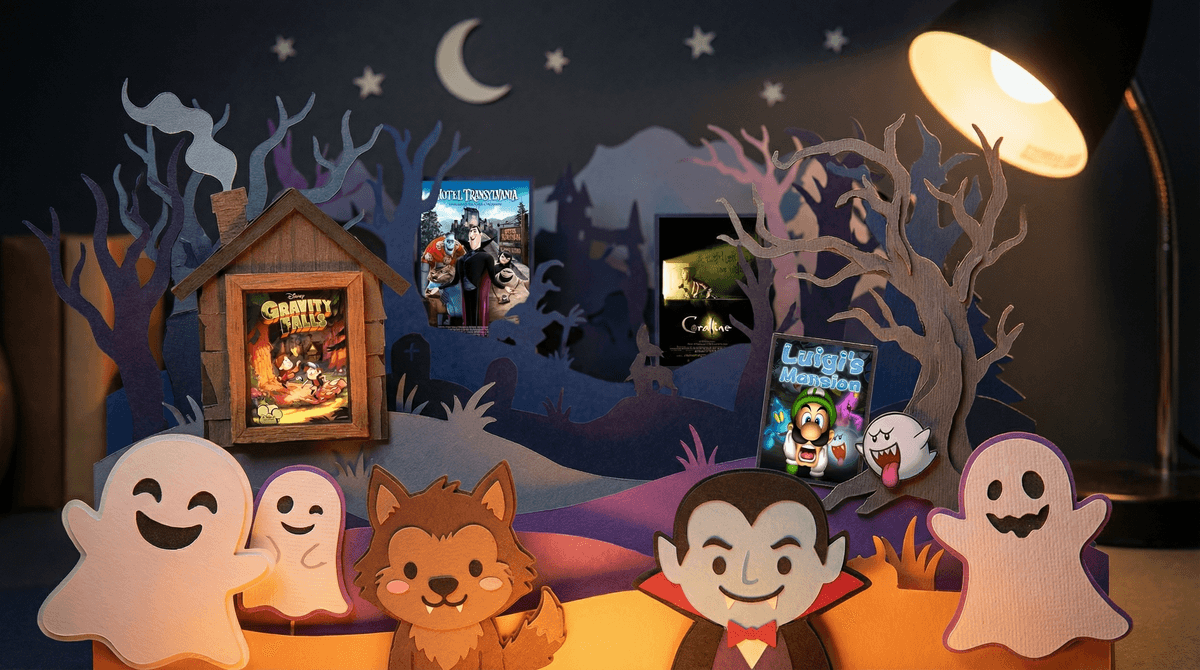
This is the age where kids might handle something like Hotel Transylvania (silly monsters) but struggle with The Lion King (realistic animal violence, parental death).
Ages 8-10: Abstract Thinking Emerges
Now we're getting into the age where kids can handle more sustained tension and begin to enjoy it. They understand story structure enough to know that scary moments will likely resolve. But:
- They're newly aware of real-world dangers like violence, death, and loss. Content that deals with these themes can hit harder than it would have at age 6.
- Peer influence is strong. They might claim they can handle something because their friends watched it, even if they're not actually ready.
- Individual differences are HUGE. Some 8-year-olds are ready for Coraline. Others will have nightmares for weeks.
This is the age where you really need to know your kid. The "recommended age" on content ratings becomes more of a starting point than a rule.
Ages 11+: Horror as Genre
By middle school, many kids are genuinely interested in horror as a genre. They want the adrenaline rush, they're fascinated by special effects, and they're old enough to appreciate the craft of building suspense.
But even here, content matters. There's a big difference between Goosebumps and graphic horror films. And just because a kid can watch something doesn't mean they should, especially if it includes:
- Sexual violence
- Extreme gore
- Realistic depictions of trauma
Even horror-loving teens can be affected by content that crosses certain lines.
Regardless of age, here are signs that scary content has crossed the line for your kid:
Sleep disruption. One rough night after a scary movie? Normal. Multiple nights of nightmares, bedtime resistance, or needing you to stay in the room? That's a sign their nervous system is struggling to regulate.
Behavioral changes. Increased clinginess, regression (like suddenly being afraid of the dark again), or new anxious behaviors.
Intrusive thoughts. If they can't stop thinking about the scary content, or if it's interfering with daily activities, that's too much.
Physical symptoms. Stomachaches, headaches, or other stress responses when the content is mentioned or similar situations arise.
They tell you it was too much. Listen to them. Kids are often surprisingly good at self-assessment if we create space for honesty.
Co-View When Possible
Especially for younger kids, watching together lets you:
- Gauge their reactions in real-time
- Pause and discuss scary moments
- Provide reassurance immediately
- Model healthy emotional regulation ("Whoa, that was intense! I felt nervous too.")
Preview Everything
Use resources like Common Sense Media or Get content advice about specific content before your kid watches. Read detailed reviews, not just age ratings. Ratings can't account for your individual child's sensitivities.
Create an Exit Strategy
Before watching something potentially scary, establish that it's okay to:
- Look away or cover their eyes
- Ask you to fast-forward
- Stop watching entirely
Make it clear that stopping isn't "failing" or "being a baby." It's being smart about their own limits.
Process Afterward
Talk about what they watched. Ask:
- What parts were scary?
- What made them feel better?
- Do they have questions about what happened?
- How do they feel now?
This helps them integrate the experience rather than just suppressing it.
Use Their Interests
If your kid is drawn to scary content, channel it productively:
- Age-appropriate scary books (like Scary Stories to Tell in the Dark for older kids)
- "Scary" video games that are actually more puzzle-based (like Luigi's Mansion)
- Halloween-themed content that's spooky but not traumatic
This is where it gets tricky. Your 10-year-old might be ready for something your 7-year-old definitely isn't. A few strategies:
Different content at different times. Yes, it's more work. Yes, it's worth it.
Explain the "why" to the older kid. "Your brother's brain is still learning how to handle scary things. When you were his age, you weren't ready for this either."
Create "big kid privileges" that aren't just about scary content. If the older sibling feels like they have other special things, the scary movie becomes less of a status symbol.
Don't let the younger kid's presence be the only limit. Even if the 7-year-old wasn't home, would the content actually be appropriate for your 10-year-old? Make sure you're not using the younger sibling as an excuse to avoid a harder conversation.
There's no formula for "too scary." A child who's terrified of The Wizard of Oz might be fine with Gravity Falls. A kid who loves creepy books might find scary movies overwhelming because the visual element is too much.
Your job isn't to eliminate all scary content. It's to help your kid build their capacity to handle difficult emotions, while also protecting them from genuine harm.
Pay attention to their reactions. Trust your instincts. And when in doubt, wait. There's no award for watching the scary movie at age 8 instead of age 10. But there can be real costs to pushing too far, too fast.
The content will still be there when they're ready.
- Check in regularly about what they're watching and how they're feeling about it
- Build a vocabulary for different kinds of fear (surprised-scared vs. worried-scared vs. excited-scared)
- Explore alternatives to scary content that still provide excitement and engagement
- Remember that sensitivity isn't weakness. Some kids are just more emotionally attuned, and that's actually a strength—they just need content that matches their processing style.
Need help figuring out if a specific movie, show, or game is right for your kid? See if content is right for your kid and we can walk through it together.