

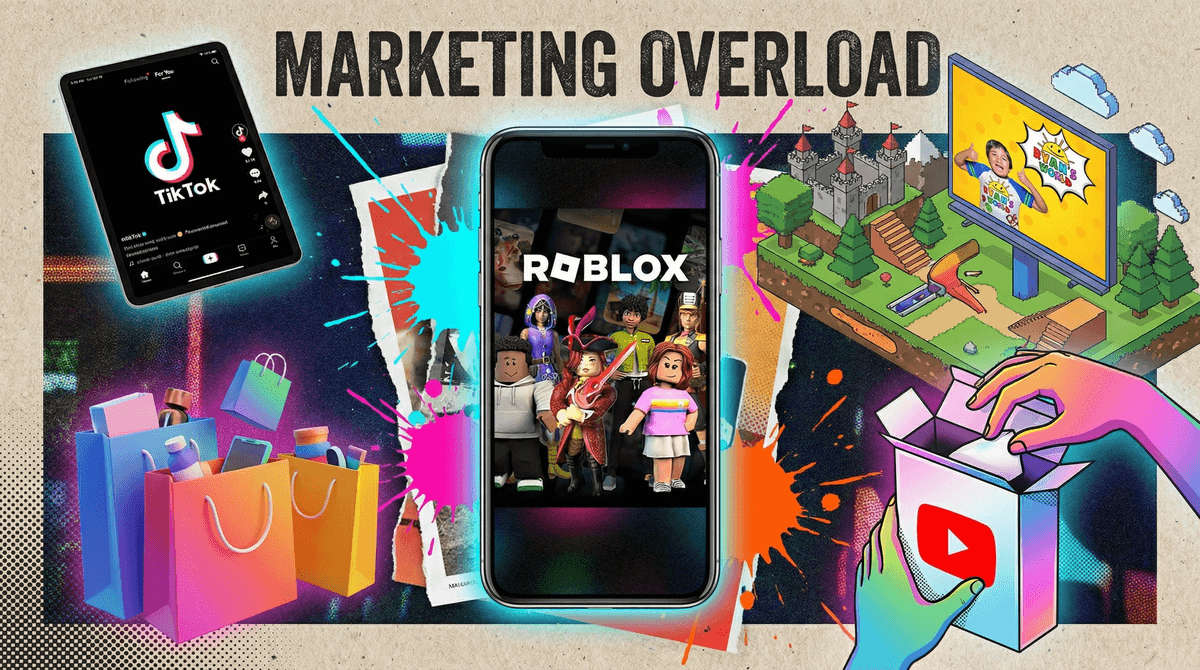
Remember when brand awareness meant Saturday morning commercials and cereal box characters? Yeah, those days are gone. Today's kids are swimming in a 24/7 ocean of brand messaging that's so sophisticated, so integrated into their entertainment and social lives, that they often don't even recognize it as advertising.
Your eight-year-old isn't just watching YouTube—they're absorbing a masterclass in consumer culture through unboxing videos, haul content, and influencer partnerships. Your tween isn't just playing Roblox—they're navigating a virtual economy where brand collaborations with Gucci and Nike are normalized. And that teenager? They're being courted by brands through TikTok creators who feel more like friends than salespeople.
Here's the thing: kids today are exposed to an estimated 5,000+ brand messages per day, compared to about 500 in the 1970s. And unlike traditional advertising, most of these messages don't look like ads at all.
Let's break down the main channels where kids are absorbing brand messaging:
Influencer Marketing & Sponsored Content This is the big one. Kids watch creators they trust—people who feel like cool older siblings or friends—casually mention products, wear certain brands, or create content "in partnership with" companies. The line between genuine recommendation and paid promotion is deliberately blurred. Even when there's a #ad hashtag (which there legally should be), kids often don't understand what that means or simply don't care because they trust the creator.
Unboxing & Haul Culture Unboxing videos have become their own genre of entertainment. Kids watch other kids (or adults) open packages, reveal products, and react with excitement. It's essentially a 10-minute commercial wrapped in the dopamine hit of vicarious gift-opening. Ryan's World built an empire on this format, and now there are entire channels dedicated to unboxing everything from toys to tech.
In-Game Advertising & Brand Collaborations Games like Fortnite and Roblox have pioneered "brand worlds" where kids can visit virtual Nike stores, attend Travis Scott concerts, or dress their avatars in designer clothing. It's not interrupting the experience—it is the experience. And unlike a TV commercial, your kid might spend 30 minutes actively engaging with branded content.
Social Commerce & TikTok Shop
The newest frontier: buying products without ever leaving the app. TikTok Shop has turned casual scrolling into impulse purchasing, with creators demonstrating products in 15-second clips that make everything look essential. For teens with their own payment methods, the barrier between "seeing" and "buying" has essentially disappeared .
.
Algorithmic Personalization Here's what makes modern brand marketing so powerful: it's personalized. The algorithm knows your kid showed interest in skateboarding, so they'll see skateboard brands. They watched one video about skincare, now their feed is full of Sephora hauls and CeraVe reviews. It feels organic, but it's highly calculated.
You might be thinking, "So what? I grew up with commercials and I turned out fine." Fair point. But there are some key differences that make modern brand marketing more concerning:
Kids don't recognize it as advertising. Traditional commercials had clear boundaries—the show stopped, the ad played, the show resumed. Today's brand content is seamlessly integrated into entertainment, social connection, and play. Research shows that kids under 12 especially struggle to identify sponsored content, even with disclosure labels.
It's targeting younger and younger kids. Brands are reaching children through platforms and content that feel like play spaces. YouTube Kids is full of toy reviews and unboxings aimed at preschoolers. Gaming platforms are introducing brand concepts to elementary schoolers.
It's creating material anxiety and social pressure. When your kid's favorite creator has the latest iPhone, wears specific sneaker brands, and uses particular products, not having those things can feel like social failure. The comparison isn't to TV characters anymore—it's to "real people" (even though influencer life is highly curated).
It's building brand loyalty before critical thinking develops. Companies know that brand preferences formed in childhood last decades. They're not just selling products—they're creating lifelong customers before kids have developed the cognitive tools to evaluate marketing claims critically.
It's often tied to data collection. Many of these platforms are collecting data on your child's interests, behaviors, and preferences, creating detailed profiles that make future marketing even more effective.
Ages 3-7: The "Everything Is Real" Phase Young kids can't distinguish between content and advertising at all. They think unboxing videos are just kids playing with toys, and they want everything they see. This age group needs the most protection.
What helps: Curated content only (think PBS Kids or pre-downloaded shows), co-viewing whenever possible, and simple explanations: "That video is trying to get you to want that toy. That's their job."
Ages 8-11: Emerging Awareness This age group is starting to understand that advertising exists, but they're not great at spotting it in native formats. They're also beginning to feel social pressure around brands and products.
What helps: Teaching them to ask "Who made this video and why?" Start pointing out sponsorships and brand placements when you see them together. Discuss the difference between a genuine review and a paid promotion.
Ages 12-15: Peak Vulnerability Middle schoolers are highly susceptible to influencer marketing because they're so focused on social belonging and identity formation. They're also often getting their own phones and social media accounts, expanding their exposure dramatically.
What helps: Deeper conversations about marketing psychology, influencer economics (did you know creators can make $10,000+ per sponsored post?), and how algorithms work. Help them develop healthy skepticism without becoming cynical.
Ages 16+: Building Critical Consumers Teens can understand sophisticated marketing tactics, but they're also the most likely to have disposable income and make independent purchases.
What helps: Treat them as emerging adults. Discuss ethical consumption, how to evaluate product claims, and the environmental/social impact of consumer culture. Let them make some purchasing decisions and learn from mistakes.
You can't eliminate brand exposure, but you can build resilience. The goal isn't to shield kids from all brand messaging—that's impossible and probably counterproductive. Instead, focus on developing critical thinking skills and media literacy.
Co-viewing is your secret weapon. Watch what they watch sometimes, not to police it, but to understand it and have conversations. "Wow, she mentioned that brand three times in this video. I wonder if they paid her?" These casual observations teach more than lectures.
Talk about your own consumer choices. Model thoughtful purchasing decisions. Explain why you chose one product over another, how you research before buying, or why you're waiting to purchase something.
The influencer economy is real work. Help kids understand that their favorite creators are running businesses. This doesn't mean the creators are evil, but it does mean their content has commercial motivations. Learn more about how influencer marketing actually works.
Set boundaries around purchasing. Whether it's requiring a 24-hour waiting period before online purchases, setting monthly spending limits, or requiring kids to use their own money for wants vs. needs, clear boundaries help kids develop self-regulation.
Watch for signs of material anxiety. If your kid is constantly asking for specific brands, expressing distress about not having what "everyone else" has, or showing signs of low self-worth connected to possessions, it's worth digging deeper and potentially limiting exposure to haul content and shopping-focused media.
Brand learning isn't inherently bad—understanding how commerce works is actually an important life skill. But the current landscape is designed to bypass critical thinking and create desire before kids have the cognitive tools to evaluate it.
Your job isn't to eliminate all brand exposure or make your kid a marketing cynic. It's to help them develop the skills to recognize when they're being marketed to, evaluate whether they genuinely want/need something, and make thoughtful consumer choices.
The good news? Media literacy is teachable, and kids who learn to think critically about marketing become more resilient consumers and more thoughtful citizens.
- Do a media audit: What platforms is your kid using? What content are they consuming? You can't address what you don't know about.
- Start small conversations: Next time you see obvious product placement or a sponsored post, just point it out casually. No lecture needed.
- Check privacy settings: Many apps collect data for advertising purposes. Review what information your child's apps are collecting and sharing.
- Create a family purchasing policy: Whether it's "we wait 24 hours before buying anything over $20" or "you use your allowance for wants," clear guidelines help.
- Model good behavior: Let your kids see you researching products, reading reviews from multiple sources, and making intentional purchasing decisions.
Want to dig deeper into specific platforms your kids are using? Screenwise can help you understand exactly what brand messaging they're encountering and how to talk about it. Because the best defense against manipulative marketing isn't sheltering—it's education.