

Setting hard household rules around bedtime screens protects your child's sleep more than cutting back their homework or sports schedules.
Clear household rules around bedtime and pre-bed media curfews are the single most effective lever parents have to protect their child's sleep duration. Establishing a hard screens-off boundary matters significantly more for rest than reducing academic or extracurricular workloads.
Parents frequently worry that heavy homework loads and packed sports schedules are robbing their kids of sleep. But daily habits inside the house actually hold significantly more sway over how long elementary students sleep.
A firm bedtime boundary changes your child's sleep length tonight, regardless of how busy their after-school calendar looks.
Researchers wanted to map how lifestyle habits, cultural practices, and digital technology intersect to impact children's sleep as they grow. While academic pressure increases as kids get older, researchers investigated whether everyday home habits could cushion the inevitable sleep loss that comes with age.
The study evaluated 4,273 elementary school children aged 6 to 12. Kids averaged 9 hours and 16 minutes of sleep on school nights, adding about a half-hour of catch-up sleep on weekends.
- No rules, less sleep: Skipping bedtime rules and using digital screens right before bed were the strongest behavioral drivers of shorter sleep.
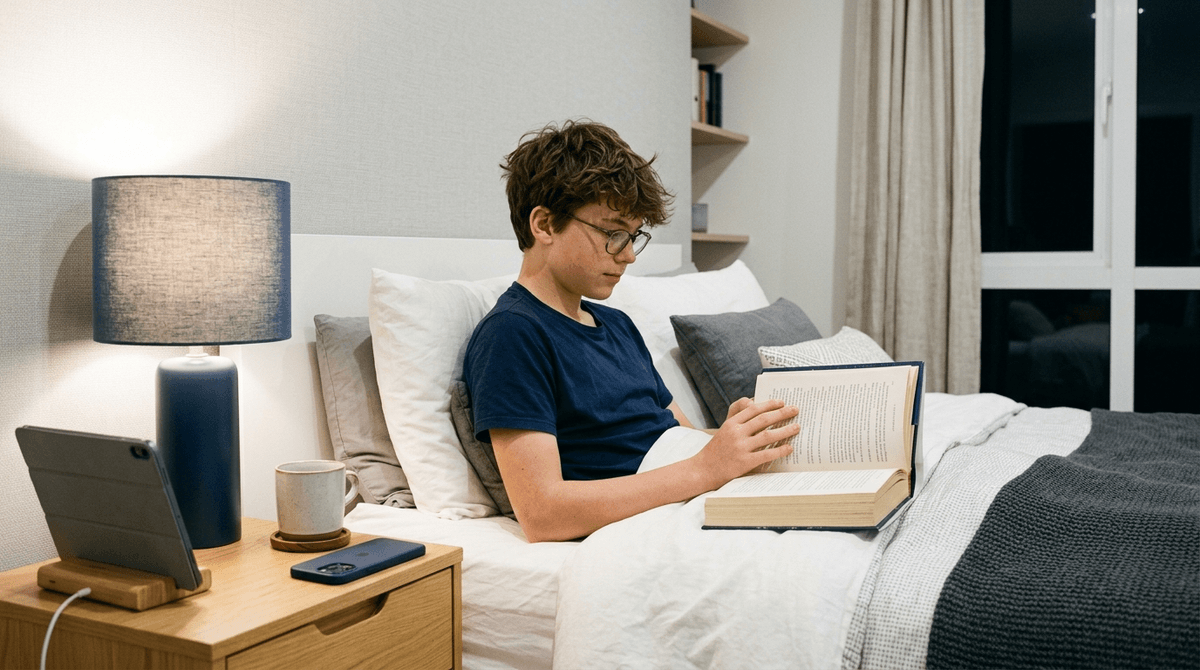
- Books and sunshine win: Bedtime paper-book reading and daily outdoor play were consistently tied to longer sleep durations.
- Age drops sleep hours: As children grew older, sleep duration fell sharply under growing academic pressure.
- Room-sharing trade-offs: Children who shared a bedroom with parents—a common cultural practice in Japan—got less weekday sleep than those sleeping independently.
We tend to blame external forces—like school assignments and evening practices—for tired kids. But this data suggests unstructured evening time is where sleep is actually lost. When children go to bed without a firm curfew, digital media fills the void and pushes sleep onset back, regardless of how much homework was assigned earlier in the night.
This research relied on parent-reported surveys rather than objective sleep trackers, which can introduce reporting bias. The response rate was low at under 9%, meaning the participating families may not fully represent all households. Finally, the study was conducted in Japan, where cultural norms around room-sharing and academic pressure differ from Western environments, and the cross-sectional design cannot prove that screens directly cause shorter sleep.
- If your child's sleep duration is dropping as they get older: Establish a strict household rule turning off all screens 30 to 60 minutes before bed rather than trying to cut their extracurricular activities.
- If your child struggles to wind down in the evening: Replace tablet use with paper book reading at bedtime to lengthen their rest window.
- If you want to build habits that support nighttime rest: Ensure your child gets daily outdoor physical play, which consistently correlates with longer sleep duration.
- If you share a bedroom with your elementary student: Evaluate whether adult movement or late-night device use in the shared room is accidentally cutting into their sleep hours.
You do not need to strip your child's schedule of sports or music lessons to fix their sleep schedule. Put a firm screen curfew in place, hand them a paper book, and let household boundaries do the heavy lifting.
Kawamura K, Nishimura T, Taniike M et al. (2026). A cross-sectional, web-based survey on sleep duration and social sleep restriction by daily habits in Japanese children: Cultural considerations. Sleep medicine. doi:10.1016/j.sleep.2026.109054 — pubmed.ncbi.nlm.nih.gov