

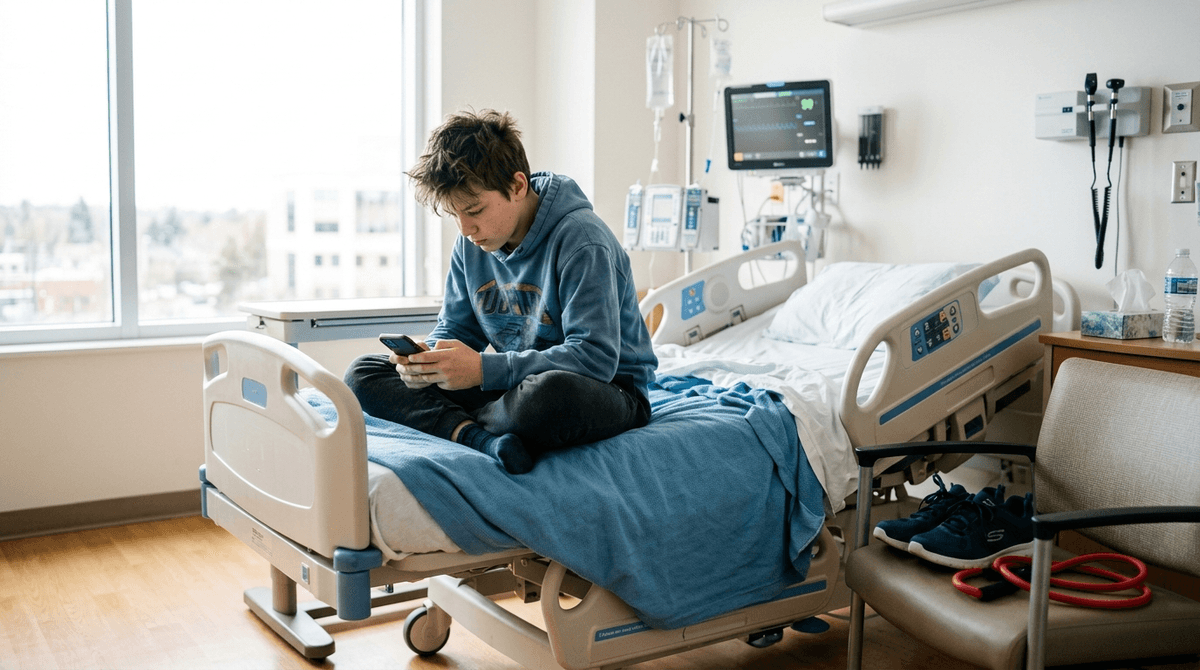

Hospitalized children with cystic fibrosis log more than five hours of screen time a day, with the sickest patients spending the most time glued to devices. While tablets and phones help pass the time during grueling hospital stays, heavy screen use traps unwell kids in bed right when their lungs desperately need physical movement.
Hospitalized children with severe lung disease average more than five hours of daily screen time, driven primarily by physical exhaustion and hospital boredom.
Hospital rooms encourage rest, but for children with respiratory illnesses like cystic fibrosis, prolonged immobility actively hinders recovery. Airway clearance relies on physical movement and deep breathing, making long stretches of bed-bound screen time a potential obstacle to getting healthy enough to leave the hospital.
Home habits follow kids straight into the clinic. Children with heavy television routines at home default to screens during admissions, leaving parents relying on tablets as a digital pacifier to survive grueling medical stays.
Pediatric hospital admissions are uncomfortable, scary, and boring. Parents managing sick children in cramped quarters turn to screens because non-digital activities are scarce and kids feel too unwell for active play. Researchers wanted to pinpoint how much screen time occurs during these admissions and whether a child's clinical lung capacity directly drives device use.
Nearly every hospitalized child studied far exceeded daily recommended screen limits.
- Five hours a day: The median screen time for hospitalized children was 315 minutes (5.25 hours) daily.
- Near-universal excess: Over 95% of the children exceeded recommended World Health Organization screen time limits.
- Sicker lungs mean more screen time: Worse lung function scores correlated directly with higher screen use—a one-point drop in lung capacity score matched roughly an extra hour of screen time daily.
- Boredom is the main trigger: Almost two-thirds of parents cited boredom, and over half pointed to a lack of non-digital alternatives, as the primary reasons for heavy device use.
Heavy screen time during illness acts as a visible marker of disease severity rather than simple entertainment seeking. Sinking into bed with an iPad is the path of least resistance when a child feels terrible, but this creates a harmful feedback loop: feeling sicker leads to more bed-bound screen time, which reduces the movement necessary to clear airway mucus.
This study evaluated only 45 children at a single hospital in southern Brazil. Because the study was observational, it shows a strong link between poor lung function and high screen time, but it cannot prove that screen time caused lower lung capacity. Additionally, daily screen time was reported by caregivers from memory, which can introduce reporting errors.
- If your child is facing an inpatient stay for a respiratory condition… pack a dedicated bag of hands-on, non-digital distractions like puzzle books, craft kits, or card games before you leave home to break up hospital boredom.
- If your child has a chronic illness… establish clear screen limits during healthy periods, because baseline home habits strongly predict how much your child will rely on screens during a health crisis.
- If your sick child is stuck in bed with a screen… set a timer for short posture changes or mild physical movements between videos to help clear their airways.
Screens offer comfort during stressful hospital stays, but relying on them exclusively keeps sick children sedentary when their lungs need movement most. Building non-screen habits during healthy days gives your family a better toolkit when illness strikes.
Rodrigues VDS, Schmidt C, Medeiros GK et al. (2026). Screen time and pulmonary function in hospitalized children with cystic fibrosis. Jornal brasileiro de pneumologia : publicacao oficial da Sociedade Brasileira de Pneumologia e Tisilogia. doi:10.36416/1806-3756/e20250284 — pubmed.ncbi.nlm.nih.gov