

Look, we all know teens are already listening to something through those AirPods—whether it's the same 47-second TikTok sound on repeat or a true crime podcast that's giving you nightmares about their nightmares. But here's the thing: podcasts can actually be one of the healthiest forms of media consumption for teens right now.
Unlike the dopamine slot machine of social media, podcasts require sustained attention. They build listening skills. They introduce complex ideas through conversation rather than algorithmic rage-bait. And honestly? Some of them are genuinely good enough that you might find yourself "borrowing" your kid's Spotify queue.
The podcast landscape for teens has exploded in the past few years. We're not just talking about educational content disguised as entertainment (though there's plenty of that). We're talking about shows that treat teens like the intelligent, curious humans they are—covering everything from mental health and identity to science, storytelling, and social justice.
Podcasts hit differently than other media for a few reasons:
They're multitask-friendly. Teens can listen while doing literally anything else—homework, gaming, art, walking to school, pretending to clean their room. It's passive enough to be background noise but engaging enough to actually learn something.
They feel personal. Good podcast hosts create an intimate, conversational vibe. It's like having a smart older sibling or cool teacher in your ear, which is exactly what teens want (even if they'd never admit it).
They're identity-building. The shows teens choose say something about who they are or who they're becoming. Listening to a podcast about climate activism or queer history or astrophysics is a way of trying on identities and interests without the social risk of, say, joining the debate team.
No visual pressure. In a world where everything is about how you look, podcasts are refreshingly face-free. Just ideas, stories, and voices.
Here's a curated list across different interests and age ranges. Not every teen will vibe with every show, but there's something here for most curious minds.
For the Science-Curious (Ages 12+)
Radiolab remains the gold standard for making complex science and philosophy accessible and genuinely thrilling. Episodes range from 20 minutes to an hour, and the production quality is movie-level.
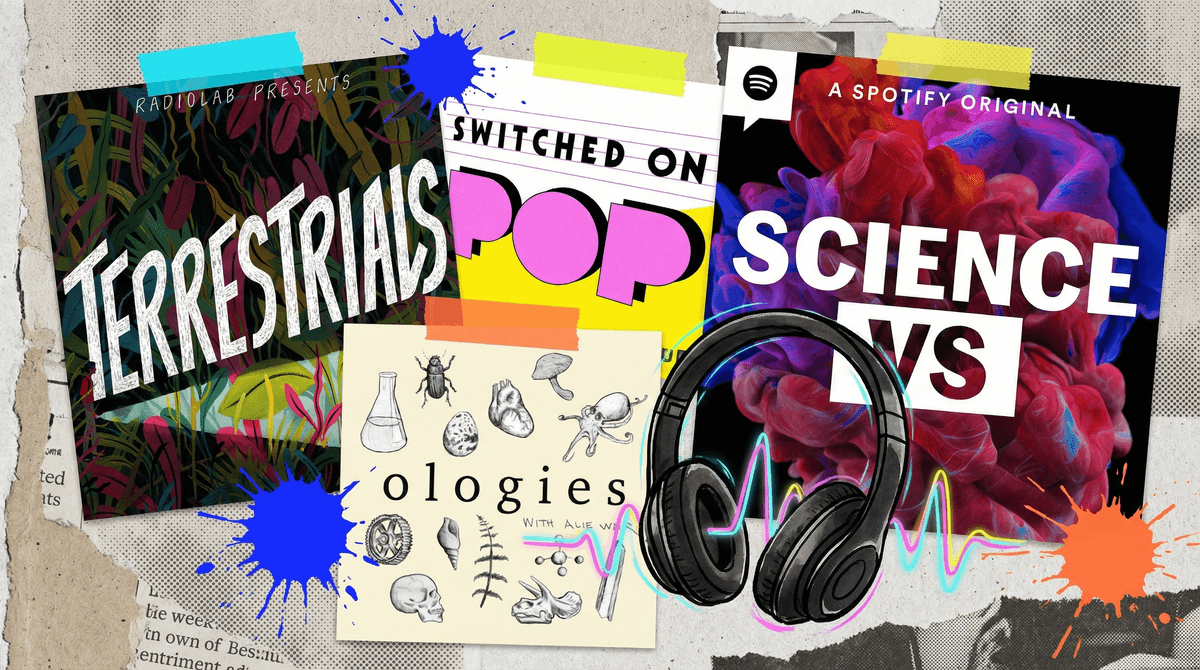
Science Vs takes on fads, trends, and controversial topics (vaping, intermittent fasting, astrology) and actually looks at the science. Host Wendy Zukerman has a perfect balance of skepticism and humor that teens appreciate.
Ologies with Alie Ward interviews experts in obscure fields (jellyfish biology, medieval history, forensic botany) with infectious enthusiasm. Fair warning: there's occasional mild language, but it's conversational, not gratuitous.
For Mental Health & Identity (Ages 13+)
Terrible, Thanks for Asking is hosted by Nora McInerny and gets real about grief, loss, and the messy parts of being human. It's honest without being performative, which teens can smell from a mile away.
The Moth features true stories told live on stage. The range of human experience here is incredible, and hearing real people tell their own stories builds empathy in a way that scripted content just doesn't.
For News & Current Events (Ages 14+)
Today, Explained from Vox breaks down one big news story each day in about 20 minutes. It's not dumbed down, but it is accessible, which is exactly what teens need to start understanding the news cycle.
The Daily from The New York Times goes deeper on major stories. It's more serious in tone, but for teens who are ready to engage with real journalism, it's excellent.
For Storytelling & Narrative (Ages 12+)
This American Life is the OG. Some episodes will resonate more than others, but the storytelling craft is unmatched. Great for teens who love English class or creative writing.
Welcome to Night Vale is a fictional podcast presented as community radio for a weird desert town. It's quirky, funny, and often surprisingly profound. Huge LGBTQ+ following and representation.
For Pop Culture & Media Literacy (Ages 13+)
Switched on Pop analyzes pop music through a musicological lens. If your teen is into music (and what teen isn't?), this teaches them to think critically about what they're hearing on Spotify.
Decoder Ring from Slate explores cultural mysteries and forgotten histories. Episodes on everything from the origin of the high five to the history of the chicken nugget. Fascinating stuff.
Ages 11-13: Stick with shows that are explicitly educational or storytelling-focused. Radiolab, The Moth, and Ologies are solid starting points. Some true crime podcasts are fine (looking at you, Criminal), but skip the graphic ones.
Ages 14-16: Most of the shows listed here are fair game. You might want to preview episodes of more mature shows like Terrible, Thanks for Asking first, especially if your teen is going through something difficult—it could be helpful or it could be heavy.
Ages 17+: Pretty much anything goes, though you can always check specific shows if you're unsure. At this age, critical thinking about media consumption is more important than content restrictions.
Podcast algorithms can be weird. Spotify and Apple Podcasts will recommend similar content, but "similar" doesn't always mean "appropriate." If your teen is listening to true crime, they might get recommended something much more graphic. Worth having a conversation about.
Ads are everywhere. Most podcasts are ad-supported, and the ads are often for other podcasts, therapy apps, or meal kits. Mostly harmless, but occasionally you'll get betting apps or other questionable sponsors. Teens should know that podcast ads aren't vetted the way TV commercials are.
Some shows have Patreon or premium content. Many podcasts offer bonus episodes or ad-free listening for a monthly fee. If your teen is asking for this, it's actually a good sign—they're engaged enough to want more. Consider it like a magazine subscription.
Listening together is underrated. Playing a podcast on a car ride or during dinner prep can be a great conversation starter. You're both hearing the same thing at the same time, which is rare in our fractured media landscape.
Podcasts are one of the few media formats where quality content is genuinely abundant and easy to access. Unlike YouTube (where you're three clicks from conspiracy theories) or TikTok (where the algorithm is literally designed for addiction), podcasts reward sustained attention and curiosity.
The teens who develop a podcast habit tend to be better informed, more empathetic, and frankly, more interesting conversationalists. That's not me being preachy—that's just what happens when you regularly expose yourself to new ideas and perspectives.
So yes, encourage this. Add shows to a shared family playlist. Ask what they're listening to. Send them a link to an episode you think they'd like. This is one of those rare wins where the thing your teen actually wants to do is also genuinely good for them.
- Start with one show. Don't overwhelm them with a list. Pick one based on their interests and suggest it casually.
- Check out our guide to screen-free activities for other ways to fill time that isn't just scrolling.
- Get podcast recommendations based on your teen's specific interests.
And hey, if they're still listening to true crime podcasts that give you the creeps, maybe we should talk about that too.