

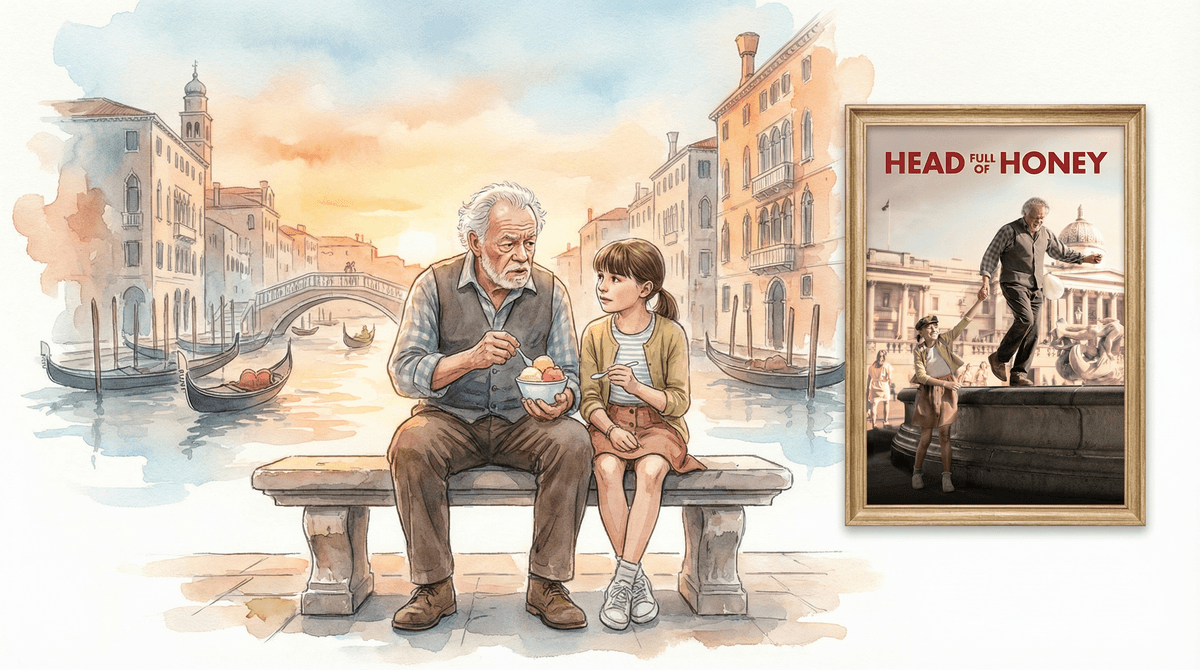
Head Full of Honey: What Parents Should Know About This Alzheimer's Family Drama
TL;DR: This 2018 German-American remake is a well-intentioned road-trip movie about a grandfather with Alzheimer's and his 11-year-old granddaughter, but it's emotionally heavy, slow-paced, and honestly? There are better family films about dementia out there. If your kids are asking questions about memory loss or you're dealing with this in your own family, it might spark good conversations—but be prepared for some tears and a lot of "when is something going to happen?" from younger viewers.
Age recommendation: 10+ (but really, this is more for teens and adults)
Head Full of Honey stars Nick Nolte as Amandus, a retired veterinarian with Alzheimer's who lives with his daughter Sarah (Emily Mortimer) and her family in England. When Sarah reaches her breaking point trying to balance caregiving with her own life, Amandus ends up on an impromptu road trip to Venice with his 11-year-old granddaughter Tilda (Sophia Lane Nolte, Nick's real-life daughter).
The film is a remake of the 2014 German film Honig im Kopf, which was a massive hit in Germany. Director Til Schweiger brought his own story to an English-speaking audience, but something got lost in translation—both literally and cinematically.
Here's where I'm not going to sugarcoat it: this movie is a slog.
The premise is sweet—a confused grandfather and his devoted granddaughter bonding over gelato and getting lost in Venice. The real-life father-daughter chemistry between the Noltes is genuine. And yes, there are touching moments that'll get you misty-eyed, especially if you've dealt with dementia in your own family.
But the execution? It's two hours of meandering scenes that feel like they're trying SO hard to be profound but mostly just feel slow. The pacing drags. The script is clunky. Plot points that should be emotionally devastating land with a thud because we've been watching the same "Amandus is confused, Tilda is patient" scene for the fifteenth time.
Critics agreed—it holds a brutal 0% on Rotten Tomatoes (yes, zero), and even generous parent reviewers on Common Sense Media struggled to find much to recommend beyond "it has good intentions."
Despite its flaws, there are legitimate reasons some families might want to watch this:
If you're dealing with dementia in your family: Sometimes a mediocre movie about a hard topic is still valuable because it gives you a shared experience to talk about. If your kids' grandparent has Alzheimer's or another form of dementia, watching Tilda navigate her grandfather's confusion might help them feel less alone. The film does show some realistic aspects of memory loss—the repetition, the frustration, the moments of clarity, the gradual decline.
If your kid is specifically asking about memory diseases: Maybe they heard about Alzheimer's at school or a friend's family is dealing with it. This movie puts a human face on the condition in a way that's gentler than a documentary but more substantive than just explaining it in conversation.
If you want to talk about caregiving and family responsibility: The subplot about Sarah's exhaustion and guilt is actually one of the stronger elements. It opens up conversations about how families handle aging parents, the "sandwich generation" stress, and why caregiving is so demanding.
The emotional weight is real: This isn't a fun family movie night pick. It's sad. Your kids will watch a man they've grown to care about gradually lose himself. The ending is bittersweet at best. If your child is already anxious or dealing with grief, this might not be the right time.
The medical accuracy is... loose: While some aspects of Alzheimer's are portrayed realistically, the movie takes major liberties. An 11-year-old taking her grandfather with advanced dementia on an international trip without telling anyone? That's not heartwarming, it's concerning. Don't use this as an educational resource about the actual disease—use it as a conversation starter and then fill in the gaps with accurate information about dementia.
Language and content: The movie is rated PG-13. There's no violence, no sexual content, minimal language. The rating is purely for thematic elements—specifically, the heavy subject matter of terminal illness and death.
It's LONG: At 139 minutes, this is a significant time commitment for a movie that doesn't have a lot of action or plot momentum. Younger kids (under 10) will likely get bored and restless.
The Venice setting is gorgeous: If nothing else, the cinematography of Venice is beautiful. It's a love letter to the city, and if your family has Italian heritage or has visited Venice, that might add some personal connection.
Ages 8-9: Too young. The themes are too abstract and the pacing too slow. They won't understand the nuances of dementia, and they'll just be bored and confused.
Ages 10-12: Possible, but only if there's a specific reason (family dealing with similar issues). Watch it with them and be ready to pause for questions and conversations. Don't expect them to love it or even like it—this is medicine, not entertainment.
Ages 13+: More appropriate age range. Teens can grasp the complexity of the situation and might appreciate the emotional depth, even if they find the movie itself kind of boring. This could pair well with reading books about Alzheimer's and memory or discussing family health history.
If you want to explore similar themes with better filmmaking, consider:
-
Still Alice (PG-13): A more sophisticated, better-acted film about early-onset Alzheimer's. Better for teens than tweens, but far superior quality.
-
The Father (PG-13): Anthony Hopkins gives a masterclass in portraying dementia from the inside. Intense and definitely for older teens, but incredibly powerful.
-
Up (PG): Pixar's opening sequence deals with loss and memory in a way that's accessible to younger kids while still being emotionally resonant for adults. Plus, it's actually, you know, good.
-
Coco (PG): Explores memory, family legacy, and what it means to be forgotten in a culturally rich, beautiful way. Works for a much wider age range.
For non-fiction approaches, the documentary Alive Inside shows how music can reach dementia patients and might be more hopeful and educational.
If you do watch Head Full of Honey with your kids, here are some conversation starters:
Before watching: "This movie is about a grandfather whose brain is sick. He has trouble remembering things and sometimes gets confused about where he is or who people are. It's called Alzheimer's disease. Have you heard of it before?"
During/after:
- "What did you notice about how Tilda treated her grandfather when he was confused?"
- "Why do you think Sarah was so stressed about taking care of Amandus?"
- "What would you do if someone you loved started forgetting things?"
- "The movie shows Amandus and Tilda running away together. In real life, would that be safe? Why or why not?"
If you're dealing with this in your family: "Some of the things Amandus does might remind you of [grandparent/relative]. What feels similar? What feels different?" Let them lead the conversation and validate their feelings—confusion, frustration, sadness, even anger are all normal.
Head Full of Honey has its heart in the right place, but it's a prime example of how good intentions don't automatically make good movies. It's slow, overly sentimental, and takes a premise that could be genuinely moving and stretches it to the breaking point.
Watch it if: You're specifically looking for a film to help process dementia in your own family, you're okay with mediocre filmmaking in service of an important conversation, or you've exhausted other options and really want to see Nick Nolte and his daughter's real-life chemistry.
Skip it if: You're looking for an entertaining family movie night, your kids are under 10, or you want something that's actually well-made. There are better films about aging, memory, and family bonds—go watch Coco instead.
The verdict: ⭐⭐ out of 5 stars. Important topic, poor execution. Use it as a tool if you need it, but don't expect to enjoy it.
If dementia and memory loss are topics your family needs to explore:
- Check out books about Alzheimer's for kids that are age-appropriate and more educational
- Look into resources for talking to kids about terminal illness
- Consider family counseling if you're navigating a dementia diagnosis—kids often have questions and feelings they don't know how to express
- Balance heavy content with lighter fare—after a movie like this, queue up something fun like Paddington or The Mitchells vs. The Machines
And remember: you don't have to watch every movie about every hard topic with your kids. Sometimes an honest conversation over ice cream is more valuable than sitting through 139 minutes of a mediocre film.