

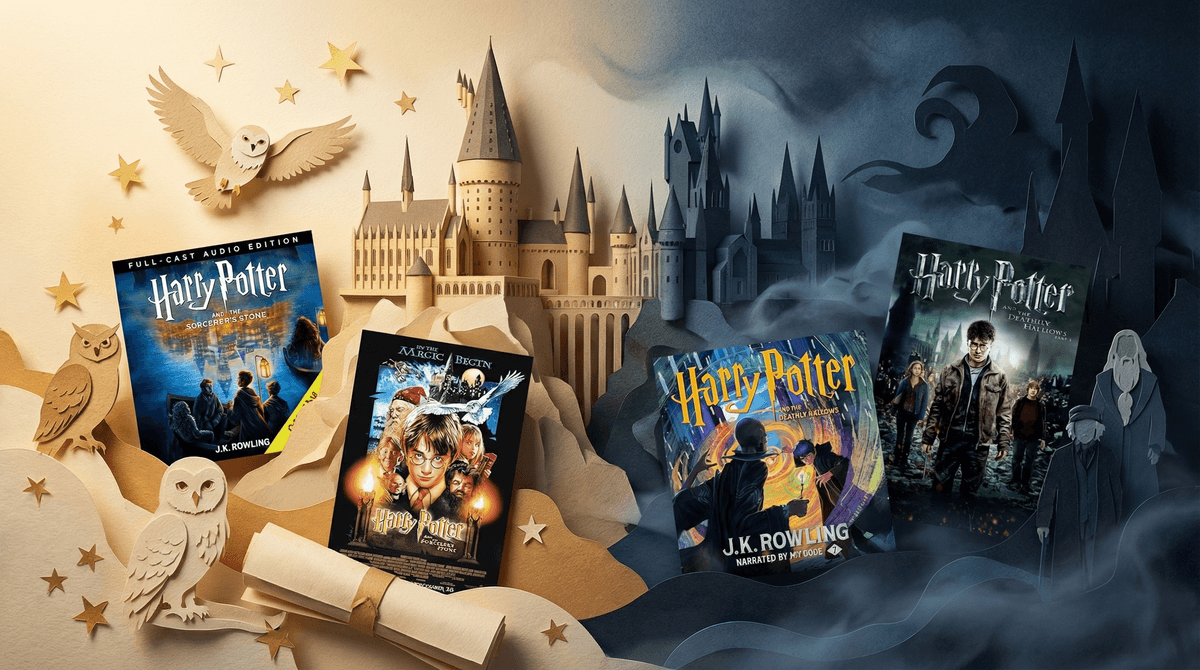
Unless you've been living under the Dursleys' stairs, you know Harry Potter is the cultural phenomenon about a boy wizard who discovers he's famous in the magical world. The series spans seven books by J.K. Rowling and eight movies, following Harry from age 11 through 17 as he attends Hogwarts School of Witchcraft and Wizardry, makes lifelong friends, and ultimately faces down the darkest wizard of all time.
But here's the thing that trips up a lot of parents: just because the main character starts at age 11 doesn't mean 11-year-olds should necessarily start the series. The books and movies grow progressively darker and more intense, mirroring Harry's own maturation. What begins as a whimsical story about a magical school becomes increasingly about death, loss, corruption, and war.
The magic system is detailed and immersive. The world-building is exceptional. The characters feel real and flawed. Kids love the idea of discovering they're special, of finding their people, of a place where being different is actually an asset.
There's also the massive cultural literacy component. Harry Potter references are everywhere—in memes, in conversation, in other media. Houses (Gryffindor, Slytherin, etc.) have become personality shorthand. Not knowing Harry Potter can feel socially isolating for some kids, especially in upper elementary and middle school.
And honestly? The books are genuinely well-crafted stories about friendship, bravery, standing up to injustice, and choosing to do what's right even when it's hard. There's a reason multiple generations have connected with them.
The Sorcerer's Stone (Book 1 & Movie 1)
Reading age: 7-8+ | Movie age: 6-8+
This is the gentlest entry point. The movie is rated PG and pretty tame—the scariest parts are the three-headed dog and the climactic scene with Voldemort. The book is accessible for strong second-grade readers or great as a read-aloud for younger kids.
That said, even here there are themes of parental death, child neglect by the Dursleys, and some peril. If your kid gets scared easily, maybe wait until 8 or 9.
The Chamber of Secrets (Book 2 & Movie 2)
Reading age: 8-9+ | Movie age: 7-9+
Slightly darker—there's a giant snake, students being petrified, and more intense danger. The movie has some genuinely creepy moments in the Chamber itself. Still pretty manageable for most elementary schoolers who handled the first one fine.
The Prisoner of Azkaban (Book 3 & Movie 3)
Reading age: 9-10+ | Movie age: 8-10+
This is where the visual tone shifts significantly darker (new director Alfonso Cuarón brought moodier cinematography). The Dementors—soul-sucking creatures that force you to relive your worst memories—are legitimately frightening and represent depression in a very visceral way.
The themes get more complex too: wrongful imprisonment, betrayal, the gray areas of revenge and justice. Many kids can handle this around 9-10, but it's worth a conversation about what Dementors represent.
The Goblet of Fire (Book 4 & Movie 4)
Reading age: 10-11+ | Movie age: 10-12+
This is the major turning point. A significant character dies on-screen in a traumatic way. Voldemort returns to physical form in a disturbing ritual. The tone shifts from "magical adventure" to "actual war is coming."
The movie is rated PG-13 for good reason. This is typically where I suggest families pause and assess: Is your kid ready for death that matters? For real stakes and consequences? For a story where the good guys don't always win?
The Order of the Phoenix (Book 5 & Movie 5)
Reading age: 11-12+ | Movie age: 11-13+
Another major character death, plus themes of government corruption, propaganda, and authoritarianism. Harry is also dealing with PTSD and teenage angst, which makes him pretty angry throughout. The book is the longest and can feel like a slog.
The emotional complexity here is significant—this isn't just "scary," it's about systemic injustice and how institutions fail people.
The Half-Blood Prince (Book 6 & Movie 6)
Reading age: 12-13+ | Movie age: 12-14+
More death, including a beloved character. Deeper exploration of Voldemort's backstory and the concept of Horcruxes (splitting your soul through murder). Romance subplots pick up. The tone is ominous throughout, building to a devastating ending.
The Deathly Hallows (Book 7 & Movies 7-8)
Reading age: 12-13+ | Movie age: 13-15+
Multiple character deaths, torture scenes, war, and existential questions about mortality and sacrifice. The movies are darker and more intense than the book in some ways. Part 2 is essentially a war film.
This is not for younger kids, period. Even mature 11-12 year-olds might find this overwhelming.
The books allow kids to process scary content at their own pace and imagination level. The movies put disturbing visuals right in front of them—the Dementors look terrifying, Voldemort's snake face is nightmare fuel, death scenes are graphic.
General rule: add 1-2 years to the movie age recommendations if your kid is particularly visual or sensitive.
Also worth noting: the books have more nuance and character development. Kids who only watch the movies miss a lot of the moral complexity and relationship building. But the movies are also how many families experience the series together, which has its own value.
The J.K. Rowling factor: Her public statements about transgender issues have been controversial and hurtful to many. Some families have chosen to step back from the franchise; others separate the art from the artist. This is worth thinking through based on your family's values, especially if you have LGBTQ+ kids or family members. You can explore different perspectives on this .
.
The marathon temptation: Kids often want to binge the whole series once they start. This can be intense—going from whimsy to war in a few weeks. Consider spacing them out, especially between books 3 and 4.
Reading level vs. emotional readiness: A precocious 7-year-old might be able to read book 4, but that doesn't mean they should. Emotional readiness matters more than reading ability for this series.
The conversation opportunities: These books tackle prejudice (pure-blood supremacy as a metaphor for racism), authoritarianism, death and grief, the complexity of good and evil. They're rich ground for family discussions if you're reading together or debriefing after.
There's no perfect age for Harry Potter—it depends entirely on your individual kid's sensitivity, maturity, and readiness for increasingly dark themes.
A reasonable approach for many families:
- Start books 1-3 around ages 8-10
- Pause before book 4 (around age 10-11) and assess readiness
- Continue books 4-7 around ages 11-14, spacing them out
Or go slower:
- Start the series at 10-11
- One book per year through middle school
- Finish by high school
Trust your gut. If your kid is having nightmares or seems anxious, it's okay to stop and come back later. The books will still be there. And if your 13-year-old hasn't started yet? That's completely fine too—plenty of teens and adults discover the series later and love it just as much.
The magic of Hogwarts isn't going anywhere. There's no rush to get there before your kid is ready.
Thinking about other book series or movies for your kids? Check out our guides on Percy Jackson, The Hunger Games, or Marvel movies for age-appropriate recommendations. Or Find the right fantasy series for your reader.