

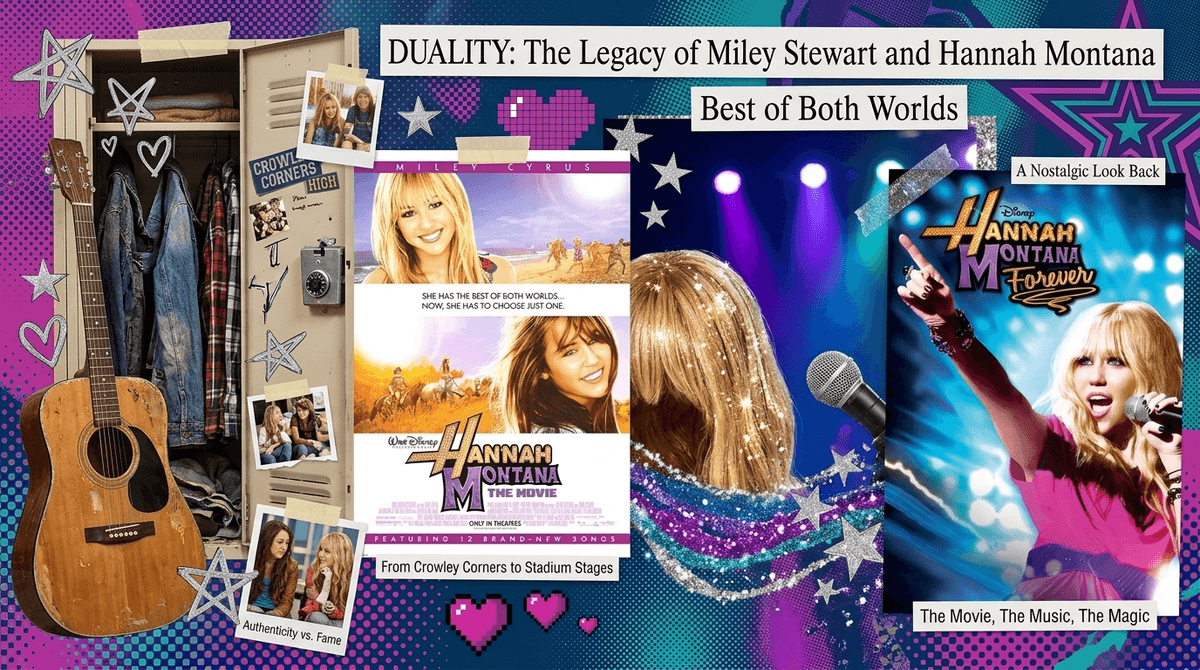
TL;DR: Hannah Montana is back in the cultural zeitgeist thanks to the 20th-anniversary special on Disney+. While the slapstick humor and 2000s fashion are pure nostalgia, the show’s core theme—the struggle to balance a "real" life with a "famous" persona—is more relevant than ever for kids navigating TikTok and Instagram. It’s a great "co-watch" for ages 7+, provided you’re ready to talk about the difference between a curated profile and a real human being.
It’s officially been twenty years since Miley Stewart first put on that blonde wig and told us we could have the "Best of Both Worlds." If that makes you feel ancient, you aren't alone. But with the anniversary special hitting Disney+ this March, a whole new generation of kids is discovering the show.
On the surface, it’s a loud, brightly colored sitcom about a girl with a secret pop star identity. But in 2026, the "Hannah Montana" dynamic isn't just a fantasy for kids—it's their daily reality. Every time your middle schooler spends forty minutes editing a photo for their "Grid" while looking like a total mess in real life, they are essentially living the Miley/Hannah divide.
For those who missed the first wave: the show follows Miley Stewart, a teenager who moved from Tennessee to Malibu. By day, she’s a regular student; by night, she wears a wig and performs as global superstar Hannah Montana. Only her family and her two best friends, Lilly and Oliver, know the truth.
The drama usually stems from Miley trying to keep her secret, dealing with "mean girls" at school, or learning "valuable lessons" from her dad, Robby Ray (played by her real-life dad, Billy Ray Cyrus). It’s classic Disney Channel: high energy, lots of canned laughter, and a catchy soundtrack.
In 2006, being "famous" was a rare, lottery-win type of situation. In 2026, every kid with a smartphone is a micro-influencer in their own social circle.
The "blonde wig" isn't a physical object anymore; it's the filter, the carefully curated "finsta" (fake Instagram), or the Roblox avatar that looks nothing like the kid sitting on your couch. Kids today are under immense pressure to maintain a digital identity that is "slay" and "aesthetic," while simultaneously dealing with the messy, awkward reality of puberty.
Watching Hannah Montana actually provides a pretty solid opening to talk about the "performative" nature of the internet. Miley often finds that the "Hannah" life is exhausting and that her real friends are the ones who like her without the glitter. It’s a message that hits differently when your kid is stressed about how many views their last video got.

The show is rated TV-G, and for the most part, it earns it. However, if you’re coming at this from a digital wellness perspective, there are a few things to keep an eye on:
- Ages 6-9: They’ll love the physical comedy and the music. The "secret identity" aspect is just fun fantasy at this age.
- Ages 10-13: This is the sweet spot. They’ll relate to the social hierarchy at Miley’s school. This is also the age where the "double life" metaphor starts to mirror their own online experiences.
- Ages 14+: They might find it "cringe" or "brain rot," but don't be surprised if they secretly watch it for the nostalgia.
The show features characters like Amber and Ashley, who exist solely to be rich, popular, and cruel. While it’s played for laughs, it can reinforce the idea that social status is everything. If your kid is into the "preppy" or "aesthetic" side of YouTube, they might see these characters as goals rather than villains.
If your kid has finished the series and the Hannah Montana: The Movie and is looking for more "girl-power-pop-star" vibes without the heavy "brain rot" of some modern influencer content, here’s what we recommend:
If they love the "costume change" and "dual identity" aspect of Hannah, this Nintendo Switch game is perfect. Peach takes on different roles (Swordfighter, Detective, Patissiere) to save a theater. It’s colorful, empowering, and has zero "stranger danger" or microtransaction traps.
The spiritual ancestor to Hannah Montana. It deals with the same "ordinary girl mistaken for a pop star" trope but with a slightly more grounded (for Disney) feel. It’s a classic for a reason.
Wait, a farming sim? Yes. In the show, Miley often retreats to her "Tennessee roots" to find herself. Stardew Valley offers that same "escape the hustle" vibe. It’s a great way to decompress after the high-energy stimulation of a show like Hannah Montana.
For the kid who loves the concert footage in the show, this is the gold standard. It’s a masterclass in performance and hard work, showing the "Hannah" side of fame without the fictional drama.
It’s impossible to talk about the show without acknowledging what happened after. Miley Cyrus famously struggled to shed the "Disney" image, leading to some very public (and very adult) rebellious phases.
If your kid starts Googling the show, they’re going to find 20 years of tabloid history. This isn't necessarily a bad thing—it's a "teaching moment." It’s a real-world example of how difficult it is to live under a brand. You can be honest with your kids: "Miley played this character, but as she grew up, she wanted to be her own person, and that was hard to do with everyone watching her."
When you’re sitting through the third episode in a row, try asking a few questions that go beyond "Is this show almost over?"
- "Do you think Miley is happier when she’s Hannah or when she’s Miley?" (This gets them thinking about whether being 'famous' or 'popular' is actually better than being yourself.)
- "If you had a secret identity online, what would it be?" (This gives you a window into their digital aspirations and how they want to be perceived.)
- "Why do you think Miley’s friends like her even when she doesn’t have the wig on?" (Reinforces the value of authentic relationships over followers.)
Hannah Montana is a relic of the mid-2000s, but its themes are accidentally prophetic. It’s a loud, silly, and mostly harmless show that offers a surprisingly deep look at the "dual identity" crisis our kids face every day on social media.
Enjoy the nostalgia, ignore the "Ohio" jokes your kids might make about the fashion, and use the "blonde wig" as a metaphor for the digital masks we all wear.
Next Steps:
- Check out the 20th Anniversary Special on Disney+.
- If your kid starts asking for a "ring light" to start their own channel, read our guide to kidfluencers.
- Take the Screenwise survey to see how your family’s media consumption compares to other intentional parents in your community.