

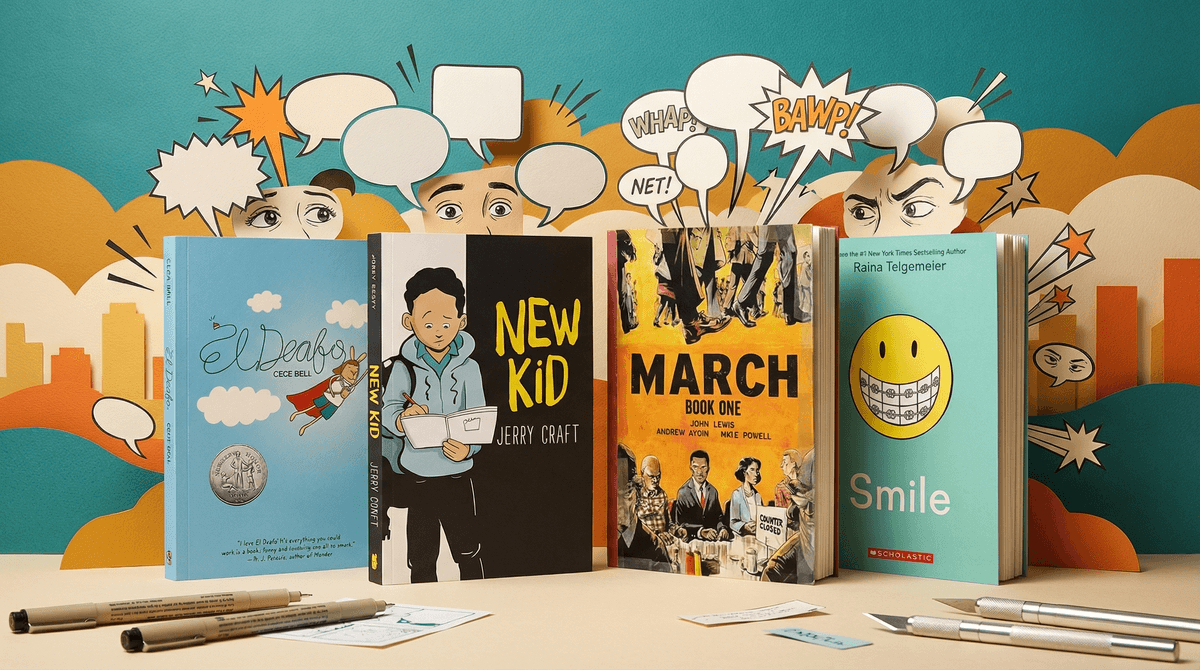
Let's clear something up right away: graphic novels are not just "long comic books" (though there's nothing wrong with comic books either). They're a legitimate literary format that combines visual art with narrative text to tell complex, often profound stories. Think of them as novels that happen to use illustrations as a core part of the storytelling, not as decoration.
Graphic memoirs take this format and apply it to real-life stories—autobiographies and personal narratives told through sequential art. We're talking about books like Maus (Art Spiegelman's Holocaust memoir), Fun Home (Alison Bechdel's coming-of-age story), and March (John Lewis's civil rights memoir). For kids, there's Smile by Raina Telgemeier, El Deafo by Cece Bell, and New Kid by Jerry Craft.
The format has exploded in the last decade, and schools are finally catching up. Your kid's teacher probably has a whole section of graphic novels in their classroom library now, and there's a reason: they work.
Here's the thing about graphic novels that makes English teachers and parents equally excited: they get kids reading who otherwise wouldn't pick up a book.
Visual processing is real reading. When kids "read" the images in a graphic novel, they're doing legitimate comprehension work—inferring emotion from facial expressions, understanding pacing from panel layout, tracking multiple storylines. It's not cheating or taking shortcuts. It's a different kind of literacy that actually helps build traditional reading skills.
Lower barrier to entry. A 200-page graphic novel might have the same word count as a 50-page chapter book. For a struggling reader or a kid with dyslexia, that's huge. They get the satisfaction of finishing a "real book" without the overwhelming wall of text.
The stories are actually good. We're not talking about superhero punch-fests here (though Dog Man has its place). Modern graphic novels tackle everything from anxiety and depression to racism, gender identity, historical events, and family dysfunction. They Stay by Raina Telgemeier deals with anxiety attacks. New Kid addresses microaggressions and being Black in a predominantly white school. These aren't lightweight topics.
Here's where it gets tricky, because graphic novels span from picture books to adult literature, and the format can be deceiving.
Ages 6-9: Early Readers
- Dog Man series by Dav Pilkey (same author as Captain Underpants)
- Narwhal and Jelly by Ben Clanton
- Hilda series by Luke Pearson (also a great Netflix show)
These are genuinely age-appropriate with simple vocabulary, clear illustrations, and gentle humor. Perfect for building confidence.
Ages 8-12: Middle Grade
This is the sweet spot for graphic novels right now:
- Smile, Sisters, and Guts by Raina Telgemeier
- El Deafo by Cece Bell (about growing up deaf)
- New Kid and Class Act by Jerry Craft
- Amulet series by Kazu Kibuishi (fantasy adventure)
- Roller Girl by Victoria Jamieson
Parent heads-up: Even in this age range, some books deal with real issues. Guts is about anxiety and therapy. El Deafo shows the isolation of being different. These aren't problems—they're features. But you might want to read them first if your kid is sensitive or you want to be prepared for conversations.
Ages 12+: Young Adult and Beyond
This is where you really need to pay attention, because YA graphic novels can get into mature territory fast:
- Maus by Art Spiegelman (Holocaust memoir, Pulitzer Prize winner—absolutely essential but intense)
- Fun Home by Alison Bechdel (coming out story, family dysfunction, suicide)
- Persepolis by Marjane Satrapi (growing up during Iranian Revolution)
- March trilogy by John Lewis (civil rights movement—should be required reading)
- They Called Us Enemy by George Takei (Japanese American internment)
These are serious works of literature that happen to be illustrated. They contain violence, sexuality, trauma, and complex political themes. They're also some of the most powerful books your teenager can read. Don't dismiss them because they have pictures.
The "it's just pictures" trap: Some parents see their 10-year-old breezing through graphic novels and worry they're not being challenged. But here's the reality—if your kid is reading anything voluntarily, that's a win. You can always offer chapter books as alternatives, but don't take away the graphic novels. Many kids use them as a bridge to more text-heavy books.
Content can sneak up on you. The visual format sometimes makes mature content feel more immediate and intense. A written description of violence is different from seeing it illustrated. Check Common Sense Media or read the book yourself if you're unsure. Don't just judge by the cartoon-y cover.
Library vs. bookstore: Graphic novels are expensive—usually $12-25 each, and kids can finish them in an hour. Your library almost certainly has a huge collection now. Many libraries also have digital graphic novels through apps like Hoopla or Libby. This is the perfect format for borrowing.
Schools are embracing them: If your kid's teacher assigns a graphic novel, don't email them asking if there's a "regular book" alternative. Graphic novels are increasingly part of curriculum for good reason. Teachers aren't being lazy—they're meeting kids where they are.
The memoir format matters: Graphic memoirs give kids access to lived experiences completely different from their own. A white kid in the suburbs reading New Kid or March is doing important empathy work. These aren't just books—they're windows into other people's realities.
Manga confusion: Manga (Japanese comics) is technically a subset of graphic novels, but it comes with its own rating systems and cultural context. Don't assume all manga is kid-friendly just because it's illustrated. Check out our guide on manga if your kid is interested.
Series addiction: Once kids find a graphic novel series they love, they'll binge the entire thing in a week. This is expensive and can feel like they're racing through books without absorbing them. Set some limits (one per week, must read a chapter book in between, whatever works for your family).
Gatekeeping: Some kids (and adults) will say graphic novels "don't count" as real reading. Shut that down immediately. Reading is reading, and format snobbery helps no one.
Graphic novels and memoirs are legitimate literature that can hook reluctant readers, build visual literacy, and expose kids to complex themes in an accessible format. Yes, they're "easier" to read than dense chapter books—that's the point. They're also expensive, sometimes surprisingly mature, and can be consumed faster than you can restock them.
Start here:
- For younger kids: Hit up Dog Man or Narwhal and Jelly
- For middle schoolers: Raina Telgemeier's books are the gateway drug
- For teens: New Kid, March, or They Called Us Enemy depending on their interests
Get a library card, browse the graphic novel section together, and let your kid choose based on cover art and back-cover description. If they finish a book in one sitting, that's not a problem—that's a kid who's excited about reading.
And if you're still skeptical about whether graphic novels "count," remember: we want kids who read, not kids who perform reading in the format we prefer.