

Gordon Ramsay's Kids' Cooking Shows: MasterChef Junior and Beyond
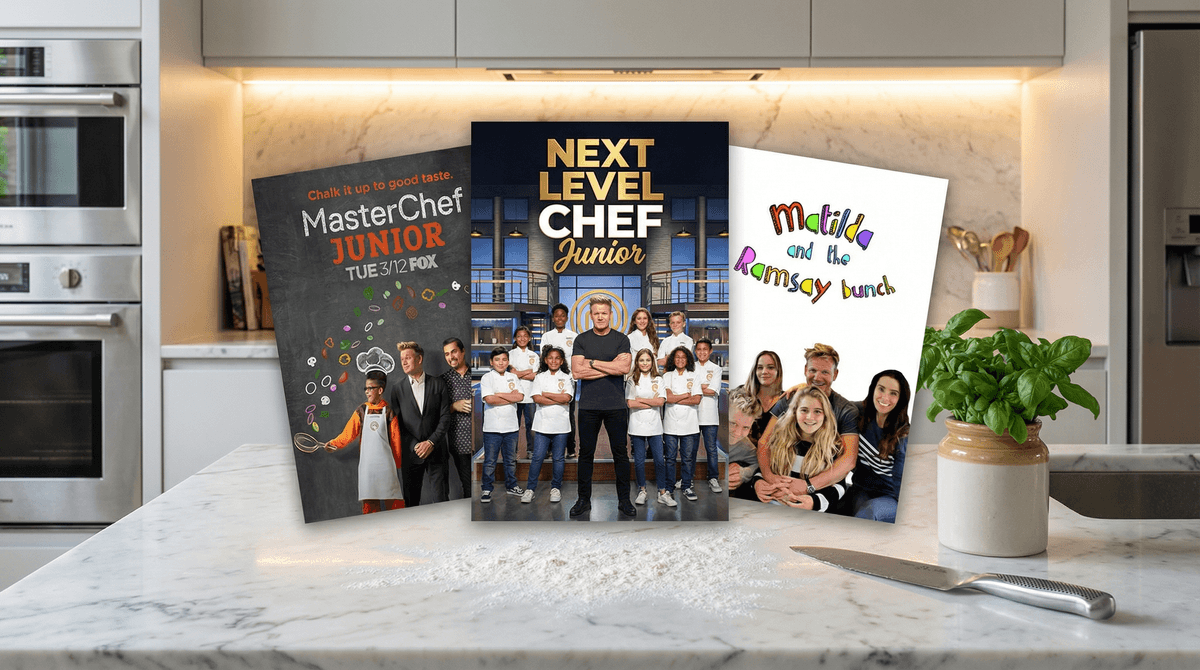
Gordon Ramsay—the chef famous for screaming "IT'S RAW!" at adult contestants—has a surprisingly wholesome kids' cooking franchise. MasterChef Junior is the flagship, but there's also the newer Next Level Chef Junior. Both shows feature talented kids (ages 8-13) competing in high-stakes cooking challenges, and yes, Gordon is actually... nice? The shows are genuinely impressive and can inspire culinary curiosity, but they also raise real questions about competition pressure, unrealistic expectations, and whether your kid will suddenly think they're too good for your Tuesday night tacos.
Quick recommendations:
- MasterChef Junior (Hulu, Fox) - Ages 8+ - The OG, 9 seasons deep
- Next Level Chef Junior (Fox) - Ages 8+ - Newer, flashier kitchen setup
- Matilda and the Ramsay Bunch (CBBC) - Ages 6+ - Gordon's daughter's cooking show, way more chill
If you've seen Gordon Ramsay on Hell's Kitchen or Kitchen Nightmares, you know him as the guy who could make a Navy SEAL cry. But on MasterChef Junior? He's basically a supportive uncle. He kneels down to kids' eye level, gives genuine encouragement, and saves his critiques for the food, not the person. It's jarring if you're used to his adult content, but it's also... kind of sweet?
The format is classic competition reality TV: auditions, challenges, eliminations, finale. Kids cook restaurant-quality dishes—we're talking beef Wellington, soufflés, and perfectly seared scallops—while cameras capture every moment of tension and triumph. The production value is high, the food looks incredible, and the kids are genuinely talented.
But here's where it gets complicated for parents: these aren't just kids who like to bake cookies on weekends. These are highly trained young chefs who've been cooking for years, often with professional instruction. The show doesn't really acknowledge this gap, which can make your average kid feel like they should be able to replicate what they see on screen.
The appeal is obvious: kids doing impressive things that are usually reserved for adults. There's something deeply satisfying about watching an 11-year-old plate a dish that looks like it belongs in a Michelin-starred restaurant. The contestants are relatable (they're kids!), but also aspirational (they can do THAT?!).
The competition format creates natural drama—who will get eliminated? Will they finish in time? Did someone forget to season their dish?—and kids are drawn to that narrative tension. Plus, unlike many competition shows, the contestants are generally supportive of each other. There's crying when friends get eliminated, group hugs, and genuine camaraderie.
For kids who already love cooking, these shows validate their interest as legitimate and impressive. For kids who've never thought about cooking, it can spark genuine curiosity about food, techniques, and flavors.
Let's talk about the elephant in the kitchen: this is high-pressure competition television featuring children. Yes, Gordon is supportive, but kids are still getting eliminated, crying on camera, and dealing with the stress of timed challenges and harsh critiques (of their food, but still).
The show includes:
- Timed challenges where kids are visibly stressed and sometimes in tears
- Elimination rounds with dramatic music and emotional goodbyes
- Public failure when dishes don't turn out (though handled gently)
- Intense focus on winning as the ultimate goal
Some kids watch this and feel inspired. Others watch it and feel inadequate or anxious. The show normalizes a level of perfectionism and competitive intensity that isn't necessarily healthy for all kids to internalize.
There's also the question of what happens behind the scenes. These kids are working long hours during filming, dealing with cameras and producers, and experiencing adult-level pressure. The show presents it as fun and exciting, but child actors and reality TV participants have historically faced significant challenges.
One thing MasterChef Junior does well: they take safety seriously. There are always adult supervisors nearby, and the challenges are designed with age-appropriate modifications (younger kids might get pre-cut ingredients, for example). The kitchen setup includes safety equipment, and producers are clearly monitoring closely.
But here's what the show doesn't emphasize enough: these kids have extensive training and supervision. If your 9-year-old watches an episode and wants to make crème brûlée with a blowtorch, that's not automatically a good idea. The show can create a false sense of confidence about kitchen skills and safety.
If these shows inspire your kid to cook more, that's genuinely great! But it needs to come with realistic conversations about:
- Knife safety and proper technique
- Stove and oven dangers
- The difference between cooking with supervision vs. independently
- Building skills gradually rather than attempting advanced techniques immediately
Check out our guide on teaching kids to cook safely for age-appropriate progressions.
MasterChef Junior and Next Level Chef Junior: Ages 8+
The shows are rated TV-PG, which is generally accurate. There's no inappropriate content, but the competition intensity and some emotional moments (kids crying, disappointment) might be tough for sensitive younger viewers.
Best for:
- Kids who already enjoy cooking and can handle competition content
- Families who can watch together and discuss the pressure/perfectionism aspects
- Kids who won't immediately feel inadequate comparing themselves to contestants
Maybe skip if:
- Your kid is highly sensitive to others' distress or failure
- They're prone to perfectionism or anxiety about performance
- They tend to copy what they see without understanding context/safety
Matilda and the Ramsay Bunch: Ages 6+
This is Gordon Ramsay's daughter Matilda's cooking show, and it's much more chill. It's less competition, more "here's how to make fun food." If you want cooking inspiration without the pressure cooker format, this is a better entry point for younger kids.
The talent gap is real. Most MasterChef Junior contestants have been cooking seriously for years, often with professional training. They're not just "kids who like to cook"—they're young chefs. The show doesn't always make this clear, which can create unrealistic expectations.
It might change dinner dynamics. Some kids watch these shows and become more adventurous eaters or interested in cooking. Others become tiny food critics who suddenly have opinions about your seasoning choices. Be prepared for "Gordon wouldn't approve of this" commentary.
The show glorifies restaurant cooking culture. High pressure, perfectionism, intense critique, working through stress—these are all normalized as part of "serious cooking." That's not necessarily the relationship with food you want your kid to develop. Cooking can be creative, relaxing, experimental, and fun without the competitive element.
It's still reality TV. There's editing for drama, producer influence on storylines, and a format designed to create emotional peaks and valleys. Talk to your kids about how reality TV works and how it's different from real life—even when the skills on display are genuinely impressive.
The diversity representation is actually pretty good. MasterChef Junior has featured contestants from various backgrounds, and the show generally does well with representing different cultures' cuisines without exoticizing them.
If your kid loves these shows and you want to channel that interest productively:
Watch together and talk about it. Discuss the pressure, the editing, the difference between competition cooking and everyday cooking. Ask questions like "How do you think that kid felt when their dish didn't work out?" or "Do you think cooking is always this stressful?"
Focus on the skills, not the competition. If your kid wants to try a technique they saw on the show, great! Help them learn it in a low-pressure, experimental way. Emphasize that mistakes are how we learn, not failures to be eliminated for.
Set realistic expectations. Be clear that the contestants have years of training and adult supervision. Your kid doesn't need to make beef Wellington to be a good cook. Simple recipes for kids are a better starting point.
Create low-stakes cooking opportunities. Let them experiment, make messes, and try things that might not work out. The goal is building confidence and skills, not creating restaurant-quality dishes.
Balance it with other food content. Shows like Nadiya's Time to Eat, The Great British Baking Show Junior, or even Salt Fat Acid Heat offer different perspectives on cooking—more educational, less competitive, and focused on joy rather than perfection.
Gordon Ramsay's kids' cooking shows are impressive, well-produced, and genuinely showcase talented young chefs. They can inspire culinary curiosity and validate kids' interest in cooking as a serious skill. But they also normalize intense competition, perfectionism, and pressure in a context (cooking) that could instead be creative, experimental, and fun.
These shows aren't harmful, but they benefit from parental context and conversation. Watch together, discuss the format and pressure, and help your kid develop a healthy relationship with cooking that's about learning and creativity, not just competition and perfection.
If your kid watches MasterChef Junior and wants to cook more, that's genuinely wonderful. Just make sure they're building skills gradually, prioritizing safety, and understanding that cooking at home doesn't need to look like a timed challenge with dramatic music and elimination rounds.
And hey, if they do become an amazing cook? You're going to eat very well for the next several years. That's not nothing.
- Try watching one episode together and see how your kid responds to the format
- If they're interested in cooking, start with age-appropriate cooking activities rather than jumping straight to advanced techniques
- Check out other cooking shows for kids that might offer different perspectives
- Set up a regular cooking time where your kid can experiment without pressure—maybe a weekly "try a new recipe" tradition
- Have a conversation about competition vs. creativity and what makes cooking enjoyable