

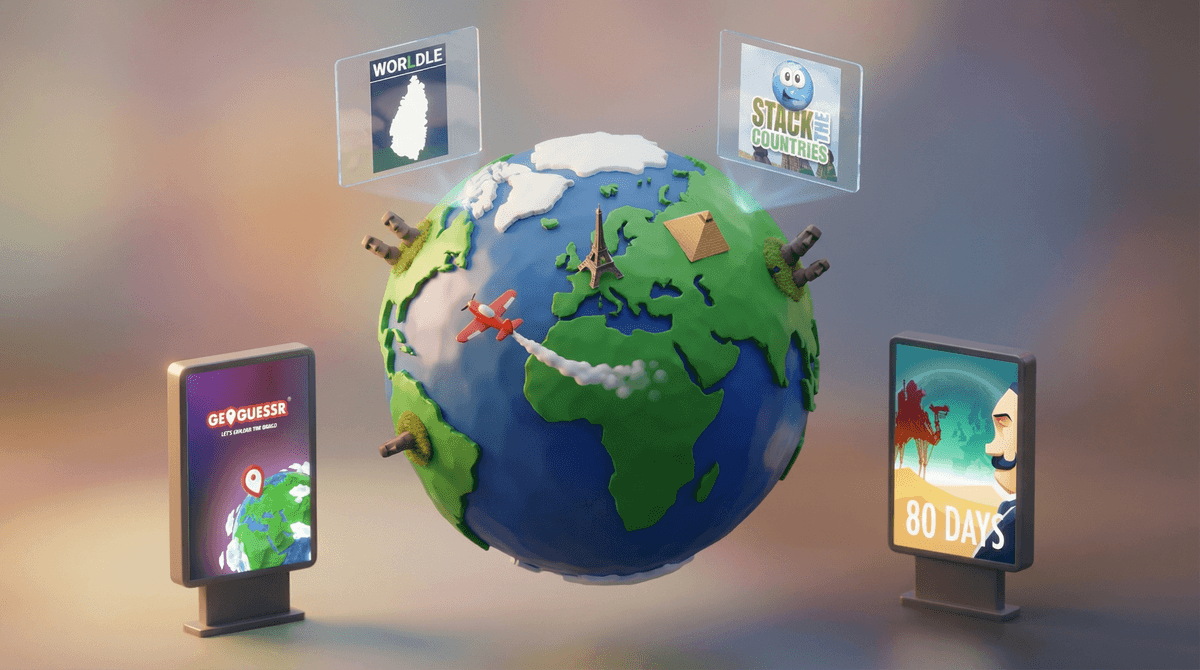
Geography games are digital (and sometimes physical) games that teach kids about the world through interactive play. We're talking everything from GeoGuessr dropping you in a random street view and challenging you to figure out where you are, to Carmen Sandiego adventures that weave geography into mystery-solving, to simple map puzzles that help younger kids learn continents and countries.
The digital versions range from quick mobile apps to full browser games, and honestly? They're one of those rare categories where "educational game" doesn't automatically mean "boring slog your kid will quit after 30 seconds."
Here's the thing: geography games work because they tap into natural curiosity about the world. Kids are inherently interested in where things are. They want to know where their favorite YouTuber lives, where that cool animal from the nature documentary is found, where their family came from, where their online gaming friend is logging in from.
Good geography games hijack that curiosity and turn it into actual learning. The best ones feel like puzzles or detective work rather than flashcards. When a kid is trying to figure out if they're looking at Iceland or Norway based on the architecture and landscape in GeoGuessr, they're not thinking "I'm learning geography" — they're thinking "I'M GOING TO SOLVE THIS."
Also, there's a competency thing happening. Kids love feeling smart about knowing things their friends don't. Being able to point to Uzbekistan on a map or recognize the flag of Bhutan is genuinely cool social currency in certain friend groups.
Ages 5-7: Building Blocks
- Stack the Countries and Stack the States - Literally stacking countries/states in a Tetris-style game while learning basic facts. Surprisingly not terrible.
- Montessori-style map puzzles (physical, but worth mentioning) - The wooden ones where continents/countries are individual pieces. Tactile learning still wins for this age.
- National Geographic Kids app - Has some geography games mixed in with animal content. Good gateway.
Ages 8-11: The Sweet Spot
- GeoGuessr - The gold standard. You get dropped in Google Street View somewhere in the world and have to guess where you are. Free version is limited but totally usable. This is genuinely fun even for adults. Learn more about how GeoGuessr works
 .
. - Seterra - Free, no-nonsense map quizzes. Not flashy, but incredibly effective. You can drill down to specific regions, capitals, flags, whatever.
- [World Geography Games](https://screenwiseapp.com/media/world-geography-games-game - Another solid quiz-style option with different game modes.
- Ticket to Ride (board game) - Not explicitly educational, but kids absorb city names and routes while playing. The digital version exists too.
Ages 12+: Going Deeper
- GeoGuessr (still) - But now they can handle the competitive modes and start learning the meta-game of "reading" landscapes.
- Worldle - Like Wordle but for country shapes. Quick daily challenge that becomes habit-forming.
- [Sporcle geography quizzes](https://screenwiseapp.com/media/sporcle-website - Endless variety, from "name all countries" to hyper-specific challenges.
- 80 Days - A narrative adventure game based on Jules Verne's novel. You're making route choices around the world, and geography matters to gameplay. Genuinely beautiful game.
The screen time math actually works here. Unlike a lot of "educational" content that's basically just digitized worksheets, good geography games create genuine engagement. Twenty minutes of GeoGuessr teaches more geography than an hour of random YouTube, and your kid will actually want to do it.
These games build spatial reasoning. Understanding maps, scale, directions, and how the 3D world translates to 2D representations is a legitimate cognitive skill that matters for everything from reading graphs to navigating new places.
Cultural awareness sneaks in. When kids are trying to identify countries in GeoGuessr, they start noticing architectural styles, alphabets, vegetation patterns, infrastructure differences. It's a gateway to bigger conversations about how people live around the world.
The competitive element can be great or terrible. Some kids thrive on leaderboards and timed challenges. Others shut down. Most geography games have both competitive and casual modes — start with casual and see what your kid gravitates toward.
Watch out for the "Western-centric" problem. Many geography games over-represent North America and Europe. Seterra is actually good about this — you can specifically practice African countries, Asian capitals, Pacific islands, etc. Make sure your kid isn't just learning the "easy" maps.
Geography games are one of those rare wins where educational value and actual fun overlap. They're building real knowledge that sticks, they're developing spatial reasoning skills, and they're fostering curiosity about the wider world.
Start with whatever matches your kid's age and interests. If they're into mystery-solving, try Carmen Sandiego content. If they like competition, go straight to GeoGuessr. If they just need something chill, Seterra quizzes work great.
And honestly? Play with them sometimes. You'll probably learn something too (I certainly didn't know where Kyrgyzstan was until my kid schooled me), and it's one of those rare screen activities where parent-kid co-play actually enhances the experience rather than making it awkward.
- Try before you buy: Most of these have free versions or trials. Start with GeoGuessr's free mode or Seterra (completely free) to see if your kid bites.
- Make it social: Geography games work great as family game night options or friendly competitions between siblings.
- Connect to real life: When you're planning a trip or watching a show set somewhere specific, pull up a map game and explore that region together.
- Check out our guide to educational games that don't suck for more recommendations beyond geography.