

TL;DR
If you’re looking for a "safe" show that won't make you want to throw your remote through the window, the Tanner family is a solid bet. Full House is the ultimate 90s comfort food—earnest, slightly cheesy, and great for kids ages 5+. Fuller House on Netflix leans into the nostalgia but adds a modern "meta" layer that appeals to tweens (ages 9+). Both are excellent tools for talking about grief, sibling dynamics, and why life doesn't actually resolve itself in 22 minutes with a sentimental saxophone solo.
Check out our guide on the best family sitcoms for all ages
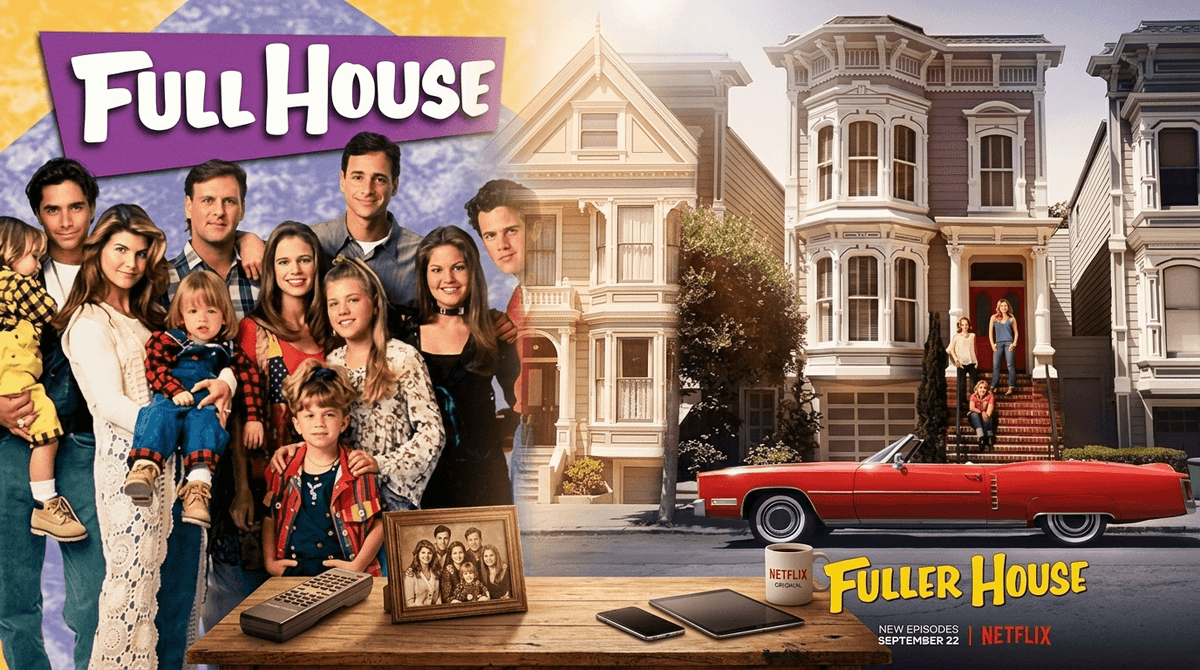
At its core, the Full House franchise is about unconventional families showing up for each other. In the original series, a widowed dad (Danny) recruits his brother-in-law (Jesse) and best friend (Joey) to help raise his three daughters. Fast forward to the reboot, and it’s D.J. Tanner-Fuller who is widowed, enlisting her sister Stephanie and best friend Kimmy Gibbler to help raise her three sons.
It’s a cycle of "too many people in one San Francisco Victorian," but it works because it centers on the idea that family is who you choose to have in your corner. While modern "brain rot" content like Skibidi Toilet or the endless "Ohio" memes on TikTok offer quick dopamine hits with zero substance, the Tanners offer a linear narrative where characters actually grow, fail, and learn.
We talk a lot about "digital wellness" and "healthy screen habits," but a huge part of that is quality of content. If your kids are used to the frantic, high-cut editing of YouTube creators, sitting down for a 22-minute sitcom is actually a great exercise in sustained attention.
More importantly, these shows tackle real-world issues in a way that is accessible but not terrifying. They provide a "low-stakes" environment to talk about "high-stakes" topics.
The original series is a time capsule. Some of the fashion is questionable (the mullets, guys... the mullets), and the "everything is fixed by the end of the episode" trope can be a bit unrealistic. However, it hits on themes that are still 100% relevant today:
- Grief and Loss: The show starts because the mom died. It doesn't dwell on the tragedy every second, but it doesn't ignore it either. It’s a gentle way to talk about how families move forward after loss.
- Sibling Rivalry: D.J., Stephanie, and Michelle are constantly at each other's throats, but they always come back together. It’s a great mirror for kids to see their own sibling dynamics reflected.
- Body Image: There’s a famous episode where D.J. tries to starve herself to lose weight for a pool party. It’s dated, but the conversation about self-worth is a perfect lead-in for parents of young girls.
Read our guide on how to talk to your kids about body image and social media
The Netflix reboot is definitely "shinier" and more self-aware. It knows it’s a reboot, and it makes a lot of jokes at its own expense. For kids who think the original is "cringe" or "too old," this is the gateway drug.
- Modern Parenting: We see D.J. struggling with things we actually deal with—like monitoring tech and managing different personalities in a crowded house.
- Inclusion and Diversity: The reboot does a much better job of reflecting the real world, including more diverse characters and storylines that feel less "San Francisco in a bubble" than the 80s version.
- The "Meta" Factor: Tweens love the humor in Fuller House. It feels a bit more grown-up than the original, even though it maintains that TV-G/TV-PG rating.
In a word: No.
While some critics might call it "saccharine" or "unrealistic," it’s the opposite of brain rot. Brain rot is characterized by nonsensical, repetitive, and often over-stimulating content designed to hijack a child's attention span.
Full House and Fuller House are pro-social media. They model empathy, communication (even if it’s a bit scripted), and conflict resolution. If your kid is saying "Ohio" about everything and watching Roblox "life hack" videos that are clearly fake, switching them over to a marathon of the Tanners is a massive upgrade in terms of cognitive engagement.
Learn more about the difference between passive and active screen time
Ages 5-8: Stick to the Original
The pacing of the original Full House is perfect for this age group. The humor is physical (Joey’s voices, Michelle’s catchphrases), and the lessons are clear.
- Watch out for: Some of the "very special episodes" regarding smoking or drinking might need a bit of context, as they are very "Just Say No" era-specific.
Ages 9-12: The Reboot Sweet Spot
This is where Fuller House shines. The kids in the show are navigating middle school, first crushes, and social hierarchies.
- Watch out for: The "romance" plots are a bit more front-and-center. There’s a lot of talk about dating, kissing, and "shipping" characters. Nothing scandalous, but it’s definitely the focus.
Ages 13+: Nostalgia or Hard Pass
Let’s be real—your teenager might find this "mid" or "basic" unless they have a deep sense of nostalgia. However, it’s a great "background show" for families to have on while doing other things.
When the credits roll, instead of just letting the next episode auto-play, try one of these:
- The "22-Minute Rule": "In this episode, D.J. and Stephanie made up in about five minutes. Does it usually take that long for you guys to stop being mad at each other? Why is real life different?"
- The "Jesse Factor": Uncle Jesse is the "cool" one, but he often makes mistakes. "Why do you think Jesse didn't want to tell Danny he messed up? Is it hard to tell the truth when you're supposed to be the 'cool' adult?"
- Modern vs. Old School: (If watching both) "What's one thing the kids in Fuller House have to deal with that the kids in the 90s didn't?" (Usually, the answer is phones/social media).

Both shows are remarkably safe. You aren't going to find "Euphoria"-level themes here.
- Language: Very mild. "Shut up" is about as heavy as it gets in the original. The reboot has a few more "omgs" and modern slang, but it’s very clean.
- Behavior: The kids are generally respectful, though Kimmy Gibbler is the "bad influence" trope (mostly just being annoying or breaking minor rules).
- Tech: In Fuller House, you’ll see the kids using phones and laptops. It’s a good chance to point out what good digital etiquette looks like (or doesn't).
If you want a show that reinforces family values without being a total snooze-fest, the Tanner family is a classic choice for a reason. It’s not "prestige TV," and it’s definitely not "edgy," but in a world of YouTube rabbit holes and Discord drama, a little "Have mercy!" goes a long way.
Next Steps:
- Start with Season 1, Episode 1 of the original Full House to set the stage.
- If the kids find it too "old," jump to Fuller House on Netflix.
- Use our Screenwise Family Survey to see how your family's viewing habits compare to your community.
Check out our guide on the best 90s shows to watch with your kids