

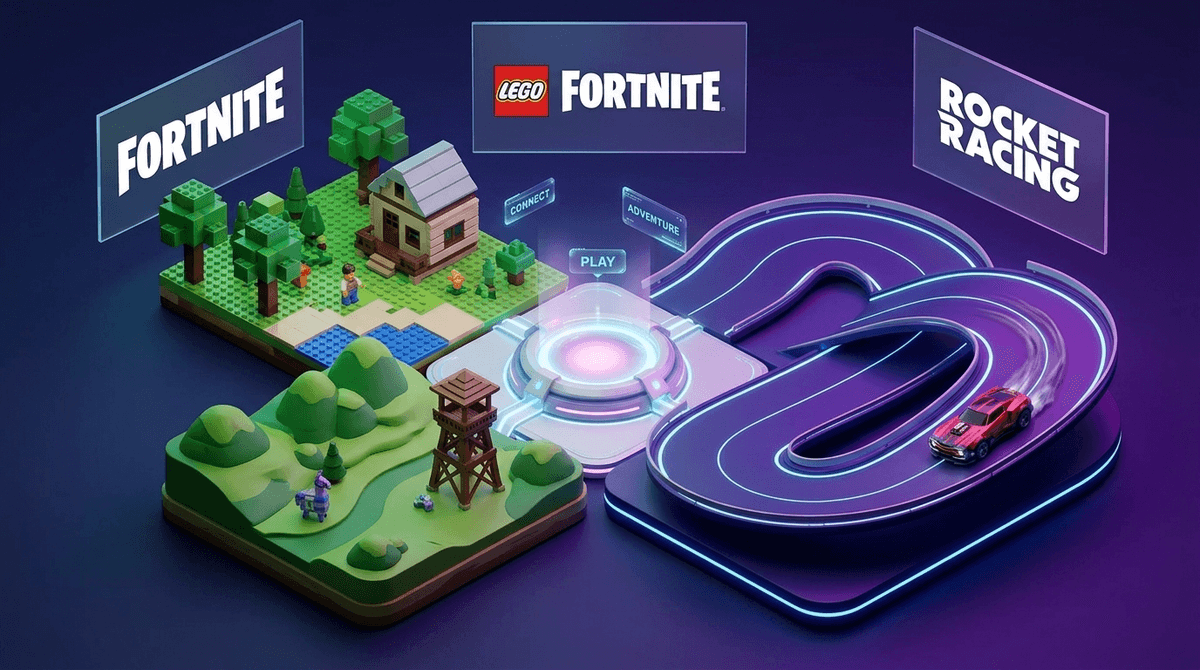
TL;DR: Fortnite is no longer just a "shooter" game; it’s a massive social ecosystem that functions like a digital mall. In 2026, the biggest shifts are the strict age-rating system for individual islands and newly granular time-limit controls that actually let you set a "digital curfew" through the Epic Games portal.
Quick Links for the Fortnite Ecosystem:
- Fortnite Battle Royale (The classic 100-player fight)
- LEGO Fortnite (A survival-crafting mode similar to Minecraft)
- Rocket Racing (High-speed arcade racing)
- Fortnite Festival (A rhythm game like Rock Band)
- Roblox (The main competitor you should know about)
If you still think Fortnite is just about 100 kids jumping out of a flying bus to shoot each other, you’re looking at a 2018 version of the world. Today, Fortnite is a "platform launcher." When your kid opens the app, they aren't just playing one game; they are entering a portal to thousands of different experiences.
Think of it like Netflix, but instead of movies, it’s interactive "islands." Some of these are made by Epic Games (the creators), like the surprisingly deep LEGO Fortnite, and others are made by random 19-year-olds in their bedrooms or big brands like Marvel and Disney.
It is the primary social square for kids in grades 3 through 10. It’s where they hang out, show off their new "skins" (digital outfits), and catch up on school gossip while hiding behind a digital brick wall.
The "Battle Royale" mode is stressful. It’s high-stakes, fast-paced, and involves a lot of losing. So why do they keep coming back?
- The Social Hub: For many kids, "playing Fortnite" is just a backdrop for a group call. They are talking about their day, using the latest slang (yes, including the "Ohio" and "Skibidi" nonsense that makes us feel 100 years old), and just being together.
- The Drip (Skins): In the playground world, having a "default" skin is a social death sentence. Kids place immense value on their digital appearance. Whether it’s a character from Star Wars, a popular YouTuber, or a giant banana, these skins are the 2026 version of name-brand sneakers.
- The FOMO Machine: Fortnite is the king of "Live Events." If you aren't there on Saturday at 2:00 PM for the season-ending explosion, you missed it forever. This creates a powerful psychological pull to stay engaged.
One of the best updates for parents is the IARC (International Age Rating Coalition) integration. Because Fortnite now hosts millions of user-created games, not all of them are appropriate for a 7-year-old.
Each "island" within Fortnite now has its own age rating.
- Battle Royale is generally rated Teen (12+ or 13+) because of the violence.
- LEGO Fortnite is usually E for Everyone.
- User-Generated Islands can range from "Cozy Farm Sim" to "Horror Escape Room."
You can now set your parental controls so your child cannot enter an island above a certain rating without you typing in a PIN. This is a massive win for intentional parenting.
Epic Games finally got the memo that "one more game" is a lie. The 2026 version of Fortnite parental controls includes a Time Limit and Reporting dashboard.
You can set:
- Daily Time Limits: Total hours allowed per day.
- Time Windows: For example, the game only works between 4:00 PM and 7:00 PM.
- The "Hard Stop": In the past, kids would argue they couldn't quit in the middle of a match. The new system can be set to allow them to finish their current match or provide a 5-minute warning before a hard lockout.
This is the big debate. On one hand, the "Creative Mode" (now powered by UEFN - Unreal Editor for Fortnite) allows kids to actually build games. They learn logic, spatial design, and even some basic coding. It’s a legitimate stepping stone to a career in tech or design.
On the other hand, the Item Shop is a masterpiece of psychological manipulation.
- V-Bucks: This is the in-game currency. By turning real money into "funny money," it’s harder for kids to grasp that they just spent $20 on a digital dance move.
- The Battle Pass: This is a $10-ish subscription that rewards them for playing more. It’s a "treadmill" designed to keep them logging in every single day.
The No-BS Take: Unless your kid is actively spending hours in the "Creative" mode building complex maps, they aren't learning entrepreneurship. They are learning how to be a consumer in a highly optimized digital storefront.
Check out our guide on whether the Fortnite Battle Pass is worth it
- Ages 7-9: Stick to LEGO Fortnite or private Creative islands with friends. Turn off voice chat entirely. At this age, the "Battle Royale" mode is often too frustrating and the social pressure is too high.
- Ages 10-12: This is the sweet spot for Battle Royale. They will want to play with school friends. Keep the console in a common area and use "Friends Only" for voice chat to avoid the toxic "randoms."
- Ages 13+: They are likely deep into the culture. Focus more on the time management and spending aspects rather than the content itself.
The biggest risk in Fortnite isn't the "gun violence" (which is cartoonish and bloodless). The risk is the people.
Voice chat with strangers is where the "brain rot" truly lives. You will hear every slur, every scream, and every weird meme imaginable if you leave "Fill" mode on with voice chat active.
Pro-Tip: Encourage your kids to use the "Ping" system to communicate with teammates if they aren't on a headset with actual real-life friends. It allows them to play effectively without having to hear a 14-year-old in another state have a meltdown.
If you want to have a real conversation with your kid about Fortnite, don't ask "Did you win?" Ask them, "Is anyone at school getting picked on for being a 'default'?"
Being a "default" (someone who hasn't bought a skin) is a major source of digital bullying in middle schools. Understanding this dynamic helps you realize that when they ask for V-Bucks, they aren't just asking for a toy—they are asking for social "armor." You don't have to buy it for them, but acknowledging that social pressure makes you an ally rather than just a "clueless parent."
Fortnite is a tool. It can be a creative outlet and a great way to stay connected with friends, or it can be a massive time-suck and a drain on your wallet.
In 2026, the tools to manage it are better than ever. You don't have to be the "No Fortnite" house, but you should definitely be the "We have a 90-minute limit and we don't talk to strangers" house.
- Audit the Settings: Log into the Epic Games Parent Portal tonight. Set the IARC rating limit to "Teen" or lower.
- Turn off "Auto-Fill" Voice Chat: Make sure they are only talking to people they actually know.
- Play with them: Seriously. Jump into a round of LEGO Fortnite or Rocket Racing. You’ll quickly see why they like it, and you'll earn a lot of "cool parent" points in the process.
Ask our chatbot for a script on how to talk to your kid about gaming limits