

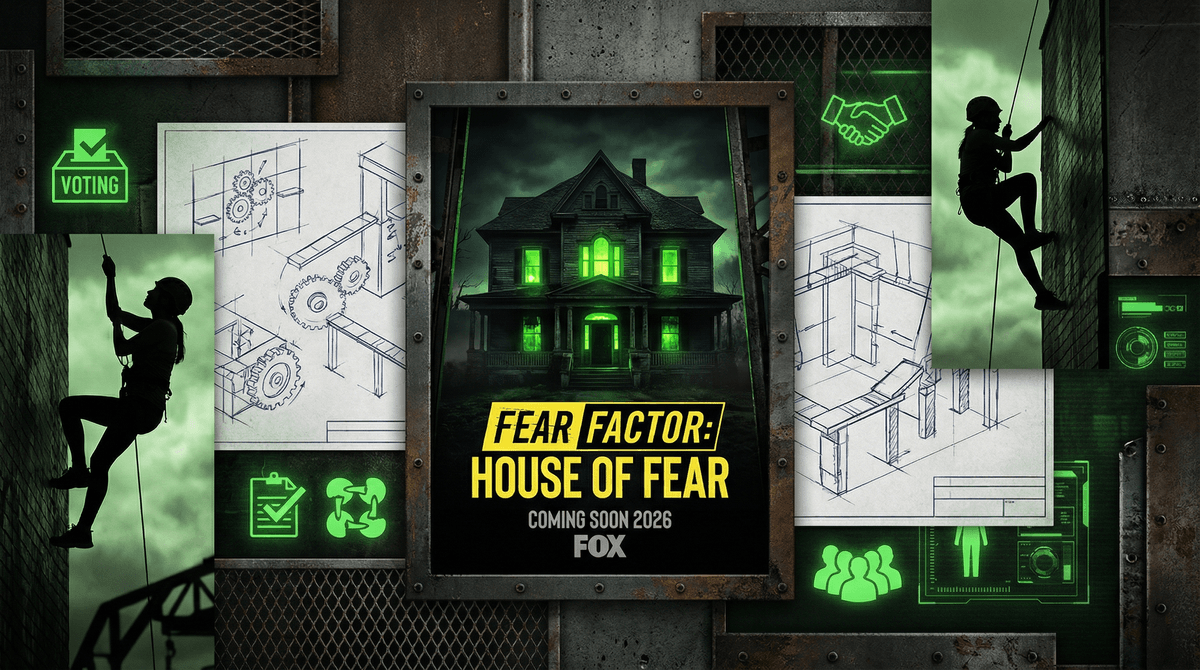
TL;DR: Fear Factor: House of Fear is the 2026 reboot we all saw coming, but with a Johnny Knoxville twist that makes it feel like a mix of Jackass and The Traitors. It’s gross, it’s high-adrenaline, and it now includes a "Social Strategy" element where contestants vote each other into stunts. Best for ages 12+ due to intense imagery and psychological manipulation.
Quick Links to Recommended "Challenge" Content:
- For the thrill-seekers: The Traitors (Strategy without the scorpions)
- For the younger crowd: Wipeout (Pure physical comedy)
- For the "How did they do that?" kids: Is It Cake? (Low stakes, high engagement)
- For the digital natives: MrBeast (The king of the modern "stunt" genre)
Screenwise Parents
See allIf you grew up in the early 2000s, you remember the original Fear Factor. It was the show that launched a thousand "I’d never eat that" conversations at the water cooler. Fast forward to 2026, and the reboot, Fear Factor: House of Fear, has officially landed on streaming.
This isn't just a nostalgic retread. Hosted by Johnny Knoxville—who has basically spent his entire career being the human embodiment of a "Don’t Try This At Home" warning—the new version introduces a psychological layer. In the original, you just had to outlast the bugs or the heights. In House of Fear, the contestants live together in a high-tension environment where they have to "nominate" peers for the most terrifying stunts.
It’s essentially "Stunt Culture" meeting "Reality TV Strategy." For our kids, who have spent the last few years watching high-production YouTube challenges, this feels like the professional version of what they see on their phones every day.
Let’s be real: kids have always loved the "gross-out" factor. Whether it’s Skibidi Toilet or the latest "Sour Candy Challenge" on TikTok, there is a biological pull toward things that make us go "Eww."
But there’s a deeper reason this specific reboot is trending in middle schools:
- The Knoxville Factor: Johnny Knoxville is a legend to us, but to kids, he’s the "OG Stunt Man." His presence gives the show a level of "clout" that a standard host wouldn't.
- The Social Game: Kids are obsessed with social hierarchy and "voting people out." This is why Among Us and Roblox "Survival" obbies are so popular. House of Fear taps into that "Who can I trust?" anxiety that is very real for 12-to-14-year-olds.
- The "Ohio" Factor: In the current kid-slang lexicon, "Ohio" basically means weird or cringey. This show is peak Ohio. It’s bizarre, it’s uncomfortable, and it’s highly meme-able.
Check out our guide on understanding current Gen Alpha slang
We need to talk about the context here. About 45% of kids in grades 6-8 report that "Challenge" videos are their primary form of entertainment on YouTube. They are used to seeing MrBeast bury himself alive or spend 24 hours in a desert.
Fear Factor: House of Fear takes that "MrBeast" energy and adds a darker, more cinematic edge. The stunts are safer than they look (thanks to massive legal teams and safety crews), but they are designed to look traumatic.
Johnny Knoxville and the Legacy of Jackass
Knoxville brings a specific brand of "self-inflicted chaos." While the show is more regulated than his Jackass Forever days, the spirit is the same: "Look at this crazy thing I’m doing for your entertainment."
For parents, the concern isn't usually that our kids will go out and eat a Madagascar Hissing Cockroach (though, never say never). The concern is the desensitization to physical risk and the normalization of "pranking" or "challenging" friends for social media views.
Screenwise generally recommends Fear Factor: House of Fear for Ages 12 and up. Here’s why:
8-11 Years Old (The "Maybe Not" Zone)
At this age, the "gross" stuff is funny, but the "fear" stuff can be genuinely overstimulating. The 2026 reboot uses a lot of psychological horror imagery—dark hallways, jump scares, and intense music. Kids this age might also lack the media literacy to realize that the "social betrayal" in the show is scripted or edited for drama.
- Better Alternative: Wipeout or American Ninja Warrior.
12-14 Years Old (The "Co-View" Zone)
This is the prime audience. They want the edge, and they want the memes. This is a great time to talk about how reality TV is edited. Ask them: "Do you think those two actually hate each other, or did the producers just edit it that way?"
- Discussion Point: Talk about the difference between "calculated risk" (with harnesses and medics) and the "TikTok stunts" they see online.
15+ Years Old (The "Media Critic" Zone)
By high school, they’ve seen it all. They’re likely watching this ironically or for the strategy. You can push the conversation further into the ethics of "misery for money" entertainment.
The biggest change in Fear Factor: House of Fear is the "House" element. Contestants live together and have to form alliances. This adds a layer of gaslighting and manipulation that wasn't in the original show.
If your kid is already into "social deduction" games like Roblox: Flicker or Among Us, they will find this fascinating. However, if your child struggles with social anxiety or has been a victim of "mean girl/boy" dynamics at school, the psychological bullying portrayed in the show might be a bit much.
Get insights on the impact of reality TV on social development
If your kids are begging to watch Fear Factor: House of Fear but you’re not quite ready to commit, or if they’ve already binged it and want more, here are our top picks:
Strategy & Social Games
- It has all the "voting people out" drama and creepy castle vibes without anyone having to eat a blended rat. It’s high-stakes and great for teaching kids about social cues and deception.
- The gold standard. If they like the survival aspect of Fear Factor, Survivor is a much more "human" show that often highlights resilience and teamwork alongside the backstabbing.
Physical Challenges (Minus the Gross-Out)
- Pure, goofy fun. It’s basically a giant Roblox obby come to life. Perfect for all ages.
- If they like the high-production stunts and "epic" feeling of the Knoxville reboot, this is a more athletic, less "gross" version.
For the "Jackass" Fans (Ages 16+)
- If you have an older teen, watching the movie that started it all (or the most recent one) can be a bonding experience—but be prepared for a lot of anatomy-based humor. It’s definitely not for the younger kids.
Fear Factor: House of Fear is exactly what you think it is: a loud, gross, high-octane spectacle. It’s not "brain rot" in the sense that it requires zero thought—the social strategy actually requires a fair bit of emotional intelligence to follow—but it’s certainly "junk food TV."
As long as your kids understand that Johnny Knoxville has a team of 50 safety experts behind every "dangerous" stunt, and as long as they aren't prone to nightmares about spiders, it’s a relatively harmless way to tap into the "stunt culture" they’re already consuming on their phones.
Next Steps:
- Watch the first episode together. See how your kid reacts to the "gross" stunts versus the "social" drama.
- Set boundaries on "Home Stunts." Remind them that the "House of Fear" has a multi-million dollar insurance policy. Your living room does not.
- Check the Screenwise Community Data. Use our app to see what percentage of other 7th graders in your district are watching the show. If everyone’s talking about it, you might want to be the "cool house" that hosts a (safe) viewing party.
Learn more about how to set up a Screenwise account for your community