

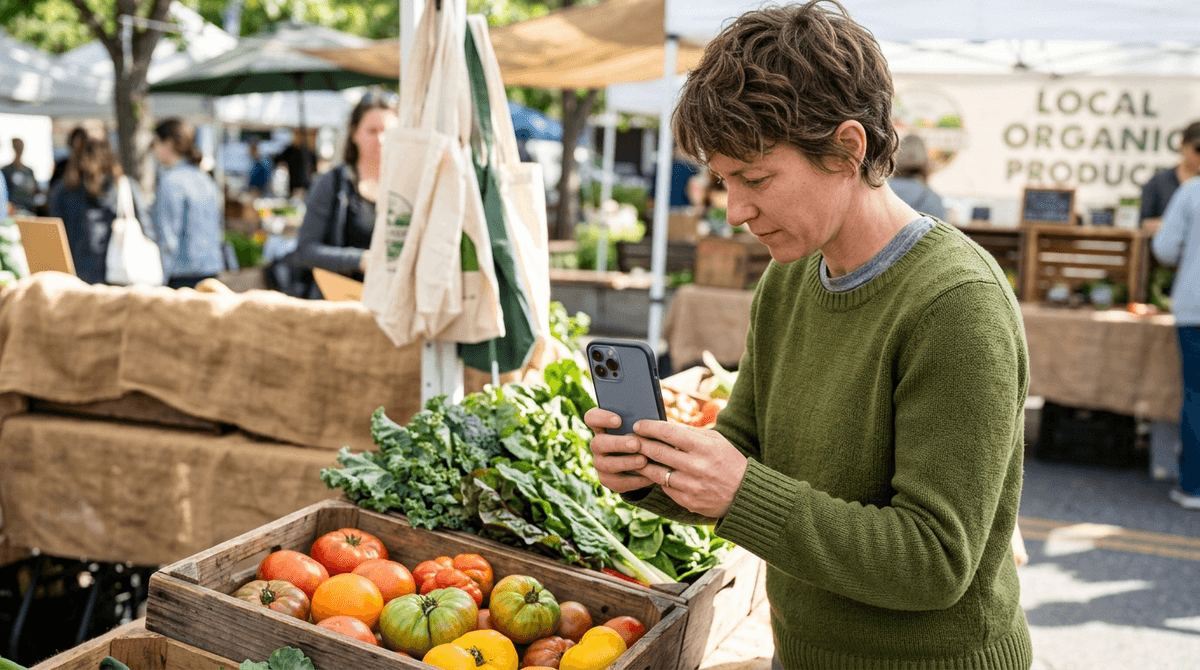

Federal food tracking rules designed to make safety recalls faster could raise prices and reduce choices at your local farmers market and neighborhood grocery store by 2026.
An upcoming FDA mandate requires strict digital tracking for certain high-risk foods by January 2026, which will speed up safety recalls but risks pricing out the small farmers and local grocers who struggle to afford the required technology and administrative work.
Your family's local food pipeline is about to become more expensive and less diverse. While the FDA's new rule helps pinpoint contaminated spinach or seafood during outbreaks in hours instead of weeks, the high cost of "data labor" falls heaviest on small-scale producers. Expect higher prices for farm-to-table produce or a drop in specialty items as local suppliers either pass along technological compliance costs or stop selling high-risk items altogether.
Foodborne illness outbreaks often leave public health officials scrambling through paper invoices to find the source of contaminated produce or seafood. To fix this, federal regulators created the Food Traceability Rule, requiring every link in the supply chain—from harvest to grocery shelf—to maintain standardized, digital-ready records by early 2026.
Researchers analyzed 1,198 public comments submitted to federal regulators by farmers, fishers, and food workers struggling to adapt to the new digital mandates.
- Infrastructure gaps present immediate roadblocks: Many small farms and fishing vessels lack the high-speed internet, cellular service, or physical setup needed to run digital logging systems.
- Flexibility creates confusion: The FDA allowed open-ended options for how businesses store their data, but this lack of standard guidance left small owners drowning in administrative ambiguity.
- Data labor costs hit small operations hardest: Large industrial farms can easily absorb the cost of automated scanning software, while family farms face hours of manual data entry or thousands in software fees.
The shift toward tech-enabled food safety naturally favors corporate mega-farms over local agricultural networks. Industrial agriculture already uses automated inventory software and dedicated compliance teams. For a small family farm operating on thin margins, forcing high-tech recordkeeping creates a silent tax that pushes small producers out of the market entirely, consolidating our food supply into fewer corporate hands.
This study examined public comments submitted to federal regulators, a pool that naturally skews toward business owners who are frustrated or struggling with the mandate. Because the findings are qualitative, they cannot predict exactly how many small farms will close or precisely how much grocery bills will rise when the rule takes full effect in 2026.
- If you rely on local farmers markets or community-supported agriculture (CSA) boxes for fresh produce... ask your local growers if they plan to keep carrying high-risk items like leafy greens or cut fruit under the new federal tracking rules.
- If you worry about foodborne illnesses like E. coli or Salmonella... expect faster, more target-specific safety recall warnings from the FDA that let you discard contaminated items without throwing out entire food categories.
- If your household budget is sensitive to organic or local food prices... prepare for modest price increases at boutique grocers and farm stands as small vendors pass along the costs of new compliance software and labor.
Faster, smarter food recalls will protect families from contaminated food, but the digital burden will squeeze the local farms and neighborhood grocers families love. You do not need to alter your immediate grocery routine today, but expect higher price tags and fewer local specialty options when federal enforcement begins in 2026.
Soonho Kwon, Catherine Wieczorek, Heidi Biggs et al. (2026). "The New Era of Tech-Enabled Traceability": Tensions between the FDA's Data Governance Vision and the Lived Realities of Food Producers. arXiv (preprint). doi:10.1145/3817012 — arxiv.org