

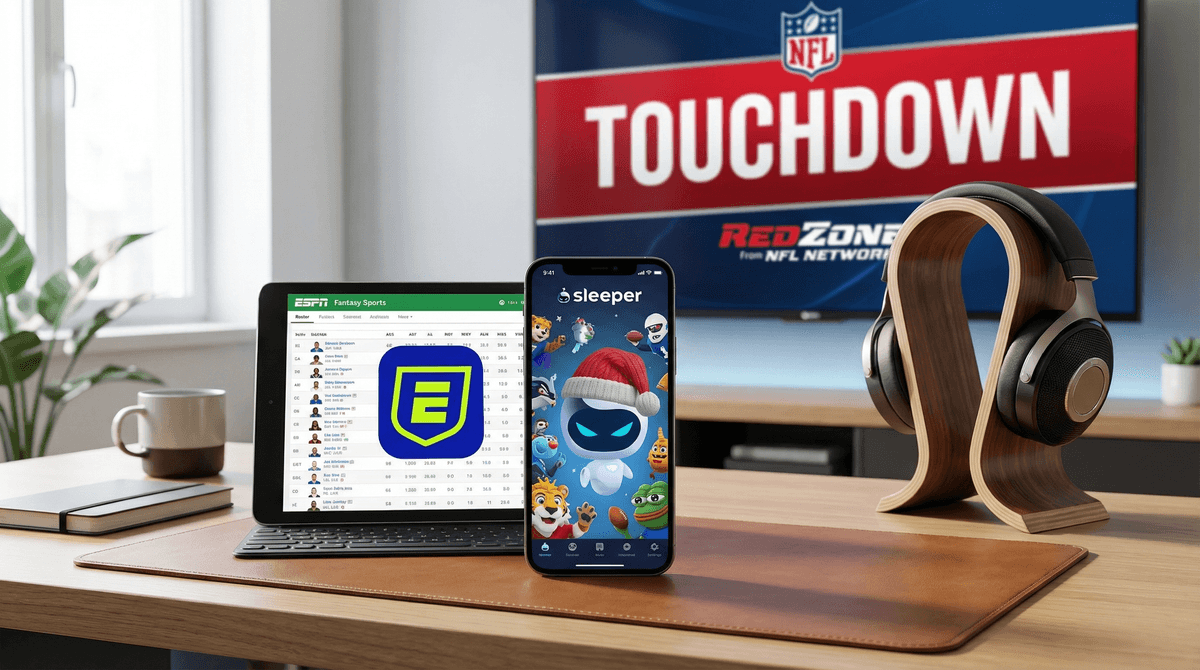
TL;DR: Fantasy football is basically Dungeons & Dragons for sports fans, but with more math and significantly more trash talk. It’s a huge social driver for kids starting around 4th or 5th grade, teaching everything from probability to "how not to be a jerk in the group chat."
Quick Links to Get Started:
- Top App for Kids: Sleeper (Clean UI, social-first, very popular with Gen Z/Alpha)
- The Legacy Option: ESPN Fantasy Sports (The "standard" but can feel cluttered)
- The Sunday Companion: NFL RedZone (Essential for tracking every score)
- Research Tool: Fantasy Footballers Podcast (Entertaining and mostly family-friendly)
If you’ve heard your kid screaming about a "waiver wire" or complaining that someone "vulture-ed a touchdown," welcome to the world of being a General Manager.
In its simplest form, fantasy football is a game where your kid "drafts" a roster of real NFL players. When those players do things on the field—gain yards, score touchdowns, or catch passes—they earn points for your kid’s fake team. Every week, they face off against a friend (or a random person online) to see whose roster performs better.
It sounds like a hobby, but for kids today, it’s a primary social currency. It’s the reason they know the backup running back for the Indianapolis Colts and the reason they are suddenly obsessed with target shares and "PPR" (Points Per Reception) scoring.
It’s easy to dismiss this as just more screen time, but there is a reason fantasy football has exploded among the middle school and high school sets.
- The Social Glue: In an era where "hanging out" often happens in a Discord server or a Roblox lobby, fantasy football provides a persistent, season-long conversation starter. The group chat is the heart of the experience.
- Hidden Math Skills: I’m not saying your kid is going to become an actuary, but they are doing more mental math and probability analysis in a fantasy draft than they probably do in a week of Prodigy. They are weighing risk vs. reward, analyzing trends, and managing a "budget" (if they play in an auction league).
- Ownership and Agency: Kids have very little control over their real lives. In fantasy, they are the boss. They decide who to fire (cut) and who to hire (pick up from the waiver wire).
Learn more about how fantasy sports can improve data literacy
Not all fantasy apps are created equal. Some feel like a sleek social media app, while others feel like a 1998 Excel spreadsheet.
This is the current "cool" app. If your kid is in a league with school friends, they are likely on Sleeper. It’s designed to look and feel like a messaging app. The UI is modern, it has built-in mascots, and the chat features are top-tier.
- The Pro: It makes the social aspect seamless.
- The Con: It’s very "sticky"—the alerts are constant, and the social nature means kids are on it more than they would be on a traditional site.
The "Old Reliable." Most adult leagues are here. It’s integrated with ESPN’s news and video clips.
- The Pro: High-quality analysis and very stable.
- The Con: The interface is a bit corporate and "ad-heavy." It can feel a bit overwhelming for a younger kid just starting out.
Similar to ESPN, but many purists prefer their interface. It’s a solid middle ground.
I’m a fan of fantasy football, but we need to be real about the potential pitfalls. This isn't just about sports; it’s about digital habits.
1. The Gambling Pipeline
This is the biggest "no-BS" concern. Most fantasy apps now have direct integrations or heavy advertising for "Daily Fantasy Sports" (DFS) like DraftKings or FanDuel. These are essentially gambling platforms. While a season-long league with friends for a $10 trophy is harmless fun, the "pick-em" style games on these apps can be addictive. Make sure your kid understands the difference between a season-long hobby and "betting the over" on a player’s yardage.
2. Group Chat Toxicity
The "trash talk" is part of the fun, but for middle schoolers, that line can get blurry fast. If the league includes kids they don't know well, things can turn into "Ohio" levels of weirdness or flat-out bullying pretty quickly. Check out our guide on managing group chat drama
3. The "Sunday Scramble"
Sundays can become a black hole of screen time. Between checking the scores on the app, watching NFL RedZone, and texting the group chat, a kid can easily spend 7 hours straight in a football trance.
Ages 8-11: The "Co-Pilot" Phase
At this age, they probably shouldn't have their own account on a major app. Instead, start a family team. Let them pick the players, but keep the app on your phone. This allows you to talk through the decisions and see the "trash talk" before they do.
- Recommendation: Use a physical draft board or a simple website rather than a high-octane app.
- Watch for: Over-attachment to players. They will be devastated when their "star" gets injured.
Ages 12-14: The "Independent GM" Phase
This is when they’ll want to join a league with friends. This is a great time to set boundaries around "research" time.
- The Rule: No checking scores at the dinner table.
- The Talk: Discuss the "Gambling Lite" aspects of the ads they see. Explain how those companies make money (spoiler: it’s by people losing).
Ages 15-18: The "Vegas" Phase
High schoolers will likely play for money. Whether it’s a $20 buy-in or a "loser has to do something embarrassing" bet, the stakes get higher.
- The Focus: Financial literacy and sportsmanship. If they lose, they pay up gracefully. If they win, they don't gloat (too much).
See how to set screen time limits for sports apps
If you want to connect with your kid about their team, don't just ask "Are you winning?" That’s a boring question. Instead, try these:
- "Who was your biggest 'bust' this week?" (The player who did way worse than expected).
- "Did you make any trades today, or is everyone in your league being stubborn?"
- "Who is the one player you’re 'starting' today that you're actually nervous about?"
This shows you understand the mechanics of the game, not just the score.
If your kid is obsessed, you can steer that interest toward higher-quality content than just TikTok highlight reels.
- For Strategy: The Fantasy Footballers on YouTube. They are funny, professional, and generally keep it PG-13.
- For the History: NFL 360 offers great storytelling about the players behind the stats.
- For Fun: The League (Note: This is for older teens only—it’s R-rated humor and very cynical, but it’s the definitive show about fantasy football culture).
Fantasy football isn't "brain rot." It’s a complex, data-driven social game that happens to be wrapped in a sports jersey. The danger isn't the game itself; it’s the gambling-adjacent marketing and the potential for the group chat to become a toxic wasteland.
If you stay involved, keep the apps off the dinner table, and keep a sharp eye on any "deposit $10 to win $1000" ads, it’s a fantastic way for kids to develop a hobby that combines math, strategy, and social bonding.
Next Steps:
- Ask your kid which app their friends are using (likely Sleeper).
- Set a "Sunday Window"—a specific time where they can be "all in" on football, so it doesn't bleed into the whole day.
- Check out our guide to sports betting and kids to stay ahead of the curve.
See if your kid's fantasy football league is actually gambling