

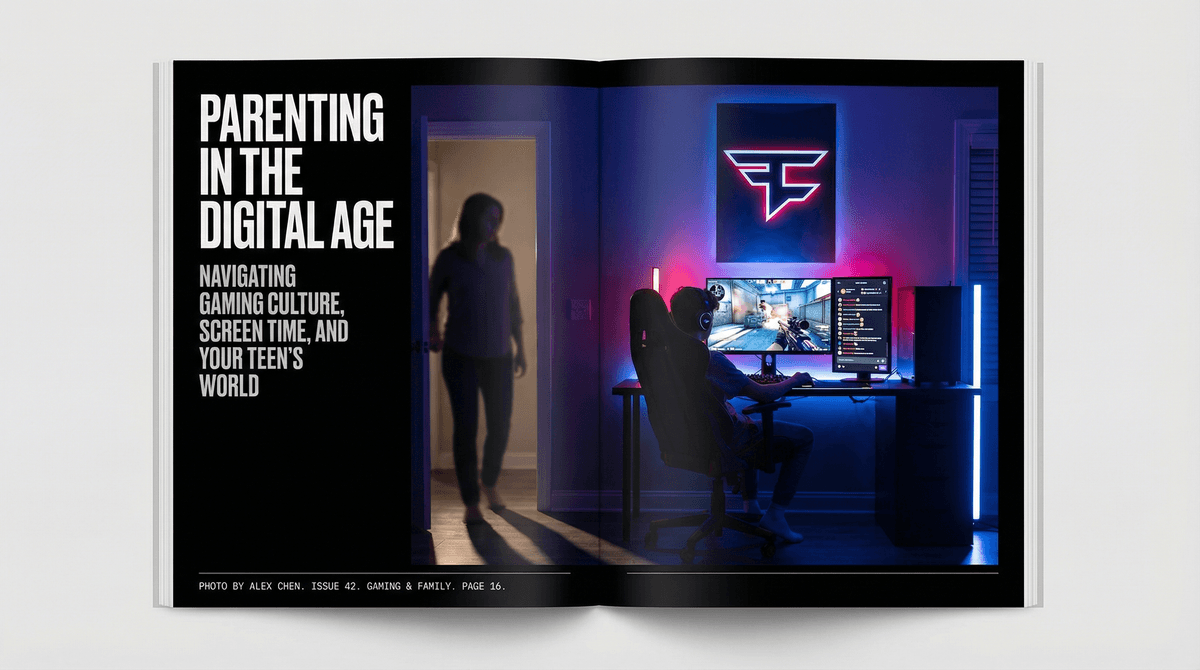
When Watching FaZe Clan Becomes an Addiction
Your kid isn't playing games—they're watching other people play games for hours. FaZe Clan streams on Twitch and YouTube can be just as addictive as gaming itself, triggering similar dopamine patterns and compulsive viewing behaviors. Here's what you need to know about esports spectating addiction and how to spot the warning signs.
Quick resources:
FaZe Clan is one of the biggest esports organizations in the world—think professional sports team, but for gaming. They have players competing in Fortnite, Call of Duty, Valorant, and other competitive games. But they're not just about tournaments—FaZe members are content creators who stream their gameplay, pull pranks, show off their lifestyle, and build massive followings.
For kids and teens, FaZe Clan members are celebrities. They've got the gaming skills, the personality, the expensive setups, and the clout. When your kid says they're "watching FaZe," they're usually watching live streams or YouTube videos of these players gaming, reacting, or just hanging out with their audience.
The pull of esports streams isn't mysterious—it's engineered to be compelling:
Parasocial relationships: Streamers interact with chat in real-time, responding to comments, calling out usernames, creating the illusion of friendship. Your kid feels like they know these people. They're not watching a TV show—they're "hanging out" with their favorite player.
FOMO and live content: Streams happen in real-time. Miss it, and you miss the inside jokes, the epic plays, the drama. This creates urgency that recorded content doesn't have. Kids feel they need to be there now or they'll be left out of conversations at school.
Unpredictability: You never know when something crazy will happen—a tournament win, a beef with another streamer, a hilarious fail. That variable reward schedule (the same mechanism that makes slot machines addictive) keeps viewers glued to the screen.
Community belonging: Chat rooms and Discord servers create tribal identity. Being a FaZe fan isn't just about watching—it's about being part of something. Kids bond over shared references, emotes, and streamer catchphrases.
Skill aspiration: Many kids watch to improve their own gameplay or because they dream of becoming pro gamers themselves. Watching FaZe members feels productive—like studying film if you want to play basketball.
Here's what makes esports spectating particularly risky: it doesn't feel like screen time to kids. They're not "just watching TV"—they're participating in a live event, learning skills, being part of a community. This makes it much harder for them to self-regulate.
Research on gaming disorder has focused primarily on playing games, but emerging studies show that passive gaming content consumption can trigger similar compulsive patterns. The same dopamine hits, the same difficulty with impulse control, the same withdrawal symptoms when access is removed.
Warning signs your kid might be developing problematic viewing habits:
- Time distortion: They consistently lose track of time while watching streams, often staying up way past bedtime
- Withdrawal symptoms: Irritability, anxiety, or anger when they can't watch their favorite streamers
- Neglecting responsibilities: Homework suffers, chores don't get done, social plans get canceled to watch streams
- Constant checking: Refreshing Twitch or YouTube throughout the day to see if their favorite streamer is live
- Financial pressure: Begging for money to subscribe, donate, or buy merch to support streamers
- Identity fusion: Their personality and interests become entirely centered on FaZe Clan and esports culture
- Difficulty with other activities: Books, sports, creative hobbies feel boring compared to the constant stimulation of streams
The tricky part? Some of these behaviors look like normal fandom. Plenty of kids go through phases of intense interest in specific content creators. The line crosses into addiction territory when it interferes with functioning and when attempts to moderate viewing result in genuine distress.
Watching streams isn't just passive—it's increasingly transactional. Twitch subscriptions ($5-25/month per streamer), "bits" for cheers, YouTube memberships, donations during streams, exclusive Discord access—there are endless ways for kids to spend money to feel closer to their favorite players.
The social pressure is real. When your username gets called out during a stream because you donated, that recognition feels amazing. When everyone in chat has the subscriber badge except you, that feels terrible. Kids describe feeling like they're "supporting" their favorite creator, not understanding that FaZe members are often making six or seven figures.
Some families report kids spending hundreds of dollars of saved birthday money or, worse, using parent credit cards without permission. Talk to your kids about in-app purchases and the psychology of microtransactions.
Ages 8-10: At this age, kids are just discovering gaming content. If they're watching FaZe Clan streams, be aware that the content often includes mature language, adult themes, and games rated T or M. Consider steering them toward more age-appropriate gaming content like DanTDM or PopularMMOs who create content specifically for younger audiences.
Ages 11-13: Middle schoolers are prime FaZe Clan territory. This is when parasocial relationships with streamers intensify and FOMO peaks. Set clear boundaries around stream watching—treat it like any other screen time. Consider watching together occasionally so you understand the appeal and can have informed conversations.
Ages 14-17: Teens will push back hard against viewing limits, arguing that watching streams is social activity or educational. They're not entirely wrong—there are benefits to understanding esports culture and analyzing high-level gameplay. The key is ensuring it doesn't crowd out everything else. Help them maintain balance and be honest about how the platform is designed to maximize viewing time.
Streams aren't just gaming: FaZe Clan content often includes lifestyle vlogs, pranks, challenges, and drama that have nothing to do with actual gaming. Some of this content involves risky behavior, materialism, and values you might not want your kids absorbing uncritically.
The algorithm is relentless: Once your kid watches FaZe content, YouTube and Twitch will recommend endless similar content. Autoplay means one video becomes five becomes three hours. The platforms profit from attention, and they're very good at capturing it.
Live chat is often toxic: Twitch chat moves fast and often includes spam, harassment, inappropriate jokes, and trolling. Even if the streamer themselves is relatively family-friendly, the community might not be. Learn about Twitch safety settings.
It's not a career path for 99.9% of kids: Many kids watch FaZe members and think "I could do that." The reality is that becoming a successful streamer or pro gamer requires extraordinary skill, timing, luck, and often comes with serious mental health costs. It's fine to support gaming as a hobby, but help your kids maintain realistic expectations and develop diverse interests.
Set clear boundaries: Treat stream watching like any other screen time. Set specific time limits (many families find 30-60 minutes on school days, more on weekends works well). Use device controls or apps like Screenwise to enforce limits when needed.
Create stream-free zones: No streams during meals, homework time, or the hour before bed. The stimulation makes it hard to transition to other activities.
Watch together sometimes: Sit down and watch a stream with your kid. Ask questions. Try to understand the appeal without judgment. This builds connection and gives you informed context for future conversations.
Encourage active over passive: If your kid loves gaming content, encourage them to actually play games rather than just watch. Better yet, play together. Even better, encourage them to create their own content if they're interested in that side of things.
Diversify their interests: Make sure streams aren't their only hobby. Sports, music, art, reading, outdoor time—kids need varied experiences. If stream watching is crowding everything else out, that's a red flag.
Talk about parasocial relationships: Help kids understand that streamers are entertainers performing a role, not their actual friends. The relationship is one-directional by design. This doesn't mean the entertainment isn't valuable, but kids need to recognize the dynamic.
Address the money piece directly: Be explicit about your family's policy on stream subscriptions and donations. Many families have a "no money for streamers" rule, while others allow kids to use their own earned money within limits. Whatever you decide, make it clear and explain the reasoning.
Monitor for addiction signs: If you're seeing withdrawal symptoms, lying about viewing time, or significant impact on grades and relationships, take it seriously. Consider consulting with a therapist who understands gaming and digital media issues.
Watching FaZe Clan streams isn't inherently harmful—lots of kids enjoy esports content without developing problematic patterns. The issue is that the platforms hosting this content are designed to maximize engagement, and developing brains are particularly vulnerable to these mechanisms.
Your job isn't to completely ban esports content (though that might be appropriate in some cases). Your job is to help your kids develop a healthy relationship with this type of media—one where they can enjoy it without it taking over their lives.
The kids who do best with esports content are those who:
- Have clear boundaries and stick to them
- Maintain diverse interests and activities
- Understand the business model behind streaming
- Can critically evaluate what they're watching
- Have strong real-world relationships and connections
If your family is struggling with esports viewing that's crossed into compulsive territory, you're not alone. This is an increasingly common issue as streaming platforms have exploded in popularity. Start with conversation, set clear expectations, and don't be afraid to pull back access if needed.
The goal is raising kids who can engage with digital culture thoughtfully and intentionally—not kids who are at the mercy of whatever the algorithm serves up next.
Additional resources: