

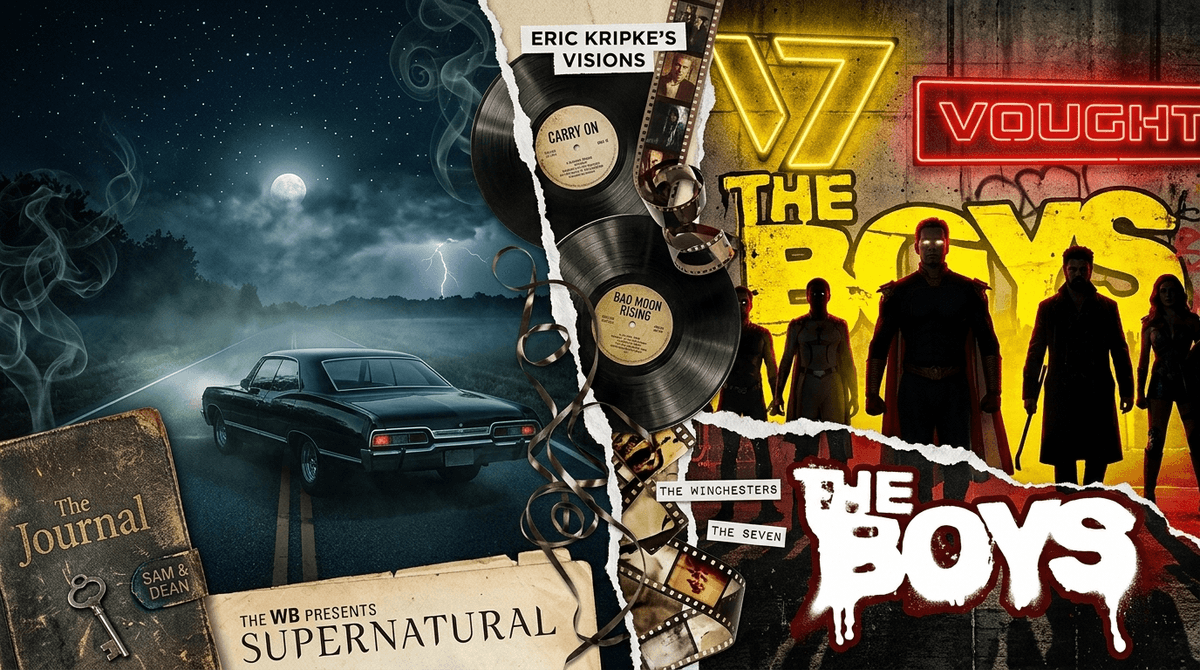
If your teen is currently begging you to watch The Boys because the internet is melting down over today's series finale, you need to know about Eric Kripke—the mastermind who turned a niche comic book into a cultural juggernaut. Kripke is a creator who doesn't do "mild"; his shows are loud, emotionally intense, and often incredibly bloody. But behind the shock value is a writer obsessed with family dynamics, power structures, and classic rock.
TL;DR: Eric Kripke is the television creator famous for blending high-octane genre concepts with deep emotional core dynamics, best seen in Supernatural and The Boys. While Supernatural is a solid, spooky monster-of-the-week drama that's great for older middle schoolers, The Boys is a hard-R satirical bloodbath strictly meant for older teens and adults. If you want a complete breakdown of what shows are worth their screen time, check out our best TV shows for kids list.
Eric Kripke has a very specific DNA as a writer. Whether he’s writing about two brothers hunting demons in a '67 Chevy Impala or a group of unhinged vigilantes trying to murder corrupt superheroes, his shows always boil down to the same core elements:
- The "Dad" of It All: Almost every Kripke protagonist has massive, unresolved issues with an abusive, absent, or legendary father figure. It’s the ultimate driving force for his characters' trauma and motivation.
- Classic Rock Soundtracks: If there isn’t a Kansas, Led Zeppelin, or AC/DC track playing during a dramatic montage, it’s probably not a Kripke joint.
- Found Family vs. The Establishment: His heroes are always scrappy underdogs fighting a massive, corrupt system—be it Heaven and Hell, a time-traveling conspiracy, or a multi-billion-dollar superhero conglomerate.
Let's break down his two biggest hits, because they require vastly different parenting strategies.
This is where Kripke made his name. He ran the first five seasons (which many fans consider the show's gold standard, though it ultimately ran for 15).
- The Vibe: Spooky, atmospheric, and deeply character-driven. It's essentially The X-Files meets a classic American road trip.
- The Content: There is plenty of blood, jump scares, and urban-legend horror, but it's CW-level. It’s gothic and dramatic, not gratuitous.
- The Sweet Spot: This lands beautifully with middle schoolers and early high schoolers. It deals with loyalty, sacrifice, and codependency in a way that actually gives you plenty to talk about. For a deeper dive into the spooky stuff, see our guide on is Supernatural okay for middle schoolers.
With the series finale dropping today, this show is the absolute peak of Kripke's cultural footprint. But make no mistake: this is a completely different beast than his network television days.
- The Vibe: A pitch-black, hyper-violent satire of corporate greed, celebrity worship, and political extremism.
- The Content: It is wall-to-wall graphic violence, exploding bodies, extreme sexual situations, and relentless profanity. It does not hold back, and it actively tries to outdo its own shock value every single season.
- The Sweet Spot: This is strictly for mature high schoolers (16+) and adults. If your teen is watching, they shouldn't just be there for the gore—they need to be old enough to understand the sharp, cynical political and media satire.
In interviews, Kripke has been incredibly open about how he balances the shocking gore with the emotional core of his characters. If you want to see him break down how he approached the finality of these characters for today's massive series finale, check out this interview:
Teens don't just watch Kripke's shows; they obsess over them. There's a reason Supernatural became a cornerstone of internet fandom culture, and why The Boys dominates social media feeds. Kripke understands teenage angst better than almost anyone else in Hollywood, but he doesn't patronize it.
- Emotional Authenticity: Even when characters are fighting angels or laser-eyed corporate psychopaths, the relationships feel painfully real. The codependency of Sam and Dean Winchester or the toxic, high-stakes romance of Hughie and Starlight resonates with teens because it mirrors the intense, high-stakes feelings of adolescence.
- No Easy Answers: Kripke doesn't do "happily ever after." His worlds are morally gray. The good guys do terrible things to survive, and the bad guys are often pathetic and humanized. For teens figuring out their own moral compasses in a complicated world, this gray area is far more compelling than a standard superhero moral.
- The Humor: Even in his darkest hours, Kripke loves a good gag. Whether it's a meta-episode where characters realize they are in a TV show or a ridiculous, over-the-top superhero parody, the humor keeps the bleakness from becoming unbearable.
If your high schooler is diving into The Boys or its college-spinoff Gen V, the biggest hurdle isn't the blood—it's the cynicism. Kripke's modern work is designed to make viewers uncomfortable with the state of the world. It parodies real-world politics, corporate media, and online radicalization in real-time.
The Pro-Tip: Don't just focus on "how much blood was in that scene" or try to shield them from the violence if they are already watching. Instead, ask your teen what they think the show is actually trying to say about corporate power or social media. If they're just watching for the shock-value gore, they're missing the entire point of Kripke’s writing. If they want to see how the spin-off compares to the flagship, read our breakdown on The Boys vs Gen V.
Q: Is 'The Boys' appropriate for a 14-year-old?
Generally, no. The Boys features extreme, graphic violence, explicit sexual content, and heavy drug use that goes far beyond typical superhero media. It's best reserved for older teens (16+) who can process both the intense imagery and the complex political satire.
Q: What is Eric Kripke's most kid-friendly show?
Kripke's early 2010s sci-fi shows like Revolution or Timeless are much tamer than his recent work. Timeless is a fantastic, family-friendly historical time-travel adventure that is perfect for middle schoolers and lacks the graphic nature of his other hits.
Q: Did Eric Kripke write the comics for 'The Boys'?
No, the comic book series was written by Garth Ennis and illustrated by Darick Robertson. Kripke adapted the comics for television, making significant changes to the characters, plotlines, and tone to make the story more grounded and character-focused.
Q: Why is Eric Kripke's work so violent?
Kripke uses extreme violence as a narrative tool to subvert the clean, consequence-free action of mainstream superhero and fantasy media. In his shows, actions have messy, visceral consequences, which he uses to highlight the real-world dangers of unchecked power.
If you're trying to figure out where to draw the line on mature content for your family, we've got you covered. Check out our digital guide for high schoolers to navigate the mature streaming landscape, or browse our best TV shows for kids list for great alternatives that still deliver high-intensity storytelling without the extreme gore.
