

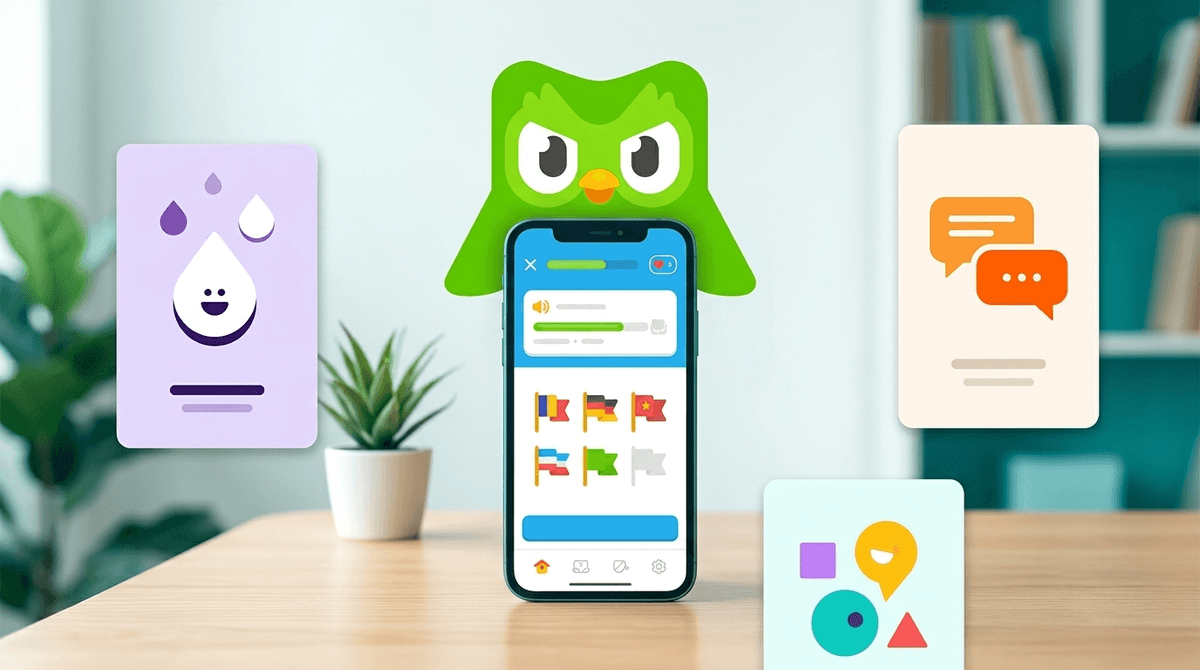
TL;DR: Duolingo is the gateway drug of educational apps. It’s brilliant at keeping kids engaged via "streak fever" and aggressive gamification, but it’s often more of a game than a deep linguistic tool. If your kid is stressed about a 200-day streak but can't order a taco in Spanish, it might be time to pivot.
Quick Links:
- Best for the little ones: Duolingo ABC
- The "unhinged" classic: Duolingo
- Best for visual learners: Droplets
- Best for serious learners: Babbel
- Best for toddlers: LingoKids
If you’ve been within ten feet of a tablet in the last five years, you know Duo. He’s a bright green owl who oscillates between being a cute cheerleader and a passive-aggressive stalker who will haunt your lock screen if you forget your French lesson.
Duolingo has effectively "solved" the problem of making kids want to learn. By 2026, the app has leaned even harder into AI-driven conversations and "Max" tiers that feel like chatting with a real person. But at its core, it uses the same dopamine-loop mechanics as Roblox or Fortnite: leaderboards, daily streaks, "lingots" (currency), and XP.
It’s the "Ohio" of educational apps—sometimes weird, occasionally nonsensical (no, I don't need to know how to say "The horse is eating the red apple" in Latin), but undeniably everywhere.
Kids love Duolingo for the same reason they love Minecraft: it gives them a sense of progression.
- The Streak: This is the big one. In 2026, a "streak" is social currency. Losing a 300-day streak feels like a genuine tragedy to a ten-year-old. It’s a badge of honor, but it’s also a source of "streak fever"—that low-grade anxiety that hits at 9:00 PM when they realize they haven't done their German.
- The Leagues: Competing against strangers to move from the "Bronze League" to the "Diamond League" turns language learning into a sport.
- The Characters: Duo, Lily (the goth teen), and Zari (the overachiever) have become memes in their own right. They feel like characters from a Netflix show rather than a textbook.
Is the Duolingo streak actually helping kids learn?
While Duo is the king, there are other players in the space that might actually be better depending on your kid’s age and goals.
Ages 3-7. This is a separate app focused on literacy and phonics rather than foreign languages. It’s excellent because it has zero ads and no in-app purchases. It’s basically a safe, high-quality digital tutor for early readers. If your kid is too young for the main app, start here.
Ages 7-12. This is the "kid version" of the Drops app. It’s incredibly visual. Instead of typing out sentences, kids swipe and match illustrations to words. It’s great for kids who find the heavy reading/writing of Duolingo a bit "mid" or boring. It limits sessions to five minutes a day, which is a blessing if you’re worried about screen time.
Ages 2-6. This is less about "learning a language" and more about "immersion through play." It’s full of songs, games, and activities. Think of it as a more interactive version of Sesame Street. It’s polished, safe, and very "brain rot" proof.
Ages 13+. If you have a high schooler who actually wants to pass their AP Spanish exam or talk to people on a summer trip, Babbel is the "adult in the room." It’s less about the "game" and more about practical conversation. It’s a subscription model, but the quality of the curriculum is significantly higher than the free apps.
Ages 10+. Pro-tip: Many local libraries give you free access to Mango. It’s fantastic for cultural context—it explains why people say things a certain way, not just the vocabulary. It’s the "quiet luxury" of language apps.
We need to talk about the "guilt-tripping." Duolingo is famous for its "unhinged" marketing. The notifications can get aggressive: "These reminders don't seem to be working. We'll stop sending them for now."
To an adult, that’s funny. To a sensitive 9-year-old, that feels like they’ve let down a friend. This is a form of persuasive design. It’s meant to keep them coming back, not necessarily because they want to learn, but because they want to avoid the negative feeling of "failing" the owl.
Also, be aware of the Leaderboard. To stay at the top, kids sometimes start "farming" easy lessons (like repeating Lesson 1 over and over) just to get XP. They aren't learning new Spanish; they're just playing the system to win a digital trophy. If you see your kid doing this, the app has officially shifted from "educational" to "just another game."
Learn more about persuasive design in kids apps
- Preschool (Ages 3-5): Stick to Duolingo ABC or LingoKids. Avoid the main Duolingo app; the social features and "League" competition are too much for this age.
- Elementary (Ages 6-10): Droplets is a winner here. If they use Duolingo, turn off the social/friends feed in the settings to keep it focused on the lessons.
- Middle School (Ages 11-13): This is the peak "streak" age. Watch out for anxiety around the 24-hour clock. Remind them that a "Streak Freeze" is a tool, not a cheat code.
- High School (Ages 14+): Encourage them to move toward Babbel or even Pimsleur for better speaking skills. At this age, Duolingo should be a supplement, not the whole curriculum.
Duolingo is generally "Safe-ish," but there are a few things to toggle:
- The Social Feed: You can follow friends and see their progress. In 2026, this has expanded to include more "community" features. If you want to keep your kid's experience private, you can set the profile to "Private" in the desktop settings (strangely, it’s often harder to find in the app).
- In-App Purchases: "Gems" and "Hearts" can be bought with real money to keep a streak alive. Make sure your App Store password is required for every purchase, or you might find a $50 charge for "Owl Gems."
- Ads: The free version has ads. Most are for other games, and some can be a bit "click-baity." If you’re using it daily, the "Super Duolingo" subscription is usually worth it just to kill the ads and the "Hearts" system (which penalizes kids for making mistakes—the literal opposite of how learning works).
Check out our guide on setting up iPhone parental controls
If your kid is obsessed with their streak, have a "vibe check" conversation. You don't have to be a buzzkill, but you can help them see the matrix.
- Ask: "Are you doing your Spanish today because you want to learn a new word, or because you're scared of losing the streak?"
- The "Real World" Test: "That’s awesome you have a 50-day streak! Can you tell me how to ask for the bathroom in Spanish without looking at the phone?"
- Normalize Breaking the Streak: Sometimes, the most "Screenwise" thing a kid can do is intentionally let a streak die to prove they aren't controlled by the app. It's a power move.
Is Duolingo "brain rot"? Absolutely not. It’s a high-quality, scientifically-grounded way to get familiar with a language.
Is it a magic bullet that will make your kid bilingual while they sit on the couch? Also no.
Use it as a "spark." If they love the gamification, let them run with it, but keep an eye on the "streak stress." If the owl starts making them cry or stay up past their bedtime, it’s time to remind them that Duo is just a bunch of pixels, and it's okay to let him be "sad" for a day.
- Audit the settings: Go into the Duolingo settings and decide if the "Leagues" are motivating or stressful for your kid.
- Try a "No-Phone" Challenge: See if they can use what they learned in a real conversation or while watching a show like Maya and the Three in the target language.
- Explore alternatives: If they’re bored of the owl, download Droplets for a week and see if the visual style clicks better.