

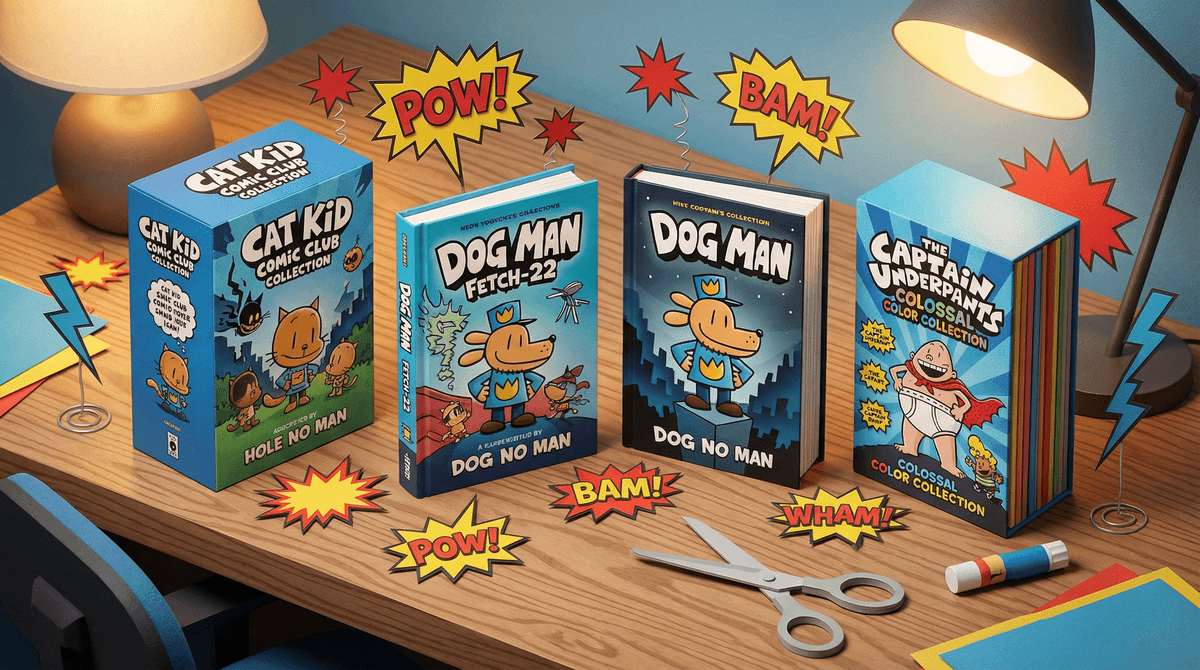
Dog Man is a graphic novel series by Dav Pilkey (yes, the same guy who created Captain Underpants). The premise is wonderfully ridiculous: a police officer and his K-9 partner are injured in an explosion, and a nurse surgically attaches the dog's head to the cop's body, creating Dog Man—a crime-fighting superhero who's part dog, part man, and 100% chaos.
The series now has 12+ books and has sold over 50 million copies worldwide. If your elementary schooler isn't reading them yet, they probably know at least five kids who are. These books are absolutely dominating the 6-10 year old reading landscape right now, and for once, that's actually great news.
Let's be real—these books look like they were drawn by a fourth grader. And that's exactly the point.
The art style is intentionally simple. Each Dog Man book is presented as if it was created by two kids named George and Harold (the same duo from Captain Underpants). The drawings are crude, the jokes are silly, and there's a meta-narrative where the "kid authors" make mistakes, cross things out, and add editorial notes. This makes the books feel incredibly accessible to reluctant readers who might be intimidated by "real" chapter books.
The humor hits perfectly for elementary schoolers. There's toilet humor (of course), visual gags, wordplay, and slapstick comedy. The villain is literally a cat named Petey who's trying to take over the world. Dog Man himself can't resist chasing squirrels, licking people's faces, or getting distracted by his own tail—even in the middle of fighting crime.
But here's what surprised me: underneath all the potty jokes and silly drawings, these books actually have genuine heart. The later books in the series deal with themes like redemption, found family, forgiveness, and doing the right thing even when it's hard. Petey the cat goes through a legitimate character arc where he tries to become a better person (er, cat) for his son, Lil Petey.
The Reading Level Sweet Spot
Dog Man books are technically labeled for ages 7-10 (grades 2-5), but the reading level is accessible enough that strong first-grade readers can handle them, and plenty of fifth graders still love them.
The text is simple, but the graphic novel format is actually teaching sophisticated reading skills. Kids have to integrate text, images, and sequential storytelling—which requires different cognitive work than traditional chapter books. Research shows that graphic novels can actually improve reading comprehension and visual literacy.
Yes, There's Potty Humor
Look, I'm not going to sugarcoat it—there are jokes about poop, pee, and butts. Dog Man drinks from toilets. There's a character called "Flat Petey" who gets squished flat and looks vaguely inappropriate from certain angles (though it's completely innocent).
If you're a family that's trying to minimize bathroom humor, these books will frustrate you. But if you can tolerate it, the potty jokes are actually the gateway that gets millions of kids excited about reading voluntarily. And honestly? That's worth something.
The "Flip-O-Rama" Factor
One of Pilkey's signature moves is the "Flip-O-Rama"—a flipbook-style animation sequence in the corner of the pages. Kids flip back and forth rapidly to create the illusion of movement. It's interactive, it's engaging, and it makes reading feel like an activity rather than a chore.
Some kids get so into these that they start creating their own flip books. If your child shows interest, that's a perfect opportunity to encourage creative storytelling and sequential art.
The Deeper Themes (Yes, Really)
Starting around book 3 or 4, the series gets surprisingly thoughtful. Dog Man: Fetch-22 deals with self-doubt and depression. Dog Man: For Whom the Ball Rolls explores grief and loss. Dog Man: Mothering Heights tackles themes of maternal love and sacrifice.
Petey's relationship with his son Lil Petey becomes a genuinely moving story about a reformed villain trying to break cycles of bad behavior. It's the kind of emotional depth that can spark real conversations with your kids about empathy, second chances, and what it means to be a good person.
Ages 6-7: Great for strong readers or as a read-aloud. The humor will land, though some of the emotional themes might go over their heads.
Ages 8-10: The absolute sweet spot. These kids will devour the entire series and probably reread their favorites multiple times.
Ages 11+: Some fifth and sixth graders still love Dog Man, though they might start gravitating toward Dav Pilkey's Cat Kid Comic Club series or other graphic novels like Amulet or Diary of a Wimpy Kid.
Dog Man books are silly, messy, and absolutely not "literary." They're also getting millions of kids excited about reading, building visual literacy skills, and sneaking in genuine emotional depth between the fart jokes.
If your child is a reluctant reader, these books might be the bridge that gets them hooked on reading for pleasure. If your child already loves reading, Dog Man is a fun, low-stakes series they can fly through and enjoy without pressure.
The real question isn't whether Dog Man is "good enough"—it's whether it's working for your kid. And for a huge percentage of elementary schoolers right now, it absolutely is.
- Start with book one: Dog Man (book 1) introduces all the characters and sets up the world
- Check your local library: These books are constantly checked out, but most libraries have multiple copies
- Consider the audiobooks: If your child struggles with reading stamina, the Dog Man audiobooks are well-produced and engaging
- Explore what comes next: Once they finish Dog Man, try Cat Kid Comic Club (same universe, slightly more advanced) or other graphic novel series
And hey—if you need help figuring out whether your kid's reading habits are on track compared to their peers, Screenwise can help you understand that in context.