

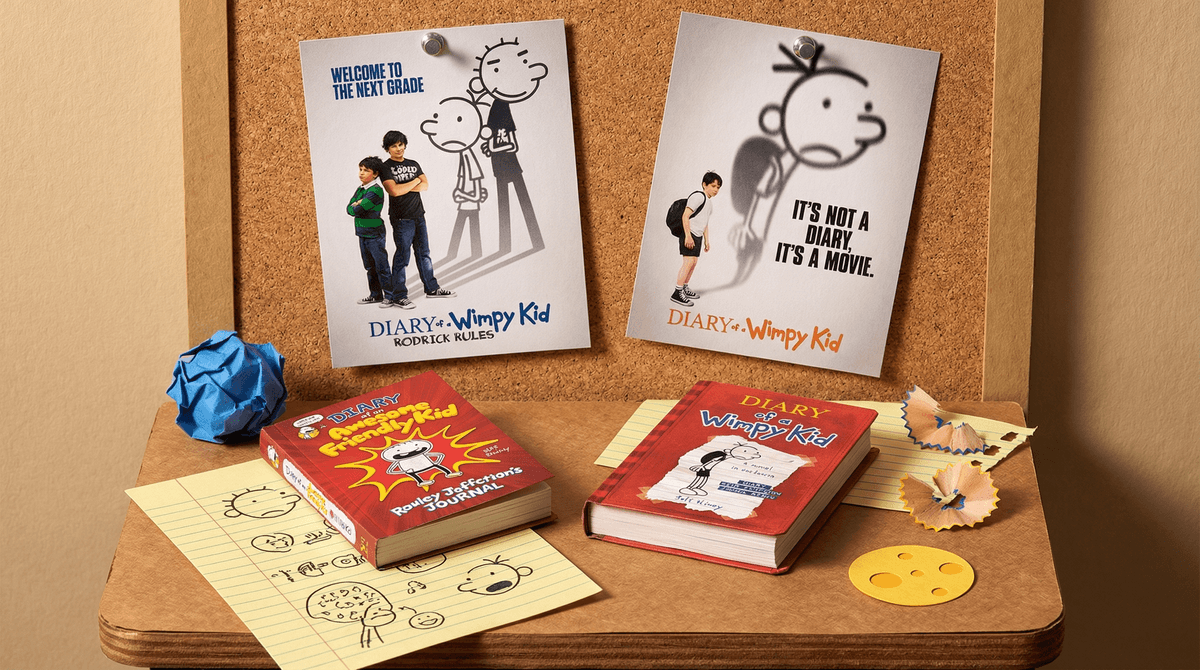
If you've got a middle schooler (or even an upper elementary kid), chances are they've already met Greg Heffley. The Diary of a Wimpy Kid book series by Jeff Kinney has sold over 250 million copies worldwide, and for good reason—it captures the absolute chaos of middle school in a way that feels painfully real to kids navigating that world.
The format is genius: half graphic novel, half journal entries, with stick-figure illustrations that make even reluctant readers pick up the book. Greg chronicles his daily disasters, from dodging the Cheese Touch at school to surviving family road trips that go spectacularly wrong. There are now 18+ books in the main series, plus spin-offs, movies, and even a Disney+ adaptation.
But here's the thing parents need to know: Greg Heffley is not a role model. And that's actually kind of the point.
Kids devour these books because Greg feels real. He's not some perfect protagonist learning tidy lessons. He's selfish, he throws his best friend Rowley under the bus, he schemes to get out of work, and he's obsessed with being popular. He's basically every middle schooler's intrusive thoughts written down.
The humor hits perfectly for the 8-12 age range—lots of physical comedy, embarrassing situations, and the kind of social dynamics that kids are either experiencing or about to experience. The books normalize the awkwardness of puberty, the weirdness of family dynamics, and the absolute minefield of middle school social hierarchy.
But yeah, Greg can be... a lot. He's often mean to his best friend Rowley (who is genuinely sweet and kind). He manipulates situations to benefit himself. He's frequently dishonest with his parents. And he rarely faces real consequences for his behavior.
This is where parents get twitchy. "Should my kid be reading about a character who lies and treats people badly?"
Here's my take: Diary of a Wimpy Kid is actually a masterclass in teaching empathy—but only if parents engage with it.
Greg is an unreliable narrator. Kids who are reading critically (and many are, even if they don't realize it) can see that Greg's version of events doesn't always match reality. When Greg describes Rowley as "immature" for playing with action figures, but we see Greg being cruel and Rowley being genuinely happy, kids pick up on that disconnect.
The books create natural opportunities to talk about:
Friendship: Why does Greg treat Rowley the way he does? What makes someone a good friend? (Spoiler: it's usually Rowley, not Greg)
Social pressure: Greg is desperate to be popular and will compromise his values to get there. Sound familiar? This is literally the defining struggle of middle school.
Consequences: Greg often gets away with stuff, which feels realistic to kids (because sometimes people do). But he's also frequently miserable, lonely, and stressed. The consequences aren't always external—they're internal.
Family dynamics: The Heffley family is chaotic but loving. Greg's relationship with his older brother Rodrick (who torments him) and younger brother Manny (who gets away with everything) mirrors a lot of real sibling dynamics.
Ages 7-8: Probably too early for most kids. The social dynamics and humor are aimed at kids who are in or approaching middle school. Younger kids might enjoy the pictures but miss the nuance.
Ages 8-10: The sweet spot for starting the series. Kids this age are beginning to understand social hierarchies and can appreciate Greg's struggles, even if they haven't experienced them yet.
Ages 11-13: Peak relevance. These kids are living Greg's life. The books can actually be therapeutic—seeing their own anxieties and embarrassments reflected back makes them feel less alone.
Ages 14+: Most kids age out naturally. The humor and concerns start feeling "young" to them.
Content notes: The books are generally clean—no violence, sex, or substance use. There's occasional potty humor and some mild language (nothing worse than "stupid" or "idiot"). The main concern is Greg's behavior, not inappropriate content.
Instead of banning or worrying about Diary of a Wimpy Kid, use it as a window into your kid's world:
Ask open-ended questions: "Who's your favorite character?" (If they say Greg, ask why. If they say Rowley, you're golden.)
Point out the unreliable narrator: "Do you think Greg is telling the whole story here?" This teaches media literacy in a low-stakes way.
Compare to their experiences: "Does your school have anything like the Cheese Touch?" Let them share their own social dynamics.
Talk about Rowley: "Why do you think Rowley stays friends with Greg?" This can lead to conversations about what kids should tolerate in friendships and when to walk away.
Discuss the family stuff: The Heffley parents are trying their best but often miss what's really going on with Greg. Does your kid feel seen by you? (Ouch, but important.)
The Diary of a Wimpy Kid movies and the Disney+ series can be watched together for family conversation starters, though the books give you more material to work with.
Diary of a Wimpy Kid isn't going to turn your kid into a selfish schemer. If anything, it's holding up a mirror to the messy reality of growing up and saying "yeah, this is hard, and you're not alone in finding it hard."
The series is fine for most kids 8-13, but it's so much better when parents engage with it. Read a book yourself (they're quick—you can finish one in under an hour). Ask your kid about it. Use Greg's bad decisions as a jumping-off point for conversations about the kind of person your kid wants to be.
Because here's the secret: most kids reading these books know Greg isn't always doing the right thing. They're not reading it as an instruction manual—they're reading it as a reflection of the chaos they're navigating. And sometimes, seeing that chaos on the page makes it feel a little more manageable in real life.
- Read one book yourself before deciding if it's right for your family (start with the first one—it sets up the whole dynamic)
- Check out alternatives to Diary of a Wimpy Kid if you want similar formats but different values
- Ask your kid's teacher how they use these books in class—many teachers leverage them for discussions about character and choice
- Use it as a bridge to get reluctant readers hooked, then gradually introduce other series
And if you're wondering whether the books are "good" for your kid, See if Diary of a Wimpy Kid teaches bad behavior —because sometimes the books that make us uncomfortable are the ones that give us the best opportunities to connect with our kids about what really matters.