

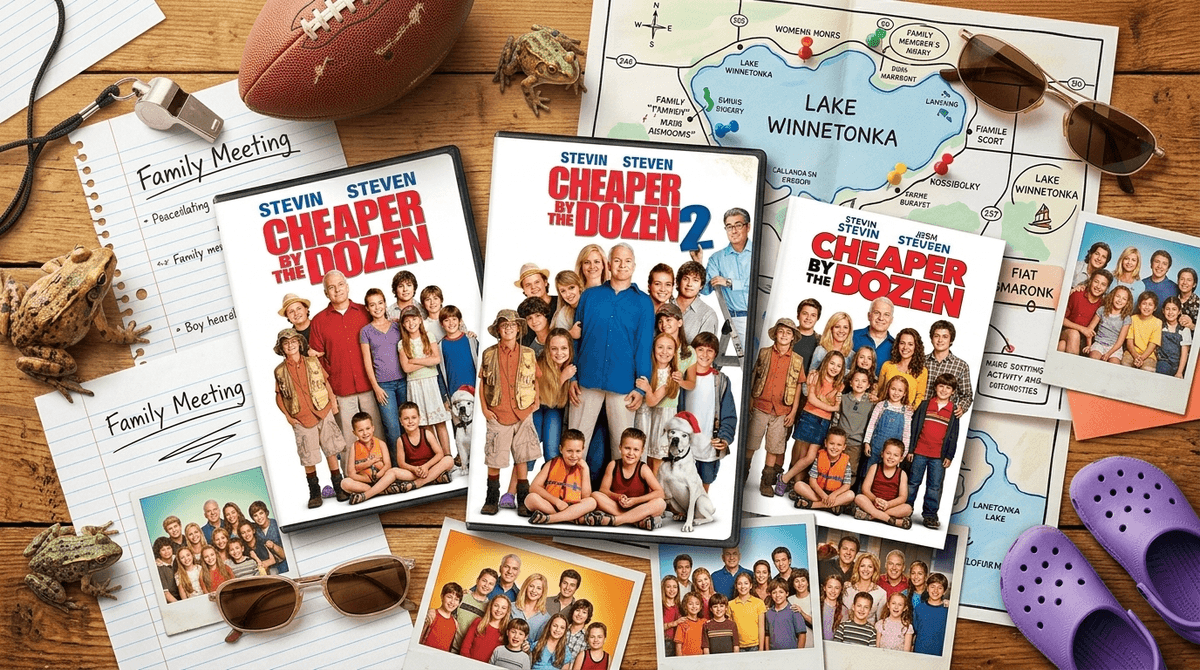
TL;DR: Cheaper by the Dozen (2003) is the ultimate "controlled chaos" movie. It’s a safe, PG-rated bet for family movie night that holds up surprisingly well, even if the fashion is aggressively early-2000s. It’s perfect for kids ages 6-12 who love physical comedy and parents who need a reminder that everyone is just winging it.
Quick Links:
- The Sequel: Cheaper by the Dozen 2
- The Original Source: Cheaper by the Dozen (the book)
- The Modern Remake: Cheaper by the Dozen (2022)
- Similar Vibe: The Parent Trap or Yours, Mine & Ours
If you grew up in the early 2000s, you probably remember this as the peak of the Steve Martin "Dad Era." The plot is straightforward: Tom (Steve Martin) and Kate Baker (Bonnie Hunt) have twelve children. When Tom gets his dream job coaching football at a big university and Kate’s book finally gets published, the family moves from their cozy rural home to the suburbs of Chicago.
Chaos—predictably—ensues. Between a projectile-vomiting toddler, a pet frog named Beans, and a very young Ashton Kutcher playing a self-absorbed actor boyfriend, the movie is a series of escalating disasters that somehow ends in a heartfelt realization about what actually matters.
It’s not high art, but it’s effective. Unlike some modern "brain rot" content that relies on flashing lights and screaming YouTubers to keep kids engaged, this movie uses actual comedic timing and character arcs.
Kids are naturally drawn to the "kids vs. adults" or "kids vs. the world" dynamic. In the Baker household, the children are a self-governing tribe. For younger viewers, there’s a massive "cool factor" in seeing a family that functions like a small army.
- The Slapstick: From the "meat soak" prank played on the older sister’s boyfriend to the general destruction of a fancy suburban house, the physical comedy hits the sweet spot for elementary-aged kids.
- Relatable Sibling Tropes: Whether it’s the rebellious teen (Hilary Duff), the athletic older brother (Tom Welling), or the misunderstood middle child (Alyson Stoner), every kid watching can find a version of themselves on screen.
- The "Us Against Them" Mentality: There’s something deeply satisfying for kids about seeing a family stick together against "snobby" neighbors or strict societal expectations.
Beyond the laughs, this movie actually touches on some pretty heavy themes that we’re all navigating today.
The Career vs. Family Tug-of-War
Tom and Kate are both chasing big dreams. Tom wants the big-league coaching job; Kate wants her literary career. This isn't a 1950s sitcom where the mom stays home and everything is perfect. They both struggle. They both fail at times. Watching this as an adult in 2026, the "hustle culture" vibes are real. It’s a great entry point to talk to kids about how parents balance their own goals with the needs of the family.
Moving and Transition
The Baker kids do not want to move. They lose their friends, their routine, and their sense of belonging. If your family is facing a big change—a new school, a move, or even a change in household rules—this movie is a great "icebreaker" to talk about those feelings of resentment and the fear of the unknown.
The "Perfect Family" Myth
The Bakers move next door to the Shenks, a family with one son who is over-scheduled, highly disciplined, and seemingly "perfect." The contrast between the messy, loud Bakers and the sterile Shenks is a loud-and-clear message: Comparison is the thief of joy. In an era of Instagram-perfect parenting and curated TikTok lives, this 20-year-old movie is a refreshing reminder that a happy home is often a messy one.
Recommended Ages: 6+
- Language: Very mild. A few uses of "hell" or "damn," and some "butt" jokes. It’s very safe compared to most PG movies today.
- Themes: There is some bullying (the older kids pick on the younger ones, and the neighbors are jerks), but it’s always addressed.
- Digital Context: Interestingly, this is a "pre-smartphone" movie. The kids aren't on TikTok or playing Roblox. Their "screen time" is mostly non-existent. Pointing this out to your kids can lead to a funny conversation: "Wait, what did they do all day?"
If your kids enjoyed the vibe of the Baker family, here are some solid recommendations to keep the momentum going:
The quintessential "kids scheming" movie. It has that same early-2000s warmth and focuses heavily on family reconciliation.
For kids who loved the "middle child" struggles of Sarah or Charlie Baker, Greg Heffley is the king of relatable (if slightly cynical) sibling drama.
If you have younger kids, Bluey is essentially the animated, Australian version of the Baker family’s philosophy: play is paramount, parents are human, and chaos is part of the deal.
For a more modern take on the "weird family vs. the world" trope (with a heavy dose of digital wellness themes), this movie is a masterpiece. It deals with a dad who doesn't "get" tech and a daughter who lives for it.
After the credits roll, you can use these prompts to move beyond "was it good?" and actually get into their heads:
- On Fairness: "Which of the 12 kids do you think had it the hardest? Why?" (This usually reveals a lot about how your child perceives their own place in your family).
- On Career: "Do you think Tom should have taken the coaching job even if it made the kids unhappy? How do we decide what's best for the whole family?"
- On Conflict: "The Bakers have a 'family meeting' when things get bad. Do you think we should do that? What would be on the agenda?"
Cheaper by the Dozen (2003) isn't going to change your life, but it might change your perspective on the laundry pile in your hallway. It’s a "comfort food" movie that celebrates the idea that a family doesn't have to be perfect to be successful.
In a world where we are constantly bombarded with data about how we’re failing as parents or how our kids are being "ruined" by tech, taking 90 minutes to watch Steve Martin get tackled by a dozen children is actually a pretty great form of self-care.
Next Steps:
- Check out the Screenwise guide to sibling rivalry to see how to manage the "Bakers-level" chaos in your own living room.
- Get a list of 90s and 2000s nostalgic family movies
