

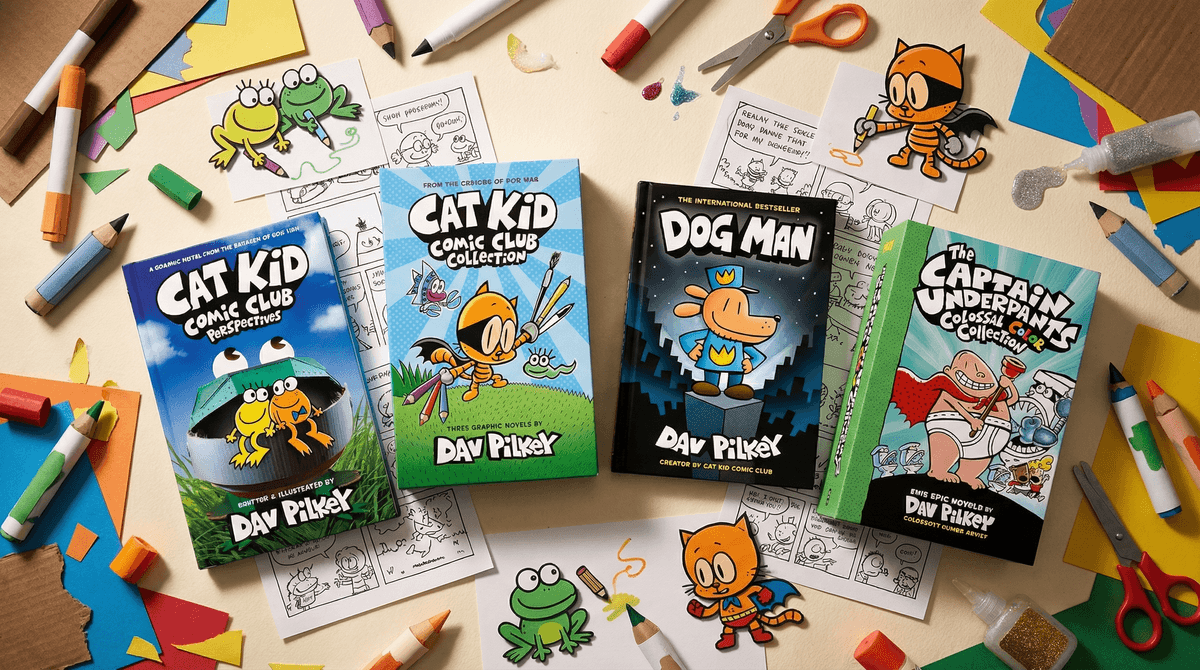
Cat Kid Comic Club is a graphic novel series by Dav Pilkey (yes, the Captain Underpants and Dog Man creator). The series follows Li'l Petey, a young cat who starts a comic club to teach baby frogs how to make their own comics. It's meta in the best way—a book about making books, with all the messy, imperfect, wonderfully chaotic creativity that comes with it.
Each book in the series features the "comics" that the baby frogs create, which range from genuinely clever to intentionally amateur. And that's the whole point. The frog characters (Melvin, Naomi, Poppy, Gilbert, and Curly) each have distinct personalities and artistic styles that evolve throughout the series. Some draw stick figures. Some create elaborate stories. Some just want to make fart jokes. All of it is celebrated.
The series currently has multiple books out, with Cat Kid Comic Club: Perspectives being one of the later installments that specifically explores how different characters see and interpret the same events in completely different ways.
It validates their creative efforts. Kids who've been told their drawings "aren't good enough" or who compare themselves to more skilled artists find something revolutionary here: the message that your unique voice matters more than technical perfection.
The baby frogs' comics are intentionally crude, misspelled, and all over the place stylistically. But they're also funny, heartfelt, and genuinely creative. When kids see these "imperfect" comics celebrated in a published book, it gives them permission to create without the pressure of perfection.
It's funny in that Dav Pilkey way. There's potty humor (of course), wordplay, visual gags, and the kind of silly-but-smart comedy that works for both reluctant readers and kids who devour chapter books. The flip-o-rama animation technique that made Captain Underpants famous also appears here.
It models friendship dynamics realistically. The characters disagree, get frustrated with each other, deal with jealousy and competition, and work through conflicts. It's not preachy about it—the lessons emerge naturally from the story.
The Perspectives installment takes the series' themes even deeper by exploring how the same story can be told in completely different ways depending on who's telling it. Each frog character retells the same events from their point of view, and the versions are wildly different—not because anyone's lying, but because we all experience and remember things through our own lens.
This is actually a pretty sophisticated concept for a kids' book. It teaches:
Empathy and perspective-taking. Understanding that someone else's version of events isn't "wrong" just because it's different from yours is a crucial social-emotional skill. In an age where kids are navigating online disagreements and exposed to polarized viewpoints, this message hits differently.
Media literacy basics. The idea that every story has a storyteller with their own perspective is foundational to critical thinking about content—whether that's a YouTube video, a news article, or a friend's retelling of playground drama.
Creative problem-solving. When the frogs struggle with writer's block or artistic challenges, they experiment, collaborate, and try new approaches. It's a gentle introduction to growth mindset thinking without being preachy about it.
Ages 6-9: This is the sweet spot. Early elementary readers who are just starting to create their own stories and art will find the series incredibly validating. The text is accessible for developing readers, and the graphic novel format provides visual support. Some kids in this age range might need help with the meta-narrative structure (a story within a story), but that's part of the learning experience.
Ages 10-12: Upper elementary kids still love these books, especially if they're already fans of Dog Man or Captain Underpants. They'll pick up on the more nuanced themes about artistic voice and perspective that younger kids might miss. Some might feel they've "aged out" of Pilkey's humor, but many are still enthusiastically reading and creating their own comics inspired by the series.
For reluctant readers: This series is gold. The graphic novel format, humor, and validation of imperfect creativity can hook kids who resist traditional chapter books.
It might inspire a LOT of comic-making. Be prepared for your child to fill notebooks with their own comics. This is actually wonderful—they're practicing storytelling, sequential thinking, and creative expression. You might want to stock up on blank paper.
The "bad" art is intentional. Some parents worry that the crude drawings in the frogs' comics will somehow teach their kids to draw "badly." That's not how art development works. Kids benefit from seeing that creativity and storytelling matter more than technical skill, especially in an era of perfectly curated Instagram feeds and TikTok content.
There's mild potty humor. It's Dav Pilkey. There will be fart jokes and silly bathroom references. If this is a dealbreaker for your family, you'll want to skip it. But for most kids, this kind of humor is developmentally normal and actually makes reading more appealing.
It's not preachy, but the lessons are real. The series tackles themes like dealing with mistakes, handling criticism, working through creative blocks, and understanding different perspectives—all without feeling like an after-school special.
Cat Kid Comic Club: Perspectives (and the whole series) offers something increasingly rare: permission to be imperfect. In a digital world where kids see polished content constantly and compare themselves to impossible standards, a book that celebrates messy, authentic creativity is genuinely valuable.
The perspective-taking theme is especially relevant right now. Whether your kid is navigating Discord servers, Roblox interactions, or just regular playground politics, understanding that people experience the same events differently is a crucial skill.
If your kid loves these books: Consider setting up a comic-making station at home with paper, markers, and simple booklet-making supplies. See how to start a comic club at school at school—many educators are using these books to teach narrative writing and visual literacy.
If you're looking for similar content: Check out The Bad Guys series, Narwhal and Jelly, or Investigators for more graphic novels that combine humor with heart.
If you want to extend the learning: After reading Perspectives, try this with your kid: pick a recent family event and have everyone draw or write their version of what happened. You'll be amazed at how different the stories are—and it's a great conversation starter about how we all experience the world differently.