

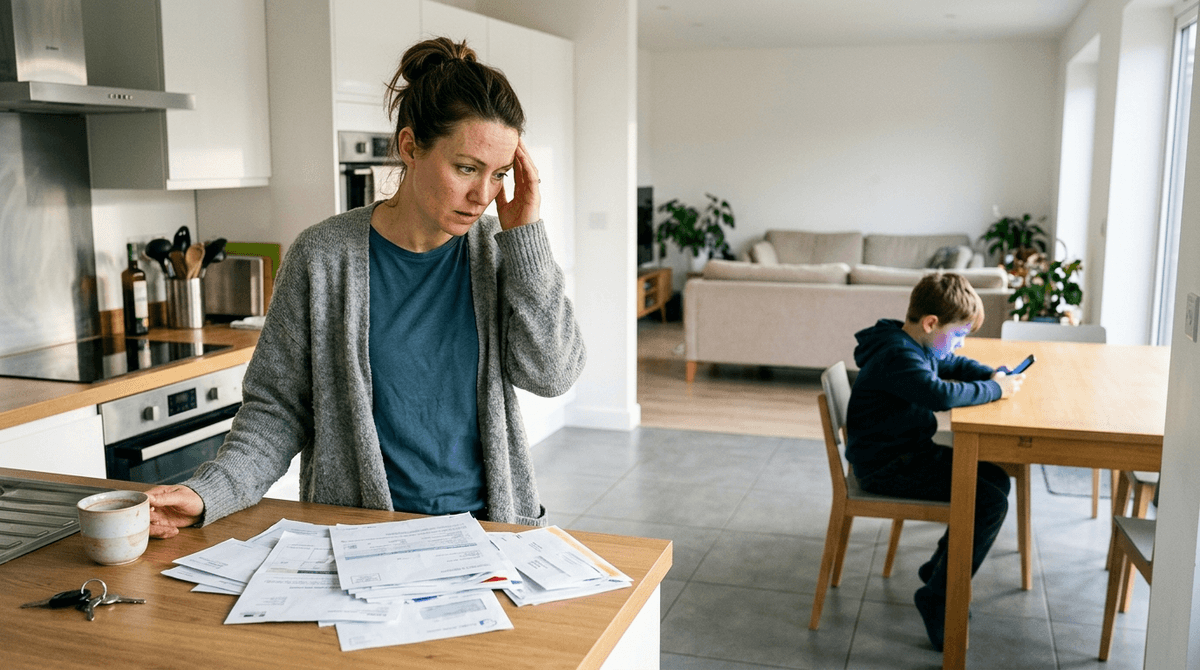

Children raised by anxious caregivers face nearly double the risk of missing early developmental milestones, a massive study of preschoolers shows. When parent anxiety collides with high screen time or an only-child household, that developmental hit gets even worse.
Caregiver anxiety nearly doubles the likelihood of preschool developmental delays, while high screen time and single-child status multiply that risk.
Treating your own anxiety isn't self-indulgence—it is a direct developmental intervention for your child.
If your preschooler is missing milestones, the solution isn't always another therapy session or flashcard routine for the kid. Lowering the emotional stress in the home environment and trimming screen exposure offer two immediate, high-leverage levers parents can pull right now.
Preschool capacity develops inside daily human interactions. Parental anxiety alters how adults read emotional cues, talk to children, and handle routine meltdowns. Researchers wanted to map how parental mental health interacts with household caregiving dynamics—specifically who provides the care and how much screen time is involved—across a large, real-world population.
Caregiver mental health proved to be one of the strongest predictors of early childhood development, closely tied to how kids build language, social skills, and emotional regulation.
- Anxiety nearly doubles delay risk: Children whose primary caregivers suffered from anxiety had an 89% higher chance of developmental delay compared to those with non-anxious caregivers.
- Screen time worsens the blow: High screen time significantly amplified the damage done by caregiver anxiety, compounding the delay risk.
- Only children are more vulnerable: The protective buffer of sibling interaction was absent for only children, making them far more sensitive to a stressed home atmosphere.
- Caregiver setup matters: In this population, children primarily cared for by fathers saw a 24% higher risk of delays compared to those cared for by mothers, while grandparent-led care carried a 12% higher risk.
Anxiety drains the psychological bandwidth required for "serve-and-return" interactions—the fundamental back-and-forth babbling, eye contact, and conversation that wire a toddler's brain.
When an anxious caregiver relies on screens to manage stress or buy quiet time, the child loses twice: first from reduced responsive human interaction, and second from passive media replacing active play. Screens act as a force multiplier for home stress, substituting passive pixels for the co-regulation kids need.
This study is cross-sectional and observational, meaning it captured a single snapshot in time. It cannot prove that caregiver anxiety causes child delays; raising a child who is missing milestones can itself increase caregiver anxiety.
Additionally, the data comes entirely from Chongqing, China. Cultural expectations around co-parenting, paternal involvement, and grandparent caregiving differ significantly from Western households. The lower developmental scores in father- or grandparent-led care may reflect local support gaps rather than inherent caregiving ability.
- If you notice your own anxiety spiking during parenting routines… prioritize your mental health care as a primary child-development tool rather than putting your care last.
- If your household relies on screens when stress is running high… swap passive video viewing for independent physical play to stop screens from compounding parental burnout.
- If you are raising an only child in a high-stress season… organize regular playdates or group care so your child gets social interaction outside your home's immediate emotional atmosphere.
- If a partner or grandparent is the primary daytime caregiver… supply them with structured developmental activities and community support to reduce their daily isolation and stress.
Protecting your child's early development requires taking your own emotional health seriously. Managing parental stress and capping passive screen time aren't luxury parenting goals; they build the environment your child's brain needs to thrive.
Guo J, Wen J, Yang G et al. (2026). Association of primary caregiver anxiety and caregiving role with early development of preschool children: a population‑based study. BMC public health. doi:10.1186/s12889-026-28063-z — pubmed.ncbi.nlm.nih.gov