

2026's Best New Books That Kids Actually Want to Read
This year brought some genuinely great new books that kids are actually excited to read—not just titles that look good on a "recommended" list. Here are the standouts:
For younger readers (ages 3-7):
- A cozy picture book about a girl helping a mouse neighbor after a storm (with die-cut flaps!)
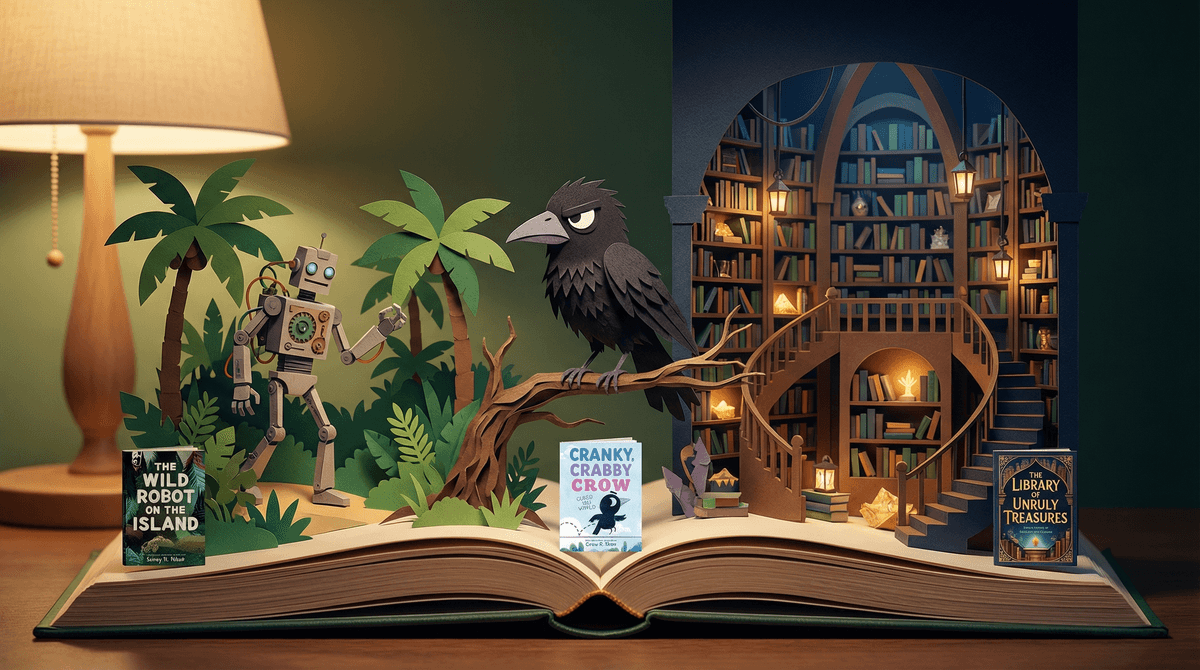
- The Wild Robot on the Island by Peter Brown—the beloved robot story adapted for picture book readers
For middle-grade readers (ages 7-10):
- Crow by Corey R. Tabor—a hilarious exploration of why one bird is perpetually cranky
- The Library of Unruly Treasures by Jeanne Birdsall—the latest in a beloved series
2025 turned out to be a banner year for children's publishing. Publishers Weekly, PEN America, and Literary Hub all featured dozens of titles that quickly became household favorites—books that combine striking illustration, humor, and themes that resonate with both kids and parents. The consensus? This year's standouts aren't just critically acclaimed; they're books kids are genuinely asking to read again.
The Red Door Story (Ages 3-7)
One of the most talked-about releases follows Olivia, a little girl who lives in a house with a bright red door, while a friendly mouse makes its home in the oak tree behind it. When a storm topples the tree, Olivia's determined effort to help her tiny neighbor becomes a gentle lesson about empathy and community. What makes this one special? Hand-painted art and interactive die-cut flaps that turn reading into an experience.
This is the kind of book that works beautifully for bedtime—cozy, sweet, but with enough interactive elements to keep kids engaged when they're not quite ready to sleep. It's earned early buzz from booksellers and has already shown up on multiple best-of-2025 lists.
If your kid loved The Wild Robot chapter book (or the recent movie adaptation), this 48-page picture book adaptation brings the tech-savvy robot's island escapades to younger audiences. Peter Brown's vivid illustrations and concise, action-packed storyline make this a perfect bridge book for kids moving from picture books to early chapter books.
The original Wild Robot series resonates because it explores themes of belonging, adaptation, and what it means to be "different"—all wrapped in an adventure story. This picture book version distills those themes for ages 3-7 without dumbing them down. It's genuinely good storytelling, not just a cash-grab spin-off.
Corey R. Tabor is a three-time Geisel Medal and Caldecott Honor winner, and Crow shows exactly why. The book explores why the titular bird is perpetually cranky through a laugh-filled narrative that Kirkus called "storytelling at its most brilliant—and whimsical" (with a starred review, no less).
This one works for ages 7-10 who are ready for slightly more complex narratives but still want humor and visual appeal. It's perfect for classroom read-alouds because it's funny enough to hold attention but short enough to finish in one sitting. Kids love the grumpy-character-learns-a-lesson arc without feeling like they're being lectured.
Released in August, this continues Jeanne Birdsall's beloved series of charming, character-driven adventures. Critics praise its warm prose and inventive plot twists that keep middle-grade readers turning pages—which is honestly the gold standard for this age group.
If your kid is in that sweet spot where they're too old for picture books but not quite ready for YA, this series delivers. The characters feel real, the adventures are engaging without being scary, and the writing quality is high enough that you won't cringe if you're reading it aloud.
What makes 2026's crop different from the typical "best books" lists? A few things:
1. They're earning critical praise AND kid approval. It's one thing to win awards; it's another to have kids actually request these books again. All of these titles appear on multiple best-of lists from major trade outlets while also showing up as strong sellers.
2. They balance visual appeal with substance. The picture books aren't just pretty—they have interactive elements (die-cuts, hand-painted art) that make reading an experience. The middle-grade books have award-winning illustrations alongside complex narratives.
3. They tackle real themes without being preachy. Empathy, belonging, adaptation, community—these books explore meaningful ideas through story, not lectures. Kids get it without feeling like they're being taught a lesson.
Ages 3-5: Start with the Red Door story or The Wild Robot on the Island. Both have enough visual interest to hold attention during multiple readings, and the interactive elements (flaps, detailed illustrations) give you something to explore together beyond just reading the words.
Ages 5-7: These kids can handle all of the picture books mentioned here, and some might be ready for Crow if they're strong readers. Look for books that bridge the gap between picture books and chapter books—The Wild Robot adaptation is specifically designed for this transition.
Ages 7-10: Crow and The Library of Unruly Treasures hit this age range perfectly. These readers want more complex narratives and character development but aren't ready for the heavier themes in YA. They're also starting to develop preferences for humor vs. adventure vs. mystery, so having options matters.
Ages 10+: If your older reader loved The Wild Robot series, they might enjoy revisiting the picture book version with a younger sibling—there's something satisfying about being the "expert" on a beloved story. For new material, you're probably looking at middle-grade fantasy or early YA.
These aren't cheap. New hardcover picture books typically run $15-20, and middle-grade hardcovers can hit $20-25. That said, these are the kinds of books that hold up to repeated readings and get passed between siblings or friends. If budget is tight, check your library first—these titles are showing up on "new releases" displays at libraries nationwide.
Not every "best of" book will work for your kid. These lists are helpful starting points, but kid preferences vary wildly. Some kids love grumpy characters (Crow), others want cozy stories (Red Door), and some are ready for longer adventures (Library of Unruly Treasures). Don't feel like you need to buy everything on a recommended list.
Interactive elements matter more than you think. For younger readers especially, books with die-cut flaps, detailed illustrations, or other tactile elements can be the difference between a book they request once and one they want to read 47 times. The Red Door story's interactive flaps aren't just gimmicks—they give kids agency in how they explore the story.
Bridge books are worth seeking out. The Wild Robot picture book adaptation is a great example of how publishers are getting better at creating books that help kids transition from picture books to chapter books. These aren't just shorter versions of longer books—they're carefully designed to build confidence and reading stamina.
2025 brought some legitimately great new books that kids are excited to read, not just titles that look good on a shelf. Whether you're looking for a cozy bedtime story with interactive elements, a hilarious exploration of why birds are cranky, or a character-driven adventure that keeps middle-graders turning pages, this year delivered.
The key is matching the book to your kid's current interests and reading level—not just buying what's on the "best of" list. These titles all earned their spots through a combination of critical acclaim and actual kid enthusiasm, which makes them safer bets than random picks. But ultimately, the best book is the one your kid wants to read again.
Want more recommendations? Check out our guides to best picture books for bedtime, chapter books for reluctant readers, or books that teach empathy without being preachy.