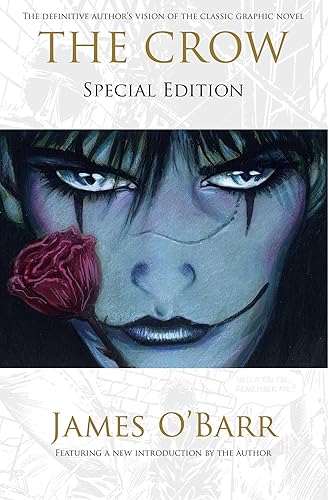
Crow

Crow

book

2017, Arts & Photography, History & Criticism

WISE
80%

WISE Score

4.8

Amazon

An 11-year-old confronts turn-of-the-century racism in 1898 Wilmington—heavy history, but told with heart and an irresistible voice.

Amazon4.8
Common Sense Media

Where to Read

Our reviews and ratings are 100% unbiased, but as an Amazon Associate, Screenwise earns an affiliate fee if you buy a book or game by clicking one of our links. We don't get any credit if you just Google it instead :)

Screenwise Verdict

This is a powerful, well-crafted piece of historical fiction that doesn't sugarcoat the realities of racism in turn-of-the-century America. The first-person voice is engaging enough to pull readers in, and the story offers real educational value—especially for families ready to have honest conversations about prejudice, resilience, and the limits of 'just work hard and you'll be fine' narratives.

It's not a light read, and it's not for every 10-year-old. But for kids who are ready (or families who want to guide them through it), this is the kind of book that sticks with you and builds empathy in ways that textbooks can't. Just make sure you're prepared to talk through the heavier moments—this isn't a 'hand it to them and walk away' situation.

Age Fit

Best for ages 10–14 (grades 4–7), especially when an adult can provide historical context and facilitate discussion. Some mature 7–9 year-olds can handle it with guidance, but the themes of racism and violence are emotionally heavy. Teens and adults will also find value in the story's historical grounding and empathy-building.

WISE Breakdown
Wholesome
82

First-person narrative from an 11-year-old provides an emotionally authentic window into a child processing racism and violence. The family unit is strong and protective, modeling resilience and love under pressure. The tone is age-appropriate for upper elementary/middle school, though the subject matter—fleeing a white-supremacist rally, threats of lynching—is heavy. The book doesn't shy away from historical truth but handles it through a child's eyes, which keeps it grounded rather than gratuitous.

Imaginative
68

Historical fiction set in 1898 Wilmington offers a specific, well-researched setting that can spark curiosity about a lesser-known moment in American history. The narrative voice is described as 'irresistible,' suggesting strong character work. However, this is a realistic, historical story—not fantastical or particularly inventive in structure. It's more about empathy and understanding than creative exploration or world-building.

Safe
72

Common Sense Media rates it 10+ with some parents suggesting 7+ with guidance. The book depicts realistic racism, threats of violence, and the stress of a family fleeing danger—no gore or graphic violence, but the emotional intensity and historical context require adult framing. For a book, this is fairly safe in that it's not shocking or exploitative, but it does demand readiness for difficult conversations. Almost all books are inherently safe as a medium; this one just needs the right developmental moment.

Enriching
88

This is a deeply enriching read. It tackles systemic racism, the limits and power of education, and the realities of white supremacy through a child's perspective, making it accessible for young readers while offering profound teachable moments. The historical grounding (1898 Wilmington) provides context for civil-rights discussions. Parents and teachers can use it to build empathy, discuss injustice, and explore how individuals respond to prejudice. It's both emotionally and intellectually valuable.

Parent Info

Why It Might Be Great

  • Compelling first-person narrator makes difficult history accessible and emotionally resonant for young readers
  • Tackles systemic racism and white supremacy head-on, offering a teachable moment about civil rights and resilience
  • Strong family bonds and protective relationships model love and courage under pressure
  • Historical setting (1898 Wilmington) sheds light on a lesser-known chapter of American history
  • Encourages empathy and critical thinking about prejudice, education, and justice

What to Watch For

  • Realistic depictions of racism, threats of violence, and a family fleeing a white-supremacist rally—emotionally intense for younger kids
  • Best approached with an adult ready to discuss historical context, prejudice, and how to respond to injustice
  • Common Sense Media suggests 10+, though some parents say 7+ with guidance—know your child's readiness for heavy themes

Conversation Starters

  • "Moses believes education can help him overcome prejudice. Do you think that's true? What else might be needed?"
  • "How do you think Moses felt when his promised train trip turned into an escape? Have you ever had plans change suddenly?"
  • "Why do you think the author chose to tell this story through an 11-year-old's eyes instead of an adult's?"
  • "What would you do if you saw someone being treated unfairly because of who they are?"

Ask Anything

Get a personalized guide on any topic