

Let's be real: not every kid is going to curl up with Harry Potter at age 8 and emerge three days later having devoured the entire series. Some kids would genuinely rather watch paint dry than read a book. And that's where the magic of reluctant reader chapter books comes in.
These aren't dumbed-down books—they're strategically designed page-turners that meet kids where they are. We're talking about books with shorter chapters, more white space on the page, compelling visuals, humor that actually lands, and topics that hook into what kids are already interested in (yes, even Minecraft and Among Us).
The goal? Get them turning pages without it feeling like homework. Because here's the thing: kids don't hate reading, they hate being bad at reading. Or they hate being bored. Or they've decided books aren't "their thing" because the first few they tried didn't click.
I know, I know—your kid can navigate YouTube like a pro and has read every wiki page about Pokémon. They're technically reading all day on screens! And yes, that counts for something.
But there's something specific about sustained reading—the kind where you follow a narrative arc over days or weeks—that builds different cognitive muscles. It develops patience, focus, and the ability to hold complex ideas in your head. Skills that, honestly, are getting harder to build in our swipe-and-scroll world.
Plus, and this is the part that keeps me up at night: reading ability is one of the strongest predictors of academic success across every subject. A kid who struggles with or avoids reading in elementary school faces an uphill battle in middle school when suddenly every class requires reading complex texts.
The good news? Finding the right book can flip the script entirely. I've seen kids go from "I hate reading" to "wait, don't turn off my light yet" in the span of one well-chosen book.
Not all chapter books are created equal when you're dealing with a skeptical reader. Here's what actually works:
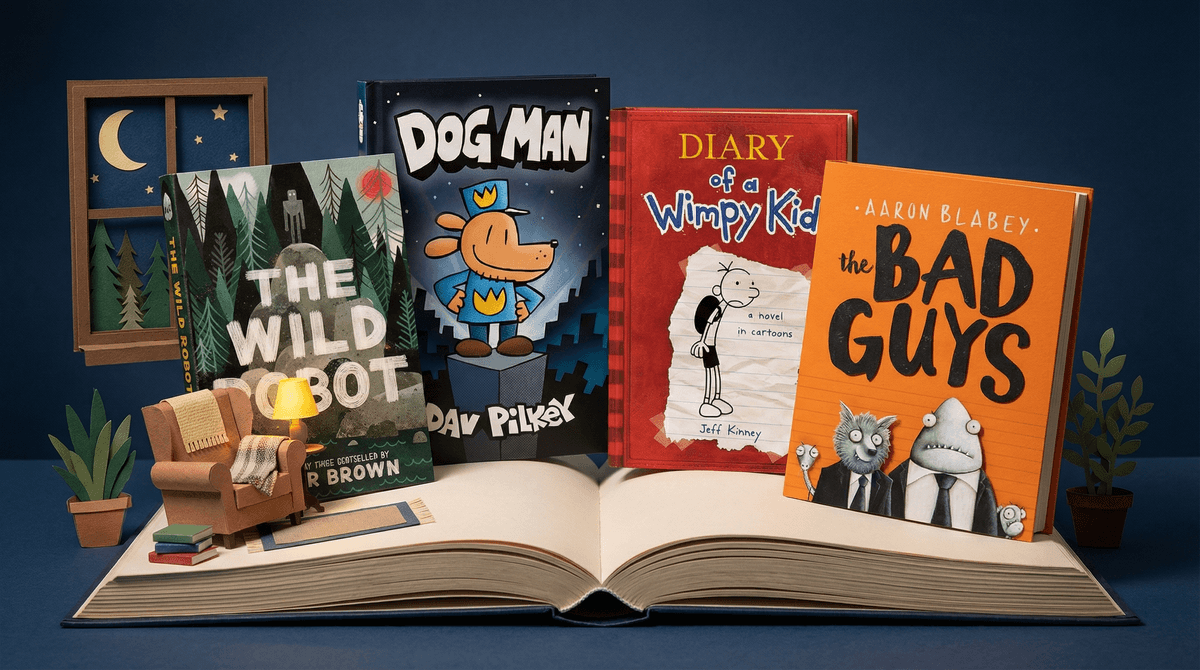
High interest, lower reading level. Look for books that tackle topics for their age group but with simpler vocabulary and sentence structure. Publishers like Dog Man by Dav Pilkey (ages 6-9) nail this—potty humor and comic-style illustrations with actual character development.
Fast pacing. Every chapter needs to end on a mini-cliffhanger. The Last Kids on Earth series (ages 8-12) is masterful at this—zombies, monsters, and kids surviving the apocalypse with just enough humor to keep it from being scary.
Visual elements. Illustrations aren't just for picture books. Diary of a Wimpy Kid (ages 8-12) basically revolutionized this category by making every page feel less intimidating with drawings and comic panels.
Topics they actually care about. If your kid is obsessed with Roblox, try The Wild Robot by Peter Brown (ages 8-12)—it's got that survival-craft-explore energy. Into YouTube culture? Remarkables by Margaret Peterson Haddix (ages 9-12) explores fame and identity in clever ways.
Ages 6-8: Just Starting Chapter Books
- Mercy Watson series by Kate DiCamillo - Short chapters, big laughs, a pig who loves toast
- The Bad Guys series by Aaron Blabey - Graphic novel/chapter book hybrid about reformed villains
- Narwhal and Jelly by Ben Clanton - Graphic novels that build reading stamina
Ages 8-10: Building Momentum
- Wings of Fire by Tui T. Sutherland - Dragons, prophecies, and surprisingly complex world-building (13+ books in the series means if it hooks them, you're set)
- Hilo series by Judd Winick - Robot kid from another dimension, graphic novel format, genuinely funny
- Who Would Win? series by Jerry Pallotta - Nonfiction that reads like a game (Killer Whale vs. Great White Shark? They're IN)
Ages 10-12: Ready for More Challenge
- Percy Jackson series by Rick Riordan - Greek mythology meets middle school, protagonist has ADHD and dyslexia
- Keeper of the Lost Cities by Shannon Messenger - Fantasy series with strong female lead and found-family vibes
- I Survived series by Lauren Tarshis - Historical fiction about real disasters, short and gripping
The "too easy" trap: If your kid is in 5th grade but reading at a 3rd grade level, it's tempting to push them toward grade-level books. Resist this. Let them build confidence and stamina with books they can actually finish. Success breeds motivation.
Series are your friend: Once a reluctant reader finds a series they like, they've already overcome the biggest hurdle—figuring out if they'll like the characters and style. Let them binge the whole series. Yes, even if it's 12 books about the same cat detective.
Audiobooks count: Seriously. Having them follow along in the physical book while listening to the audiobook builds fluency and comprehension. It's not cheating, it's scaffolding.
Graphic novels are real books: The Dog Man, Amulet, and Smile by Raina Telgemeier books are teaching visual literacy, narrative structure, and building reading stamina. Don't dismiss them.
Let them quit books: If they're not into it after two chapters, move on. Forcing them to finish creates negative associations with reading. The goal is finding books they want to finish.
The best chapter book for a reluctant reader is the one they'll actually read. Not the one that won awards, not the one their teacher recommended, not the one you loved as a kid. The one that makes them forget they're reading.
Start with their interests—whether that's Fortnite, animals, disasters, or fart jokes—and find books that connect. Visit your library and let them choose based on covers and first pages. Try graphic novels, illustrated chapter books, and series with hooks that won't quit.
And remember: every kid who loves reading now was once a kid holding their first chapter book. Sometimes it just takes a few tries to find the right match.
Try the 5-page rule: Have them read the first 5 pages of a book. If they're not interested, no shame—try another one.
Check out your library's "high interest, low reading level" section. Librarians are wizards at this stuff and most libraries have curated collections.
Ask other parents what's working. The book that hooked their reluctant reader might be the one that works for yours. See what books work for reluctant readers about what's actually getting their kids to read.
And if you want to understand how your family's reading habits compare to others in your community, take the Screenwise survey to get personalized insights about balancing screen time with book time.