

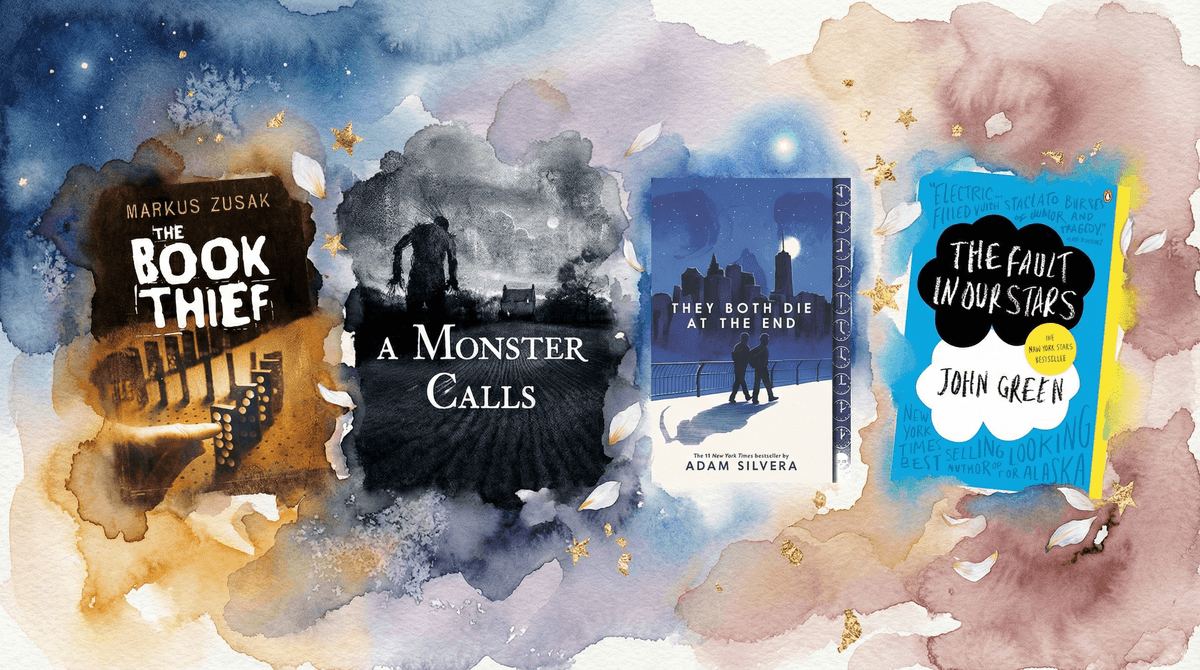
So your teen devoured The Fault in Our Stars and now they're asking for "more books like that." First, let's be clear about what "like that" means, because TFIOS isn't just a love story—it's a masterclass in making teenagers (and let's be honest, adults) ugly-cry about mortality, meaning, and what it means to live a full life in whatever time you have.
John Green wrote a book about two teens with cancer that somehow avoided being maudlin grief-porn. Instead, it's philosophical, funny, and deeply romantic while tackling the absolute heaviest stuff: terminal illness, parental grief, legacy, and whether our lives matter if they're cut short. The writing is sharp, the characters feel real (even when they're a bit too witty for actual 16-year-olds), and it doesn't shy away from the messy, unfair parts of serious illness.
When teens want "more like that," they're usually looking for some combination of: romance that feels meaningful, characters dealing with real hardship, emotional intensity, and stories that make them think about big existential questions. They want to feel something big.
There's something about YA novels that tackle mortality and meaning that hits different during adolescence. Teens are literally in the process of figuring out who they are and what matters, and books like TFIOS give them a framework to think about huge questions through characters who feel like them.
These books also don't talk down to readers. They trust teens to handle complex emotions, moral ambiguity, and sad endings. After years of being protected from "heavy" topics, many teens are hungry for stories that acknowledge that life can be really, really hard—and that you can still find beauty and meaning in that hardness.
Plus, let's be real: the romance in these books is often swoon-worthy in a way that feels more substantial than typical YA romance. These aren't just "will they kiss at prom?" stakes—these are "how do we love each other when everything is uncertain?" stakes.
Here are the books that tend to satisfy teens looking for that TFIOS vibe, organized by what specifically they're craving:
For the Romance + Heavy Themes Combo:
Everything, Everything by Nicola Yoon (Ages 13+) - Girl with severe illness falls for the boy next door. Less philosophical than TFIOS but equally romantic and deals with medical trauma, parental control, and what risk means when you're fragile. The twist is genuinely surprising.
Five Feet Apart by Rachael Lippincott (Ages 13+) - Two teens with cystic fibrosis fall in love but literally cannot touch. It's the most obvious TFIOS comp and yes, it's manipulative, but it works. Fair warning: this one is more straightforward tearjerker, less philosophical depth.
Me and Earl and the Dying Girl by Jesse Andrews (Ages 14+) - This one subverts the genre brilliantly. It's about a guy whose mom makes him befriend a girl with cancer, and it's funny and weird and ultimately devastating. The narrator is upfront about not wanting to be in an inspirational cancer story, which makes it more honest than most.
For the Philosophical Depth:
They Both Die at the End by Adam Silvera (Ages 14+) - The title tells you what happens, so the book becomes about how they spend their last day. It's about living fully, found family, queer love, and what matters when time is short. The world-building (everyone gets a death notification) is wild but it works.
The Perks of Being a Wallflower by Stephen Chbosky (Ages 15+) - Not about physical illness but definitely about trauma, mental health, and finding meaning. Charlie's voice is unforgettable. Content note: deals with sexual abuse, suicide, and substance use—worth reading but heavy.
A Monster Calls by Patrick Ness (Ages 12+) - A boy's mother is dying of cancer, and a monster starts visiting him at night to tell stories. It's technically middle grade but hits harder than most YA. The illustrations add to the emotional gut-punch. This one made me cry in public.
For the Beautiful Writing:
The Book Thief by Markus Zusak (Ages 13+) - Narrated by Death during WWII, following a girl in Nazi Germany who steals books. Absolutely gorgeous prose, devastating story, and yes, you will cry. It's longer and more literary than TFIOS but similar in emotional impact.
We Are Okay by Nina LaCour (Ages 14+) - Quiet, literary, about grief and queer love and what we inherit from our families. This isn't a page-turner like TFIOS—it's more contemplative—but the writing is stunning.
For the Realistic Teen Voice:
Turtles All the Way Down by John Green (Ages 14+) - Green's most recent novel, about a teen with OCD. It's the most accurate portrayal of anxiety/OCD I've read in YA, and while it's not about terminal illness, it's about living with something that feels like it's taking over your life. The romance is secondary to the mental health journey.
I'll Give You the Sun by Jandy Nelson (Ages 14+) - Twins tell their story in alternating timelines. Deals with grief, art, sexuality, family secrets, and first love. The writing is almost too lush but in a good way.
These books deal with real, heavy stuff: death, terminal illness, suicide, sexual abuse, substance use, mental illness. That's the point—they're not escapist fantasy. They're helping teens process big, scary emotions in a safe way.
This is actually good for them. Research consistently shows that reading about difficult topics helps teens develop empathy, process their own experiences, and build emotional resilience. These books are doing important work.
That said, you should probably know what your teen is reading, not to censor it, but to be available for conversations. Some questions to ask:
- "What made you pick that one?"
- "How are you feeling about it?"
- "Want to tell me about it, or would you rather I just know you're reading something heavy?"
Content warnings matter. If your teen has experienced loss, trauma, or is struggling with mental health, some of these books might hit too close to home. That doesn't mean they shouldn't read them, but maybe check in more frequently. Learn more about how to talk to teens about heavy content in books .
.
The romance is often queer. Many contemporary YA books include LGBTQ+ relationships as a normal part of the story. If this is new territory for your family, these books can be great conversation starters about love, identity, and acceptance.
They might cry. A lot. This is fine. Emotional catharsis is healthy. If your teen is sobbing over a book, that means they're connecting deeply with the story and characters. Don't minimize it with "it's just a book"—these stories matter to them.
Most of these books are marketed as ages 13-18, but reading maturity varies wildly. Here's a rough guide:
Ages 12-13: Start with A Monster Calls, Everything, Everything, or The Book Thief. These deal with heavy themes but with slightly younger protagonists or more accessible prose.
Ages 14-15: Pretty much all of these are fair game, but consider your specific teen. The Perks of Being a Wallflower deals with sexual abuse and substance use explicitly. They Both Die at the End has some sexual content.
Ages 16+: At this point, it's more about emotional readiness than age. These older teens can handle all of these books and will likely appreciate the more complex ones like We Are Okay or I'll Give You the Sun.
If your teen loved The Fault in Our Stars and wants more, that's a great sign—they're seeking out meaningful stories that help them process big emotions and existential questions. These books aren't "depressing"—they're honest about the fact that life includes loss and hardship, and they model how to find meaning, connection, and even joy in the midst of that.
Don't be scared of the heavy themes. These books are doing important emotional work, helping teens develop empathy and resilience. Your job isn't to protect them from sad stories—it's to be available when they want to talk about what they're reading.
And hey, maybe read a few of these yourself. They're genuinely good books, and it gives you a window into what your teen is thinking about. Plus, you might ugly-cry too, and that's okay.
- Ask your teen what specifically they loved about TFIOS—the romance? The philosophy? The humor?—to help narrow down recommendations
- Check out more books for teens dealing with grief and loss if that's the specific angle they're drawn to
- Consider reading one of these books yourself so you can have a shared experience to discuss
- Explore alternatives to heavy YA if your teen needs a break from the emotional intensity