

Let's be real: getting a teenager to read for pleasure in 2026 feels like asking them to handwrite a letter with a quill pen. They're on their phones, watching Stranger Things, playing Fortnite, scrolling TikTok, and maybe—maybe—reading assigned books for English class with the enthusiasm of someone doing dishes.
But here's the thing: teens are still reading. They're just doing it differently, and often in places we're not looking. Fanfiction on Archive of Our Own. Reddit threads. Discord conversations. Webtoons. The medium has shifted, but the hunger for stories? Still there.
Screenwise Parents
See allThe challenge isn't that teens don't want to read—it's that we're competing with literally everything else on their devices, and honestly, a lot of the books we remember loving don't hit the same way for this generation. So how do we find books that actually connect? And why does it even matter when they're getting stories everywhere else?
Look, I'm not going to pretend that reading novels is somehow morally superior to watching great TV or playing narrative-rich games. The Last of Us tells a better story than most books. But reading does something unique:
It builds sustained attention. Unlike the dopamine hits of social media, books require you to stay with something for hours. That's a muscle that atrophies fast in our current digital environment.
It develops internal visualization. When you read, your brain creates the movie. When you watch, someone else's vision replaces yours. Both are valuable, but only one builds that creative muscle.
It's still the deepest dive into a character's inner world. You can't get the same level of interiority from visual media. Books let you live inside someone else's head in a way nothing else does.
It's a refuge from performance. There's no likes, no comments, no one watching. Just you and the story. For teens who are constantly performing online, that's actually radical.
Before we talk solutions, let's acknowledge the actual barriers:
School ruined it. By high school, many kids associate reading with tedious classics, five-paragraph essays, and finding symbols in The Scarlet Letter. We've turned reading into a chore.
The books we recommend are often terrible. Sorry, but that heartwarming novel about a kid with cancer that made you cry in 2010? It might be manipulative garbage. Teens can smell inauthenticity a mile away.
They're legitimately overwhelmed. Between school, activities, college prep, and social pressure, reading for fun feels like a luxury they can't afford.
The friction is real. Getting to a bookstore or library, finding something good, committing to 300 pages—it's a lot when TikTok is right there.
Start With What They Already Love
If they're obsessed with Wednesday, try Gideon the Ninth by Tamsyn Muir (ages 15+)—it's got that same dark humor and gothic vibes. Into Avatar: The Last Airbender? The Poppy War by R.F. Kuang (ages 16+) delivers similar themes with more complexity.
The bridge from screen to page needs to be intentional. Don't fight their interests—build on them.
Graphic Novels and Manga Are Books, Full Stop
If your teen is reading My Hero Academia manga or graphic memoirs like Gender Queer by Maia Kobabe (ages 15+), that counts. The literary gatekeeping around "real books" is nonsense. Visual storytelling is storytelling.
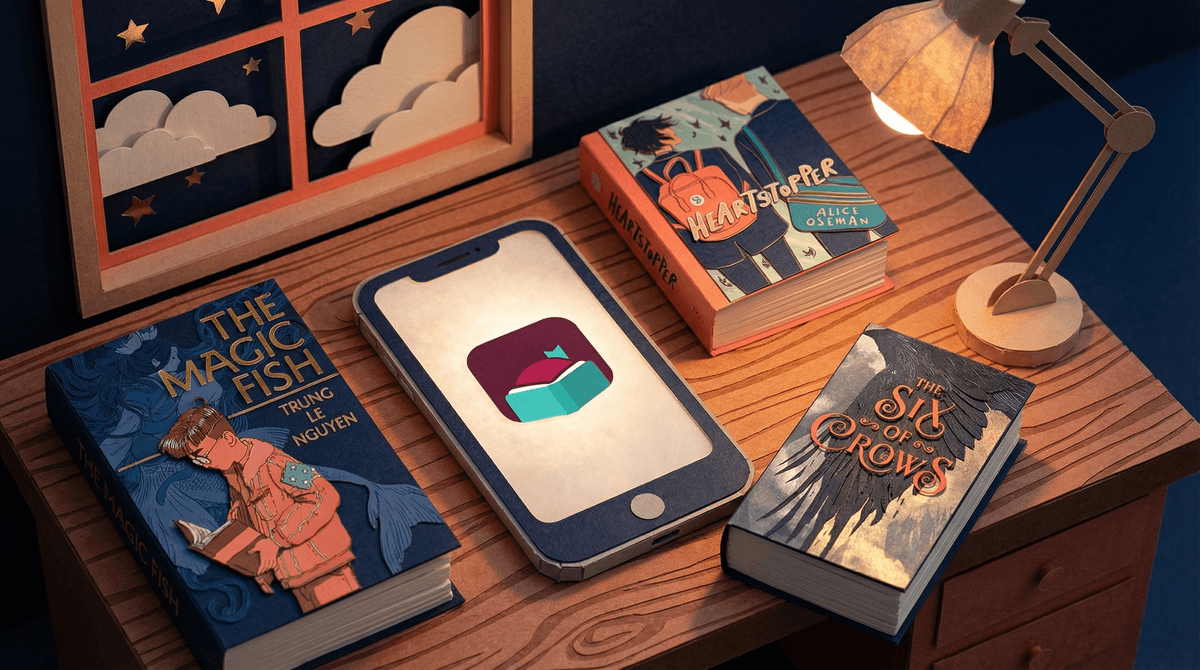
Try: Nimona by ND Stevenson (ages 12+), The Magic Fish by Trung Le Nguyen (ages 13+), or Heartstopper by Alice Oseman (ages 13+).
Let Them Read "Bad" Books
If they want to read romance with spicy scenes or YA fantasy that's basically fanfiction with the serial numbers filed off, let them. A Court of Thorns and Roses by Sarah J. Maas (ages 16+) isn't winning literary prizes, but it's gotten more teens reading than any assigned classic.
The goal is to build a reading habit, not curate their taste. That comes later.
Use BookTok and Bookstagram
Yes, I'm telling you to let your teen's algorithm find their books. BookTok has done more for teen literacy than any reading incentive program. The recommendations are peer-driven, the enthusiasm is genuine, and teens actually trust it.
Just be aware: BookTok loves dark romance and morally gray characters. If your 14-year-old comes home wanting to read Fourth Wing by Rebecca Yarros (ages 17+), you might want to preview it first. Here's more on navigating BookTok recommendations .
.
Make It Easy
- Get them a library card and show them how to use the Libby app. Free books on their phone = no friction.
- Subscribe to Kindle Unlimited or similar. The ability to abandon a book without guilt is huge.
- Take them to bookstores and let them browse. Barnes & Noble's YA section is basically a BookTok display now.
- Audio counts. If they'll listen to The Hunger Games on their commute, that's reading.
Ages 12-14: Look for books that deal with identity, friendship, and coming-of-age without heavy content. Try The Hunger Games by Suzanne Collins, Percy Jackson series by Rick Riordan, The Hate U Give by Angie Thomas, or Heartstopper by Alice Oseman.
Ages 15-16: They can handle more complexity—moral ambiguity, romance, some violence. Six of Crows by Leigh Bardugo, Children of Blood and Bone by Tomi Adeyemi, They Both Die at the End by Adam Silvera, Scythe by Neal Shusterman.
Ages 17-18: Pretty much anything goes, but you might want to know if they're reading It Ends With Us by Colleen Hoover (domestic violence) or A Little Life by Hanya Yanagihara (extremely heavy trauma content). Not to forbid it, but to be available for conversation.
The "spicy" question: YA romance has gotten increasingly explicit. If you're not comfortable with your 15-year-old reading detailed sex scenes, you need to be aware that books marketed to teens now often include them. Common Sense Media is your friend here.
Don't make it a battle. The fastest way to kill reading is to force it. Offer options, make books available, model reading yourself, but don't turn it into another thing they're failing at.
Their taste will be different from yours. The books you loved at their age might bore them to tears. That's okay. Let them find their own way.
Reading on screens counts. Whether it's Kindle, phone, or tablet, if they're reading, they're reading. The format wars are pointless.
Fanfiction is actually great training. If your teen is reading or writing fanfic, they're engaging deeply with narrative, character, and craft. It's not "lesser" than published books—it's just different.
Series are your friend. Once they're hooked on a series, you've got months of reading ahead. Throne of Glass, The Lunar Chronicles, Legend—find the first book that clicks and you're golden.
Getting teens to read in 2026 isn't about forcing them through the classics or lamenting that they're not reading "real" books. It's about meeting them where they are, removing friction, and helping them find stories that matter to them.
Will they read less than we did? Probably. Are they getting stories and building literacy in other ways? Definitely. But books still offer something unique—depth, interiority, sustained attention—that's worth preserving.
The goal isn't to create literary scholars. It's to help them discover that reading can be a refuge, an adventure, and a way to understand themselves and others. Everything else is just gatekeeping.
- Ask your teen what shows or games they're obsessed with, then find book recommendations that match those vibes
- Set up Libby on their phone with your library card
- Follow some BookTok accounts together and make a list of books they're curious about
- Consider a family reading time where everyone reads their own thing—no phones, just books
- Check out our guide to audiobooks and whether they "count" as reading
And if all else fails? At least they're reading the group chat. It's something.