

Books About Extraordinary Women: Building Confidence Through Stories
We're talking about books—both biographies and fiction—that center girls and women who did remarkable things. Women who broke barriers, changed history, invented things, led movements, created art, or simply refused to accept the limitations placed on them. These aren't just "girl power" books with pink covers (though some of those are fine too). We're talking about stories that show the full complexity of what it means to be ambitious, resilient, flawed, and extraordinary.
The range is huge: picture books about Ruth Bader Ginsburg for your kindergartener, middle-grade novels about girls coding or exploring, YA books about activists and athletes, and full biographies of scientists, artists, and leaders for older kids. The common thread? They all show girls and women as the main characters of their own stories—not the sidekick, not the love interest, just the person doing the thing.
Here's what we know: kids absorb messages about what's possible for them from the stories they consume. And for a long time (and honestly, still today), the default protagonist in books, movies, and games has been male. When girls only see themselves as supporting characters, it shapes their sense of what roles they can play in their own lives.
Research on representation in children's media is pretty clear: kids who see characters like themselves in diverse, empowered roles have higher self-esteem and broader career aspirations. A 2011 study in Sex Roles found that exposure to counter-stereotypical gender portrayals in media increased kids' beliefs about what's possible for their own gender. Translation: when your daughter reads about a girl who becomes an astronaut, she's more likely to think "I could do that" rather than "that's not for girls."
But it's not just about career goals. These books model resilience, problem-solving, standing up for what's right, handling failure, and navigating a world that doesn't always make space for you. Those are life skills that matter whether your kid grows up to be a Supreme Court justice or a stay-at-home parent.
The good ones aren't preachy. They're just good stories that happen to feature extraordinary women. Kids love them for the same reasons they love any good book: adventure, humor, relatable characters, and stories that make them feel something.
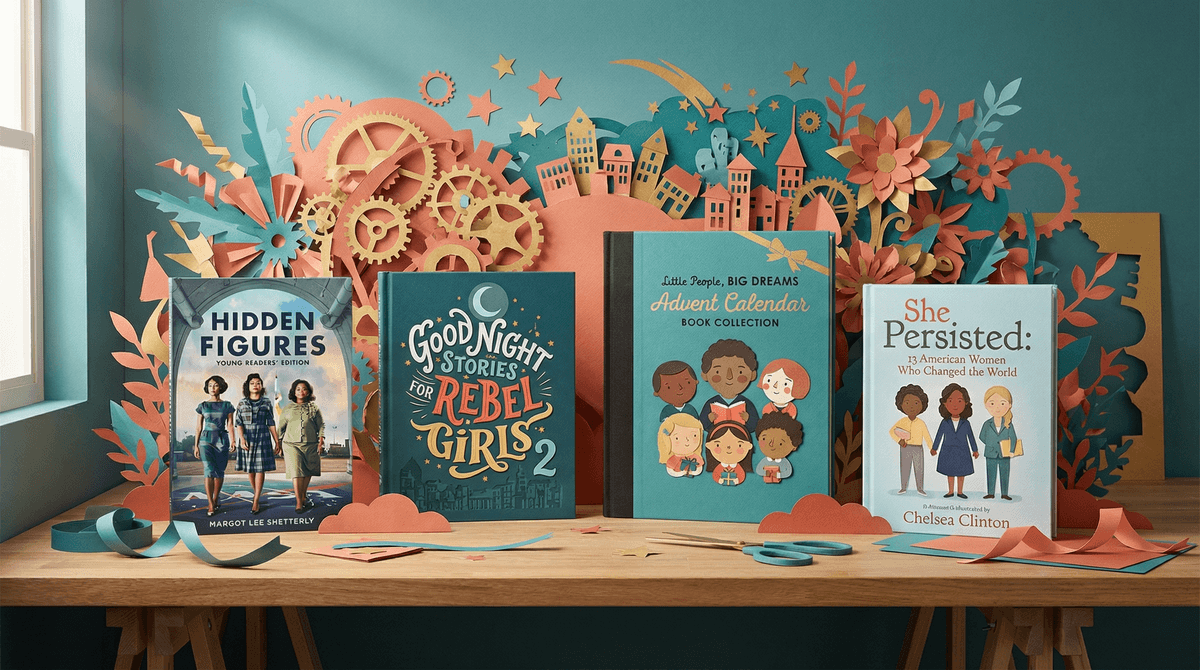
For younger kids (ages 4-8), books like Good Night Stories for Rebel Girls work because they're bite-sized, beautifully illustrated, and introduce dozens of women in a format that's perfect for bedtime. Each story is short enough to hold attention but meaty enough to spark questions.
For middle-grade readers (ages 8-12), fiction like A Wrinkle in Time or The Wild Robot (yes, the robot is coded female and it's wonderful) gives them protagonists who are smart, weird, brave, and imperfect. They're solving problems, going on adventures, and being the hero of their own story.
For teens (ages 13+), books like Hidden Figures (the young readers' edition is excellent) or I Am Malala offer real-world inspiration alongside complex narratives about systemic barriers, personal sacrifice, and what it actually takes to change the world.
Ages 4-8: Picture Books and Early Chapter Books
Start with books that are visually engaging and don't require a lot of historical context. Look for:
- She Persisted series by Chelsea Clinton
- Little People, Big Dreams series (covers everyone from Frida Kahlo to Simone Biles)
- Ada Twist, Scientist by Andrea Beaty (also a Netflix show now)
These books introduce the concept of women doing extraordinary things without requiring your kid to understand the civil rights movement or quantum physics yet.
Ages 8-12: Middle-Grade Fiction and Biography
This is the sweet spot for both fiction with strong female protagonists and accessible biographies. Try:
- Herstory by Katherine Halligan (50 women, gorgeously illustrated)
- Brown Girl Dreaming by Jacqueline Woodson (memoir in verse, absolutely beautiful)
- Matilda by Roald Dahl (yes, it's a classic, but Matilda is an extraordinary girl who uses her intelligence to fight injustice)
At this age, kids can handle more complex narratives and understand historical context. They're also forming their own identities and thinking about who they want to be.
Ages 13+: YA and Adult Biography
Teens can handle the full complexity of these stories—the failures, the systemic barriers, the personal costs of breaking ground. Consider:
- The Immortal Life of Henrietta Lacks by Rebecca Skloot
- Educated by Tara Westover (memoir about a woman who leaves a survivalist family to get a PhD)
- Becoming by Michelle Obama
These books don't sugarcoat the challenges. They show the real work, sacrifice, and courage it takes to be extraordinary—and that's exactly what teens need to see.
Not every book needs to be a biography of someone famous. Fiction with strong female characters who are complex, flawed, and driving their own narratives is just as valuable. Books like Harry Potter (Hermione is the real hero, let's be honest) or The Hunger Games give kids protagonists who are brave, strategic, and human.
Representation matters beyond gender. Look for books about women of color, LGBTQ+ women, women with disabilities, women from different cultures and backgrounds. The more diverse the stories, the more kids learn that "extraordinary" doesn't have one look or one path. The 57 Bus by Dashka Slater is a powerful example that deals with gender identity, race, and justice.
These books are for all kids, not just girls. Boys need to see women as leaders, heroes, and complex human beings just as much as girls do. Normalize it by making these books part of your regular rotation, not a special "girls only" category.
Some of these stories are hard. Books about activists, scientists, and leaders often involve discrimination, violence, or tragedy. That's real, and it's important, but know what you're getting into. Read reviews, preview the content, and be ready to have conversations about why the world wasn't (and isn't) always fair.
Books about extraordinary women aren't just "nice to have"—they're essential for building a worldview where girls see themselves as capable of anything and boys see women as equals. These stories model resilience, ambition, creativity, and courage in ways that stick with kids long after they close the book.
The best part? You don't have to make it A Thing. Just put these books on the shelf alongside everything else. Read them at bedtime. Listen to them in the car. Let your kids see that stories about extraordinary women are just... stories. Normal. Expected. Part of the landscape.
Start with one book this week. Pick something age-appropriate from the suggestions above, or Find books about extraordinary women based on your kid's age and interests.
Make it a conversation. After reading, ask your kid what they thought was extraordinary about the person or character. What would they have done in that situation? What do they think was hard about what that person accomplished?
Diversify your shelves. Take a look at your home library. If most of the protagonists are male, it's time to balance that out. Not as a punishment to boys or male characters, just as a reflection of reality: extraordinary people come in all genders.
Connect books to other media. Many of these stories have been adapted into movies, shows, or podcasts. Hidden Figures is a great movie. Malala has a documentary. Use multiple formats to reinforce these stories.
And remember: you're not trying to raise the next Ruth Bader Ginsburg (though that would be cool). You're just trying to raise a kid who knows that being extraordinary is an option, not an exception.