

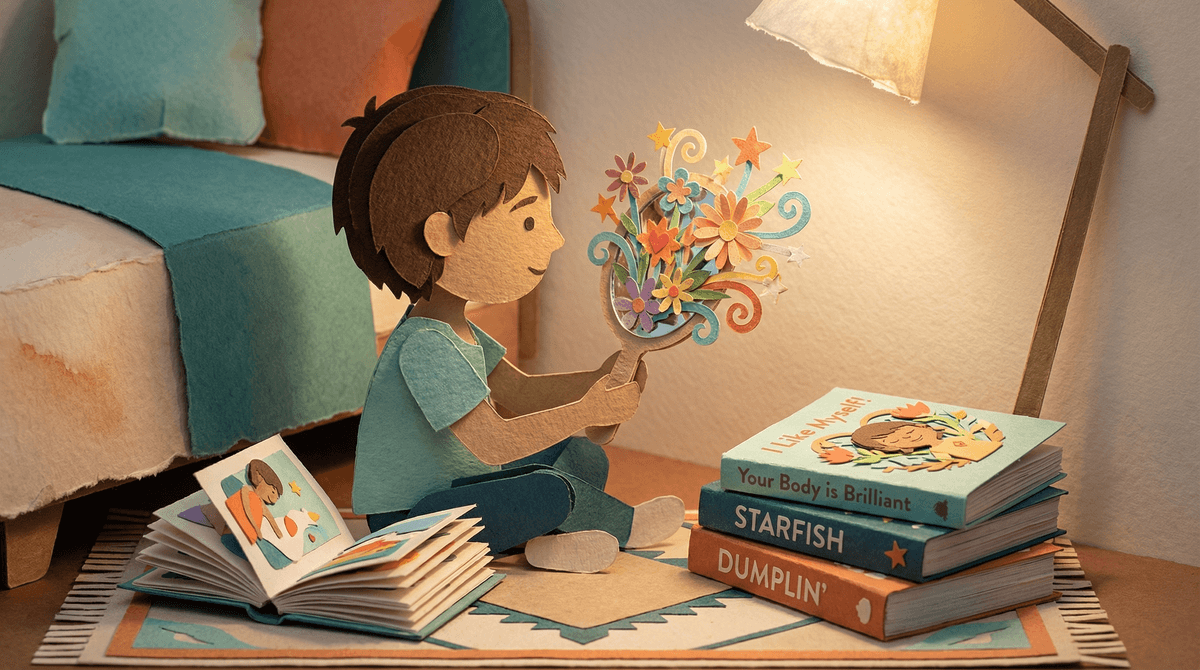
Look, we're living in a world where kids are scrolling past hundreds of filtered faces before they even finish breakfast. Body image books aren't just "nice to have" anymore—they're essential tools for helping kids develop a healthy relationship with their bodies before Instagram, TikTok, and every other platform tells them they're not enough.
These books range from picture books for little ones learning that bodies come in all shapes and sizes, to middle-grade novels tackling eating disorders, to YA stories about gender identity and self-acceptance. The best ones don't preach—they tell genuine stories that help kids see themselves (or understand others) while building resilience against the absolute onslaught of unrealistic beauty standards they're facing.
Here's the thing: the average age kids start worrying about their appearance is getting younger. We're talking 6-year-olds expressing dissatisfaction with their bodies. Six. And by middle school? The stats are genuinely heartbreaking—over 40% of kids ages 9-11 have tried to lose weight, and eating disorder hospitalizations for kids under 12 have increased significantly.
The culprit isn't just traditional media anymore (though hello, Marvel's impossible body standards). It's the constant stream of "perfect" bodies on social media, the subtle (and not-so-subtle) diet culture messaging, the comparison trap that comes from seeing everyone's highlight reel. Even Roblox avatars and game characters reinforce narrow beauty ideals.
Books offer something screens often can't: time to process, reflect, and internalize healthier messages at a kid's own pace. No algorithm pushing them toward more extreme content. No comments section tearing people apart. Just stories that can genuinely reshape how kids see themselves and others.
Ages 3-7: Building the Foundation
Little kids need books that normalize body diversity before they even develop negative associations. Look for stories that:
- Show different body types, abilities, skin colors, and features as completely normal
- Focus on what bodies can DO rather than how they look
- Use inclusive language and imagery
Strong picks: The Skin You Live In by Michael Tyler, I Like Myself! by Karen Beaumont, Your Body is Brilliant by Sigrun Danielsdottir. These books are straightforward, joyful, and set the stage for body positivity before negativity creeps in.
Ages 8-12: Navigating Comparison
This is when things get real. Kids start comparing themselves to peers, noticing differences, and absorbing messages about "ideal" bodies. They need books that:
- Acknowledge the pressure without sugarcoating it
- Show characters struggling with and overcoming body image issues
- Challenge diet culture and appearance-based judgment
Strong picks: Blubber by Judy Blume (still relevant 50 years later—tackles weight-based bullying head-on), Fat Chance, Charlie Vega by Crystal Maldonado, Starfish by Lisa Fipps. These books don't pretend everything's fine—they show the actual struggle and model resilience.
Ages 13+: Deeper Conversations
Teens need books that respect their intelligence and lived experience. They're dealing with:
- Social media's impact on self-image
- Eating disorders and disordered eating
- Gender identity and body dysphoria
- The intersection of body image with race, disability, and sexuality
Strong picks: Dumplin' by Julie Murphy, Hunger by Roxane Gay (for older teens—it's raw), The Gravity of Us by Phil Stamper, Fat Girl on a Plane by Kelly deVos. Also, The Hate U Give by Angie Thomas and Felix Ever After by Kacen Callender touch on body image within larger identity narratives.
Reading these books together is way more powerful than just handing them over. The conversations that happen during and after reading are where the real learning happens. Ask questions like:
- "How do you think [character] felt when that happened?"
- "Have you ever felt that way about your body?"
- "What would you say to a friend who felt like that?"
Don't wait for a problem to emerge. These books work best as prevention, not intervention. If your kid is already struggling with serious body image issues or showing signs of an eating disorder, books are a supplement to professional help, not a replacement.
Representation matters tremendously. Kids need to see bodies like theirs in stories—and bodies different from theirs. A thin white girl needs to read about fat Black girls and disabled Asian boys and trans kids and everyone in between. That's how empathy develops.
Watch for your own reactions. Kids pick up on everything. If you make a face when a book shows a fat character eating joyfully, or if you comment on how "brave" someone is for wearing a swimsuit, you're undermining the book's message. Learn more about how your own relationship with your body impacts your kids .
.
Books about body image aren't going to single-handedly counteract the thousands of messages kids get from media, peers, and culture. But they're one of the most effective tools we have for building a foundation of self-acceptance and critical thinking about beauty standards.
The goal isn't to make kids immune to insecurity—that's impossible and probably not even desirable. The goal is to give them language for their feelings, examples of people who've navigated similar struggles, and the understanding that their worth isn't determined by their appearance.
Start early, read often, and keep the conversations going. And honestly? You might find these books helpful for yourself too. Most of us are still unlearning decades of toxic messaging about bodies.
Start with one book this month. Pick something age-appropriate from the lists above, read it with your kid (or have them read it and discuss afterward), and see where the conversation goes.
Audit your home's media diet. What shows, games, and social media is your family consuming? Check out alternatives to appearance-focused content that prioritize character, ability, and inner qualities.
Model healthy body talk. Stop commenting on your own body negatively in front of your kids. Stop commenting on other people's bodies, period. It's harder than it sounds, but it matters.
Connect with other parents. Body image conversations can feel vulnerable. Find your people—whether that's a book club, a parent group, or just a friend who gets it—and support each other through this.